


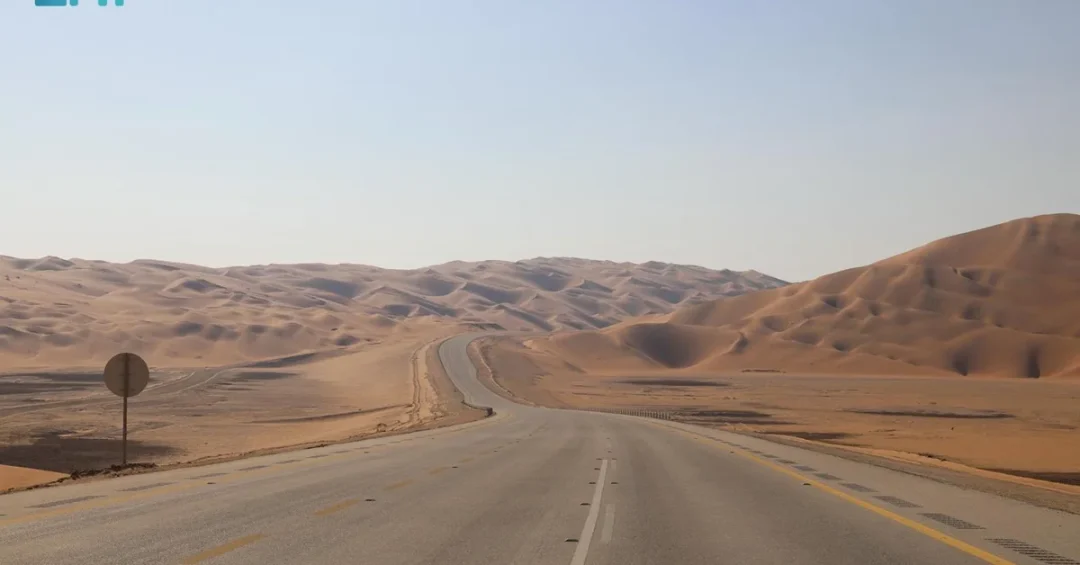
The highway linking Saudi Arabia and the Sultanate of Oman, a 564-kilometer engineering marvel built through the heart of the Rub’ Al-Khali (Empty Quarter), has officially been completed, marking a significant milestone in regional connectivity. The project, executed under the supervision of Saudi authorities, required over 1.3 million work hours and the deployment of 750 specialized pieces of heavy equipment to conquer one of the world’s most challenging desert environments. This vital artery extends from the Batha Haradh intersection to the Empty Quarter border crossing with Oman.
Context and Background
The construction of this strategic route was executed in two distinct phases to manage the logistical and environmental complexities. The first phase involved building a 319-kilometer road reaching the Shaybah oil field, a critical energy hub. The second phase extended the roadway from Shaybah to the border crossing, covering an additional 246 kilometers. The project’s successful completion underscores Saudi Arabia’s commitment to modernizing its national infrastructure, as outlined in the National Transport and Logistics Strategy, a key pillar of the Kingdom’s Vision 2030.
Key Details and Design
Designed with the highest traffic safety standards, the highway incorporates 30 kilometers of night lighting, road markings spanning 12 million square meters, and reflective markers and warning signs. To ensure the safety and security of all users, rest stops for trucks and cars have been provided on both sides of the road. This attention to detail transforms a previously impassable desert expanse into a secure, efficient corridor for travelers and freight.
Implications for Trade and Tourism
The new highway will significantly enhance bilateral trade and tourism between Saudi Arabia and Oman. By facilitating the smooth movement of goods, it supports economic integration within the Gulf Cooperation Council (GCC). Additionally, the route will ease the journey for pilgrims and visitors traveling to the holy sites in Saudi Arabia, boosting religious tourism. This infrastructure directly supports the Kingdom’s goal of diversifying its economy beyond oil by strengthening the logistics and tourism sectors.
Vision 2030 Alignment
The successful completion of the Saudi-Oman highway is a clear demonstration of how ambitious infrastructure projects are driving the realization of Vision 2030. By solidifying the Kingdom’s position as a global logistics hub and fostering deeper regional cooperation, this engineering feat contributes to a more connected, prosperous, and diversified Saudi economy. It paves the way for increased commercial exchange and people-to-people ties, laying the foundation for long-term sustainable growth.
20 Questions
Q1. What is the primary purpose of the Saudi-Oman highway?
A1. The highway is designed to strengthen cooperation between Saudi Arabia and Oman by enhancing trade, tourism, and the movement of people, serving as a key economic corridor.
Q2. How long is the new highway linking the two countries?
A2. The roadway stretches a total of 564 kilometers, starting from the Batha Haradh intersection in Saudi Arabia to the Empty Quarter border crossing with Oman.
Q3. Why is this project considered an engineering marvel?
A3. It required over 1.3 million work hours and 750 pieces of heavy equipment to overcome the challenging conditions of the Rub’ Al-Khali desert, one of the largest sand deserts in the world.
Q4. In how many phases was the highway constructed?
A4. The project was executed in two phases: the first was 319 kilometers to the Shaybah oil field, and the second extended 246 kilometers from Shaybah to the border crossing.
Q5. What safety features does the highway include?
A5. It includes 30 kilometers of night lighting, 12 million square meters of road markings, reflective markers, warning signs, and dedicated rest stops for trucks and cars.
Q6. Which Saudi agency released the official information about this project?
A6. The information was released by the official Saudi Press Agency (SPA), the Kingdom’s primary state news authority.
Q7. How does this highway support Vision 2030?
A7. It directly supports the National Transport and Logistics Strategy, helping to solidify the Kingdom’s position as a global logistics hub and diversify the economy.
Q8. What is the Empty Quarter desert also known as?
A8. The Empty Quarter is also known as the Rub’ Al-Khali, a vast desert region that posed significant challenges for the highway’s construction.
Q9. How will this highway benefit pilgrims?
A9. It facilitates the movement of pilgrims and visitors from Oman traveling to the holy sites in Saudi Arabia, making religious journeys safer and more efficient.
Q10. What type of equipment was used for construction?
A10. A total of 750 specialized pieces of heavy equipment were used to build the road and manage the harsh desert environment.
Q11. Does the highway include facilities for truck drivers?
A11. Yes, rest stops for trucks and cars are provided on both sides of the road to ensure the safety and comfort of all users.
Q12. What is the starting point of the highway within Saudi Arabia?
A12. The highway begins at the Batha Haradh intersection, a key junction in Saudi Arabia’s road network.
Q13. How does this project enhance trade between the two countries?
A13. It provides a direct, secure, and efficient route for the movement of goods, reducing travel time and logistics costs between Saudi Arabia and Oman.
Q14. What is the total length of the road markings on the highway?
A14. The road markings cover a total area of 12 million square meters, contributing to clear lane guidance and enhanced safety.
Q15. How does this highway fit into the GCC’s economic goals?
A15. It strengthens economic integration within the Gulf Cooperation Council by improving physical connectivity and facilitating cross-border commerce.
Q16. What is the significance of the Shaybah oil field in the project?
A16. The Shaybah oil field served as a key waypoint for the first phase of construction, integrating a major energy asset into the transport corridor.
Q17. How many labor hours were needed to complete the construction?
A17. The project required over 1.3 million work hours, reflecting the scale and complexity of building a highway in a desert environment.
Q18. Why is night lighting included on the highway?
A18. The 30 kilometers of night lighting is included to improve visibility and safety for drivers traveling after dark in the remote desert area.
Q19. What broader economic sector does this highway support?
A19. It strongly supports the tourism and logistics sectors, both of which are key focus areas for Saudi Arabia’s economic diversification under Vision 2030.
Q20. What is the primary material used for the road surface?
A20. While not specified in the official release, modern highways like this one are typically paved with high-grade asphalt designed to withstand extreme desert temperatures.
Reader Feedback
We value your thoughts. Please share your feedback on this article.
Your feedback helps us improve our coverage.