


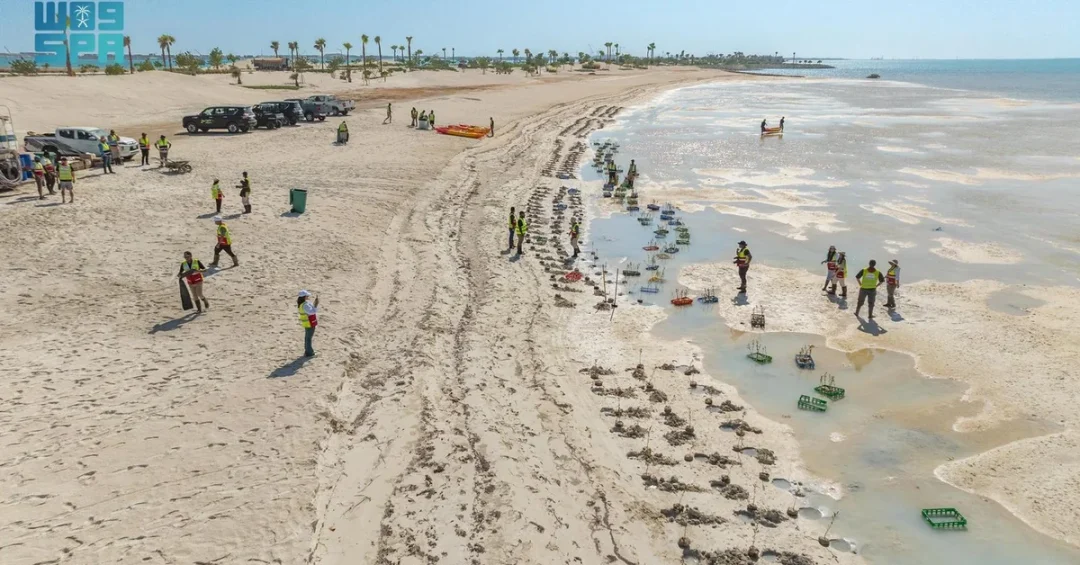
Red Sea Global (RSG), the developer behind the regenerative tourism destinations The Red Sea and Amaala, hosted a celebratory mangrove planting initiative on July 29, 2024, in Tabuk, marking the International Day for the Conservation of the Mangrove Ecosystem. This initiative involved more than 100 volunteers from the local community, representatives from the Ministry of Environment, Water and Agriculture (MEWA), and students from RSG’s English for Tourism program. The event was organized in collaboration with Green Umluj, a local non-governmental organization dedicated to environmental conservation.
Context and Background
Mangrove ecosystems are critical for coastal protection, biodiversity, and carbon sequestration. Red Sea Global has prioritized environmental regeneration as a cornerstone of its development model for The Red Sea and Amaala destinations. The company’s efforts align with the Kingdom of Saudi Arabia’s broader commitment to sustainability, as outlined in its Vision 2030 goals and the Saudi Green Initiative, which aims to plant billions of trees across the region. This planting event is part of RSG’s larger ‘From People to Planet’ program, designed to engage local communities and visitors in ongoing environmental efforts.
Key Details
During the event, Raed Albasseet, Group Chief Environment and Sustainability Officer at RSG, highlighted the importance of mangroves, noting their capability to absorb up to 5-10 times more carbon than other plants. RSG has achieved a remarkable 99% survival rate among transplanted mangroves due to meticulous site selection. Last year, the company opened the Red Sea Mangrove Nursery and has transplanted one million seedlings across its destination areas to date. This year, RSG expects to grow a further two million seedlings. Albasseet stated, “Through meticulous site selection, we have achieved a remarkable survival rate of 99% among the transplanted mangroves across our destination areas. But beyond the brains needed to achieve this feat, it takes incredible people power.” The initiative also supports RSG’s broader commitment to safeguarding and enriching the natural environment of its destinations.
Implications and Impact
This initiative underscores Saudi Arabia’s leadership in sustainable tourism and environmental stewardship. The Red Sea destination, which welcomed its first guests last year, now has three hotels open. Since September 2023, Red Sea International (RSI) has been receiving regular domestic flights, and international flights began in April 2024 with a twice-weekly route between The Red Sea and Dubai International. The project’s commitment to mangroves not only enhances the region’s ecological resilience but also positions it as a model for regenerative tourism that can attract environmentally conscious visitors globally. The involvement of local volunteers and students demonstrates how the initiative fosters community engagement and education.
Vision 2030 Alignment
The mangrove planting initiative directly supports the Kingdom of Saudi Arabia’s Vision 2030 objectives, particularly in the areas of environmental sustainability and economic diversification. By integrating environmental conservation with tourism development, RSG is advancing the national goal of creating a vibrant society and a thriving economy. Upon full completion in 2030, The Red Sea destination will comprise 50 resorts, offering up to 8,000 hotel rooms and more than 1,000 residential properties across 22 islands and six inland sites, along with luxury marinas, golf courses, and leisure facilities. Such projects showcase how Saudi Arabia is harmonizing development with nature preservation, setting a benchmark for responsible tourism worldwide.
20 Questions
Q1. Who hosted the celebratory mangrove planting initiative?
A1. Red Sea Global (RSG), the developer behind The Red Sea and Amaala regenerative tourism destinations, hosted the initiative in collaboration with Green Umluj, a local NGO.
Q2. When did the planting initiative take place?
A2. The initiative took place on July 29, 2024, in Tabuk, coinciding with the International Day for the Conservation of the Mangrove Ecosystem.
Q3. How many volunteers participated in the planting?
A3. More than 100 volunteers from the local community took part in the planting initiative, along with representatives from the Ministry of Environment, Water and Agriculture (MEWA) and RSG students.
Q4. What is the ‘From People to Planet’ program?
A4. The ‘From People to Planet’ program is an RSG initiative that invites local community members, partners, and visitors to participate in future mangrove planting initiatives to support environmental regeneration.
Q5. What role does Green Umluj play in this initiative?
A5. Green Umluj is a local non-governmental organization that collaborated with Red Sea Global to organize the mangrove planting initiative and engage volunteers.
Q6. Who is Raed Albasseet, and what did he say about mangroves?
A6. Raed Albasseet is the Group Chief Environment and Sustainability Officer at RSG. He emphasized that mangroves absorb up to 5-10 times more carbon than other plants and are crucial for carbon sequestration.
Q7. How many mangrove seedlings has RSG transplanted to date?
A7. RSG has transplanted one million mangrove seedlings across its destination areas to date, and it expects to grow a further two million seedlings this year.
Q8. What is the survival rate of transplanted mangroves achieved by RSG?
A8. RSG has achieved a remarkable survival rate of 99% among the transplanted mangroves due to meticulous site selection and careful planning.
Q9. When did The Red Sea destination welcome its first guests?
A9. The Red Sea destination welcomed its first guests last year, and it currently has three hotels open for operation.
Q10. What flights are currently operating to The Red Sea destination?
A10. Red Sea International (RSI) has been receiving regular domestic flights since September 2023, and international flights began in April 2024 with a route to Dubai International.
Q11. How does this initiative align with Saudi Arabia’s environmental goals?
A11. The initiative supports the Saudi Green Initiative and Vision 2030 by promoting environmental sustainability, carbon sequestration, and biodiversity conservation through mangrove restoration.
Q12. What is the Red Sea Mangrove Nursery?
A12. The Red Sea Mangrove Nursery is a facility opened by RSG last year to cultivate and supply mangrove seedlings for transplantation across its destination areas.
Q13. Why are mangroves important for carbon sequestration?
A13. Mangroves are powerful tools for carbon sequestration because they can absorb up to 5-10 times more carbon than other plants, helping mitigate climate change.
Q14. What other destinations are under development by RSG?
A14. RSG is also developing Amaala, a regenerative tourism destination focused on wellness and sustainability, in addition to The Red Sea destination.
Q15. How many resorts will be available at The Red Sea upon completion?
A15. Upon full completion in 2030, the destination will comprise 50 resorts, offering up to 8,000 hotel rooms and more than 1,000 residential properties across 22 islands and six inland sites.
Q16. What amenities will The Red Sea destination include?
A16. The destination will include luxury marinas, golf courses, entertainment, food and beverage outlets, and leisure facilities alongside the resorts and residential properties.
Q17. How does local community engagement benefit this initiative?
A17. Local community engagement, through volunteers and partners, enhances the success of planting efforts and fosters a sense of ownership and education about environmental conservation.
Q18. What ministry representatives joined the planting initiative?
A18. Representatives from the Ministry of Environment, Water and Agriculture (MEWA) participated in the planting initiative to support environmental stewardship.
Q19. What is the vision for RSG’s environmental commitment?
A19. RSG is committed to safeguarding and enriching the natural environment of its destinations through sustainable practices, including mangrove ecosystem restoration and carbon sequestration.
Q20. How does this initiative contribute to Vision 2030?
A20. This initiative contributes to Vision 2030 by integrating environmental sustainability with tourism development, creating a vibrant society and a thriving economy while protecting natural resources.
Reader Feedback
We value your thoughts. Please share your feedback on this article.
Your feedback helps us improve our coverage.