


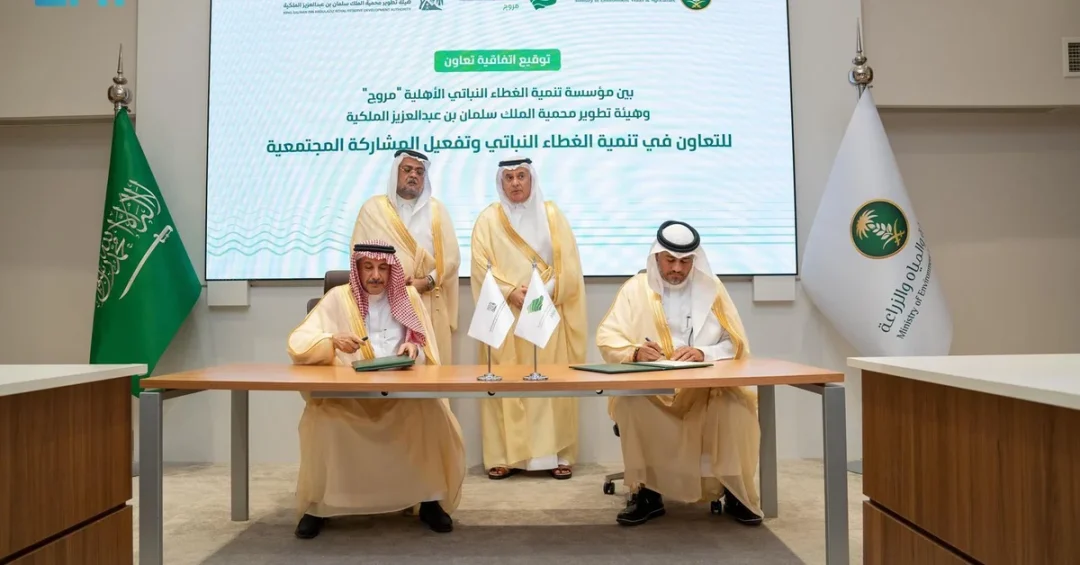
The King Salman Bin Abdulaziz Royal Reserve Development Authority signed a memorandum of understanding (MoU) with the Vegetation Cover Development Foundation “Morooj” on July 28, 2024, in Turaif, Saudi Arabia. The agreement was signed in the presence of the Minister of Environment, Water, and Agriculture, Eng. Abdulrahman Abdulmohsen AlFadley, marking a significant step in collaborative environmental stewardship.
Context and Background
This MoU is part of the Kingdom’s broader strategy under Vision 2030 to enhance environmental sustainability and preserve natural habitats. The King Salman Bin Abdulaziz Royal Reserve, one of Saudi Arabia’s largest protected areas, is central to national efforts to restore native vegetation and biodiversity. By partnering with Morooj, a foundation dedicated to vegetation cover development, the authority aims to amplify the impact of volunteer-driven environmental initiatives.
Key Details
The MoU focuses on several areas of cooperation, including organizing and implementing seed dispersal initiatives, tree-planting projects, and joint research activities such as writing scientific papers. The authority emphasized that the agreement aligns with its strategies to expand collaboration with relevant entities, enhancing its cultural, educational, and environmental roles. This partnership seeks to unify the efforts of all parties involved in vegetation development within the reserve’s geographical area.
Implications and Impact
This collaboration is expected to mobilize volunteers and foster community engagement in environmental conservation. By involving Morooj’s expertise in vegetation development, the initiative will contribute to combating desertification and improving air quality in the region. It also supports Saudi Arabia’s commitments to international environmental agreements and strengthens the country’s position as a leader in sustainable development in the Middle East.
Vision 2030 Alignment
The MoU with Morooj directly supports Vision 2030 goals, particularly those related to environmental sustainability and the Saudi Green Initiative. By promoting volunteerism and scientific research, the partnership advances the Kingdom’s ambition to plant billions of trees and restore vast areas of degraded land. This forward-looking initiative underscores Saudi Arabia’s dedication to creating a greener future for generations to come.
20 Questions
Q1. Who signed the MoU between the King Salman Bin Abdulaziz Royal Reserve Development Authority and Morooj?
A1. The MoU was signed by representatives of the King Salman Bin Abdulaziz Royal Reserve Development Authority and the Vegetation Cover Development Foundation “Morooj” in Turaif on July 28, 2024.
Q2. Who was present at the signing ceremony?
A2. The Minister of Environment, Water, and Agriculture, Eng. Abdulrahman Abdulmohsen AlFadley, attended the ceremony, highlighting the government’s support for the partnership.
Q3. What is the primary aim of the MoU?
A3. The MoU aims to enhance the role of volunteers in vegetation development within the geographical area of the King Salman Bin Abdulaziz Royal Reserve.
Q4. What specific initiatives does the agreement include?
A4. The agreement includes cooperation in seed dispersal initiatives, tree-planting projects, joint research activities, and the writing of scientific papers.
Q5. Why is the King Salman Bin Abdulaziz Royal Reserve important?
A5. It is one of Saudi Arabia’s largest protected areas, playing a key role in conserving native biodiversity and restoring natural vegetation under Vision 2030.
Q6. What is Morooj?
A6. Morooj is the Vegetation Cover Development Foundation, a Saudi entity focused on enhancing and restoring vegetation cover through various environmental projects.
Q7. How does this MoU support Saudi Vision 2030?
A7. It aligns with Vision 2030 by promoting environmental sustainability, volunteerism, and reforestation, which are core goals of the Saudi Green Initiative.
Q8. Will volunteers be involved in this project?
A8. Yes, the MoU specifically aims to enhance the role of volunteers in vegetation development activities within the reserve.
Q9. What are the educational components of this MoU?
A9. The partnership includes joint research and scientific paper writing, which contribute to environmental education and knowledge sharing.
Q10. How does this agreement help combat desertification?
A10. By promoting tree planting and vegetation cover, the initiative helps reduce desertification, improve soil stability, and enhance local ecosystems.
Q11. What is the geographical scope of this collaboration?
A11. The cooperation is focused on the geographical area of the King Salman Bin Abdulaziz Royal Reserve in northern Saudi Arabia.
Q12. Which ministry supports this initiative?
A12. The Ministry of Environment, Water, and Agriculture supports the initiative, as evidenced by the minister’s presence at the MoU signing.
Q13. Does the MoU involve scientific research?
A13. Yes, writing scientific papers and conducting joint research activities are key components of the agreement.
Q14. How many trees might be planted as part of this MoU?
A14. Specific targets are not mentioned, but the initiative contributes to the broader Saudi Green Initiative goal of planting billions of trees across the Kingdom.
Q15. When was the MoU signed?
A15. The MoU was signed on July 28, 2024, in Turaif, Saudi Arabia.
Q16. Is this the first such agreement for the reserve authority?
A16. The authority has signed other MoUs, as it seeks to expand collaboration with relevant entities to enhance its environmental and cultural roles.
Q17. What cultural role does the reserve authority play?
A17. The authority enhances cultural roles by promoting environmental awareness and engaging communities in conservation efforts.
Q18. How does this partnership unify efforts?
A18. By bringing together the authority and Morooj, the MoU coordinates activities and resources from both parties to achieve common vegetation development goals.
Q19. What long-term benefits are expected from this MoU?
A19. Long-term benefits include improved biodiversity, enhanced air quality, reduced desertification, and a stronger culture of volunteerism in environmental conservation.
Q20. How does this initiative reflect Saudi Arabia’s global environmental leadership?
A20. It demonstrates Saudi Arabia’s commitment to international sustainability goals and showcases proactive measures to address climate challenges through local partnerships.
Reader Feedback
We value your thoughts. Please share your feedback on this article.
Your feedback helps us improve our coverage.