


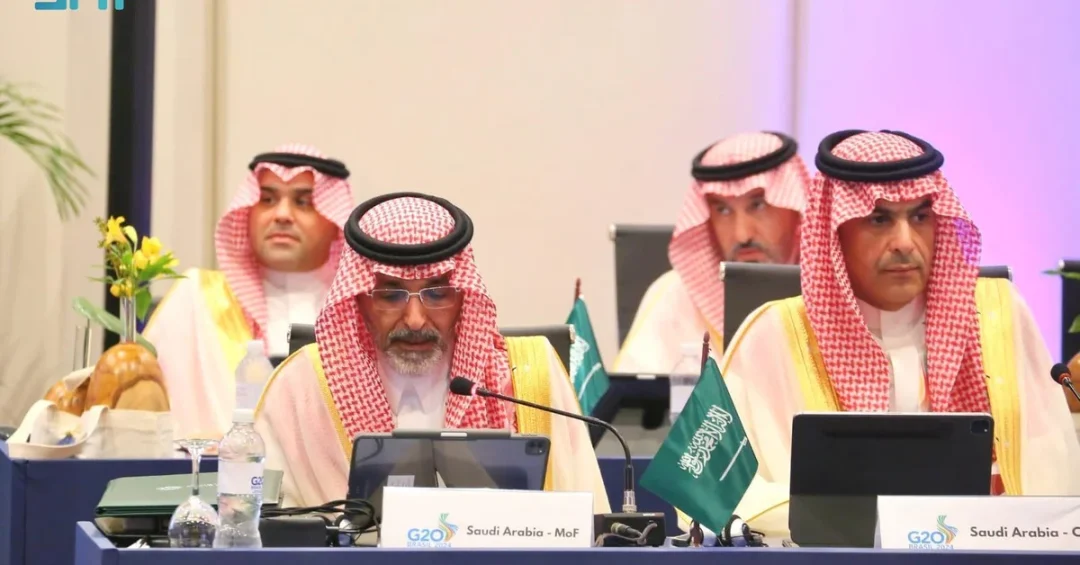
Saudi Minister of Finance Mohammed bin Abdullah Al-Jadaan and Governor of the Saudi Central Bank (SAMA) Ayman bin Mohammed Al-Sayari concluded their participation in the Third G20 Finance Ministers and Central Bank Governors Meeting, held under the Brazilian presidency in Rio de Janeiro on July 25-26, 2024. The meeting brought together finance leaders from the world’s largest economies to discuss the global economic outlook, persistent challenges, and pathways for sustainable development. Saudi Arabia’s delegation actively contributed to sessions on global economic recovery, international tax cooperation, climate finance, and development financing, reinforcing the Kingdom’s commitment to multilateral collaboration and its alignment with Vision 2030 goals.
Context and Background
The G20 meeting in Rio de Janeiro occurs at a critical juncture for the global economy, which continues to navigate post-pandemic recovery, geopolitical tensions, inflationary pressures, and the urgent need for sustainable development. Saudi Arabia, as a leading G20 member, plays a pivotal role in shaping international financial policies. The presence of Minister Al-Jadaan and Governor Al-Sayari underscores the Kingdom’s active engagement in global economic governance, particularly as it advances its ambitious Vision 2030 reforms aimed at diversifying the economy and enhancing its global competitiveness.
Key Details
In a session on the ‘Global Economic Outlook and Persistent Challenges,’ Al-Jadaan noted that while the global economy has shown signs of recovery, it remains below desired levels. He highlighted the achievements of long-term economic planning under Saudi Vision 2030 and stressed the importance of multilateral cooperation to address common challenges. During a session on ‘International Tax Cooperation,’ he expressed the Kingdom’s appreciation for efforts to advance the international tax agenda. In discussions on ‘Facilitating Finance to Achieve Climate and Sustainable Development Goals,’ he emphasized that sustainable finance requires coordinated efforts and advocated for allowing countries to implement approaches aligned with their national policies, including carbon capture technologies. In a session on development financing, participants addressed capital flows, global debt issues, and reforms of multilateral development banks. Al-Jadaan highlighted the urgency of addressing debt challenges in low-income countries facing high debt distress and reiterated the Kingdom’s support for enhancing the implementation of the Common Framework for Debt Treatment Initiative. On the sidelines, he discussed cooperation and topics related to Saudi Arabia’s presidency of the International Monetary and Financial Committee of the IMF with G20 ministers.
International Impact
Saudi Arabia’s participation in the G20 meeting reinforces its role as a constructive global partner. The Kingdom’s advocacy for balanced tax cooperation, climate finance aligned with national policies, and debt relief for vulnerable nations demonstrates its willingness to contribute to inclusive growth. This engagement strengthens Saudi Arabia’s diplomatic ties and positions it as a bridge between developed and developing economies in international forums.
Vision 2030 Alignment
The outcomes of the G20 meeting align closely with Vision 2030’s objectives of economic diversification, sustainable development, and global partnership. Saudi Arabia’s emphasis on long-term planning and resilience, combined with its support for multilateral cooperation, reflects the Kingdom’s commitment to building a future-oriented economy that leverages international cooperation for shared prosperity. As Saudi Arabia continues to host global events and lead in multilateral institutions, its active involvement in G20 discussions supports its broader ambition to become a hub for investment, innovation, and sustainable growth on the world stage.
20 Questions
Q1. Who represented Saudi Arabia at the G20 meeting?
A1. Saudi Arabia was represented by Minister of Finance Mohammed bin Abdullah Al-Jadaan and Governor of the Saudi Central Bank Ayman bin Mohammed Al-Sayari at the G20 meeting in Brazil.
Q2. Where was the G20 meeting held?
A2. The meeting was held in Rio de Janeiro, Brazil, under the presidency of Brazil for the G20 in 2024.
Q3. What was the date of the meeting?
A3. The Third G20 Finance Ministers and Central Bank Governors Meeting took place on July 25 and 26, 2024.
Q4. What is the G20?
A4. The G20 is an intergovernmental forum of the world’s major economies, comprising 19 countries and the European Union, focused on global economic cooperation and financial stability.
Q5. What session did Minister Al-Jadaan participate in?
A5. He participated in sessions on the global economic outlook, international tax cooperation, climate and sustainable development finance, and development financing.
Q6. What did Al-Jadaan say about the global economy?
A6. He noted that while the global economy has recovered, it remains below desired levels, and stressed the importance of multilateral cooperation.
Q7. How does Vision 2030 relate to the meeting?
A7. Al-Jadaan highlighted the achievements of long-term economic planning under Vision 2030 and how it guides Saudi Arabia’s contributions to global economic discussions.
Q8. What was Saudi Arabia’s stance on tax cooperation?
A8. The Kingdom expressed appreciation for international efforts supporting the tax cooperation agenda and supported balanced approaches.
Q9. What did Al-Jadaan say about climate finance?
A9. He emphasized that sustainable finance requires coordinated efforts and that countries should implement approaches aligned with their national policies, including carbon capture.
Q10. What is the Common Framework for Debt Treatment Initiative?
A10. It is a G20 initiative to coordinate debt relief for low-income countries facing debt distress, and Saudi Arabia supports its enhanced implementation.
Q11. Did Saudi Arabia discuss its role in the IMF?
A11. Yes, Al-Jadaan discussed Saudi Arabia’s presidency of the International Monetary and Financial Committee with other G20 ministers.
Q12. What is the Saudi Central Bank’s role?
A12. The Saudi Central Bank (SAMA) manages the Kingdom’s monetary policy and financial stability, with its governor representing the Kingdom in international financial meetings.
Q13. Why is the G20 important for Saudi Arabia?
A13. The G20 allows Saudi Arabia to shape global economic policies, promote its Vision 2030 reforms, and foster international partnerships for sustainable growth.
Q14. What are the persistent challenges mentioned?
A14. These include post-pandemic recovery, geopolitical tensions, inflation, and the need for sustainable development financing.
Q15. How does Saudi Arabia support low-income countries?
A15. The Kingdom advocates for addressing debt challenges and supports the Common Framework for debt treatment to help vulnerable nations.
Q16. What is carbon capture technology?
A16. It is a technology that captures carbon dioxide emissions from sources like power plants to mitigate climate change, which Saudi Arabia supports incorporating into national policies.
Q17. Did Saudi Arabia hold bilateral meetings?
A17. Yes, on the sidelines of the G20, Al-Jadaan met with other G20 ministers to discuss cooperation and IMF-related topics.
Q18. What is Brazil’s role in this meeting?
A18. Brazil served as the president of the G20 in 2024, hosting the meeting and setting the agenda.
Q19. How does the meeting impact global finance?
A19. The meeting shapes policies on tax, debt, and climate finance, influencing global economic stability and development priorities.
Q20. What is the future outlook for Saudi Arabia in the G20?
A20. Saudi Arabia will continue to play an active role, leveraging its G20 membership to advance Vision 2030 and foster multilateral cooperation for global prosperity.
Reader Feedback
We value your thoughts. Please share your feedback on this article.
Your feedback helps us improve our coverage.