


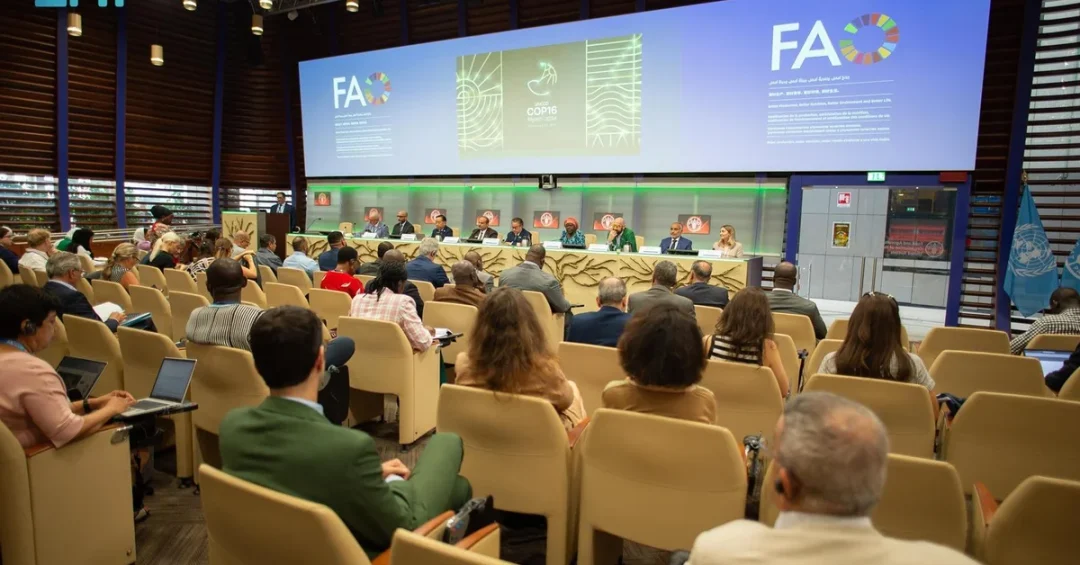
Saudi Arabia, through a high-level delegation led by National Center for Vegetation Cover Development and Combating Desertification (NCVC) CEO Dr. Khaled Alabdulkader, engaged with international environmental experts at a scientific event organized by the UN Food and Agriculture Organization (FAO) in Rome on July 27, 2024. The delegation highlighted the Kingdom’s proactive role in addressing land degradation, showcasing its readiness to host the 16th session of the Conference of the Parties (COP16) to the United Nations Convention to Combat Desertification (UNCCD) in Riyadh this December.
Context and Background
The FAO event in Rome served as a platform for global experts and policymakers to discuss pressing challenges in land degradation, desertification, and drought. Saudi Arabia’s participation underscores its commitment to international cooperation and environmental sustainability, aligning with global efforts to achieve land degradation neutrality. The Kingdom’s role as host of the upcoming UNCCD COP16 further solidifies its position as a key player in addressing environmental issues on a global scale.
Key Details
The Saudi delegation included representatives from the National Center for Environmental Compliance, the Ministry of Environment, Water, and Agriculture, and other government bodies focused on desertification. Dr. Mohammed Al-Ghamdi, the Kingdom’s Permanent Representative to FAO, was also part of the delegation. During discussions, the team highlighted Saudi Arabia’s advancements in vegetation cover development and combatting desertification, driven by initiatives under Vision 2030, such as the Saudi Green Initiative and the Middle East Green Initiative.
Implications and Impact
The event facilitated the exchange of knowledge and best practices, reinforcing Saudi Arabia’s leadership in environmental diplomacy. By presenting its strategies and readiness for COP16, the Kingdom aims to foster international collaboration to reverse land degradation and promote sustainable land management. This engagement also supports regional stability and economic growth through environmental conservation, benefiting neighboring countries and global ecosystems.
Vision 2030 Alignment
Saudi Arabia’s active participation in FAO-led scientific events and its hosting of the UNCCD COP16 are integral to its Vision 2030 goals, which prioritize environmental sustainability, economic diversification, and global partnership. The Kingdom’s commitment to combat desertification and invest in green initiatives underscores its long-term vision of creating a sustainable future, enhancing quality of life, and positioning Saudi Arabia as a global leader in environmental stewardship.
20 Questions
Q1. What is the role of the National Center for Vegetation Cover Development and Combating Desertification (NCVC)?
A1. The NCVC leads Saudi Arabia’s efforts to develop and protect vegetation cover, combat desertification, and promote sustainable land management, supporting national environmental goals under Vision 2030.
Q2. Who led the Saudi delegation at the FAO event in Rome?
A2. The delegation was led by NCVC CEO Dr. Khaled Alabdulkader, representing Saudi Arabia’s commitment to global environmental cooperation and showcasing the Kingdom’s initiatives.
Q3. What was the purpose of the FAO scientific event?
A3. The event aimed to discuss global challenges in combating land degradation, share scientific knowledge, and foster international collaboration to promote sustainable land use and desertification control.
Q4. When will Saudi Arabia host the UNCCD COP16 conference?
A4. Saudi Arabia will host the 16th session of the Conference of the Parties (COP16) to the UNCCD in Riyadh in December 2024, highlighting its leadership in environmental issues.
Q5. What other Saudi government bodies participated in the FAO event?
A5. The delegation included representatives from the National Center for Environmental Compliance and the Ministry of Environment, Water, and Agriculture, along with other bodies focused on desertification.
Q6. How does the FAO event relate to Saudi Arabia’s Vision 2030?
A6. The event aligns with Vision 2030 by promoting environmental sustainability, economic diversification, and global partnerships, supporting initiatives like the Saudi Green Initiative.
Q7. What is the Saudi Green Initiative?
A7. The Saudi Green Initiative aims to combat climate change, reduce carbon emissions, and increase vegetation cover across the Kingdom, contributing to a sustainable future under Vision 2030.
Q8. Who is Dr. Mohammed Al-Ghamdi?
A8. Dr. Mohammed Al-Ghamdi serves as the Kingdom’s Permanent Representative to the FAO, representing Saudi Arabia in international food and agricultural forums.
Q9. What challenges did the Saudi delegation discuss at the FAO event?
A9. The delegation addressed global challenges in land degradation, desertification, and drought, sharing Saudi Arabia’s strategies for mitigation and sustainable land management.
Q10. Why is land degradation a global concern?
A10. Land degradation threatens food security, biodiversity, and climate stability, requiring international cooperation to reverse its effects and promote sustainable development.
Q11. What is the UNCCD?
A11. The United Nations Convention to Combat Desertification (UNCCD) is an international agreement focused on combating desertification and mitigating the effects of drought through cooperative action.
Q12. How does Saudi Arabia contribute to combating desertification?
A12. Saudi Arabia implements large-scale afforestation projects, invests in green initiatives, and participates in global dialogues to share knowledge and foster collaboration on desertification control.
Q13. What is the significance of hosting the UNCCD COP16 in Riyadh?
A13. Hosting COP16 demonstrates Saudi Arabia’s leadership in environmental diplomacy, offering a platform to promote sustainable land management and strengthen international partnerships.
Q14. What is the Middle East Green Initiative?
A14. The Middle East Green Initiative is a regional effort led by Saudi Arabia to plant billions of trees and restore degraded land, supporting climate action and environmental resilience.
Q15. Who organized the scientific event in Rome?
A15. The event was organized by the UN Food and Agriculture Organization (FAO), a specialized agency of the United Nations focusing on food security and sustainable agriculture.
Q16. How does the FAO event support global environmental goals?
A16. The event advances global goals by facilitating knowledge exchange, promoting best practices in land management, and building consensus for policies to combat desertification.
Q17. What is land degradation neutrality?
A17. Land degradation neutrality is a global target to maintain or improve the health of land resources, balancing land degradation with restoration efforts to ensure sustainable use.
Q18. What role does the Ministry of Environment, Water, and Agriculture play in these efforts?
A18. The Ministry oversees environmental policies, water resource management, and agricultural sustainability, aligning with national strategies to combat desertification and promote green growth.
Q19. How does Saudi Arabia’s participation benefit international environmental cooperation?
A19. By sharing its expertise and hosting COP16, Saudi Arabia strengthens international collaboration, driving collective action to address land degradation and climate challenges.
Q20. What are the expected outcomes of the UNCCD COP16 in Riyadh?
A20. COP16 is expected to produce new commitments and action plans for combating desertification, enhancing global cooperation, and advancing sustainable land management practices.
Reader Feedback
We value your thoughts. Please share your feedback on this article.
Your feedback helps us improve our coverage.