


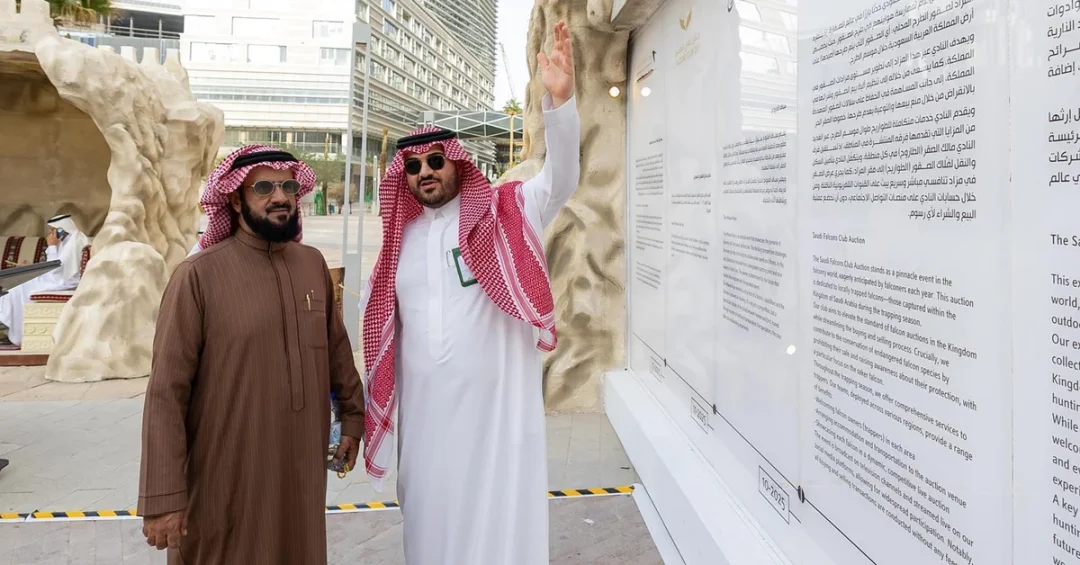
The Saudi Falcons Club celebrated Saudi Founding Day with a special event at King Abdullah Financial District (KAFD) in Riyadh on February 22, 2025, showcasing the Kingdom’s deep-rooted falconry heritage. Organized in collaboration with KAFD, the event highlighted falconry as an integral part of Saudi culture and identity, aligning with the nation’s Founding Day festivities.
Context and Background
The Saudi Falcons Club, a key institution preserving the Kingdom’s falconry traditions, organized this event to promote awareness of this ancient practice. Falconry holds significant cultural value in Saudi Arabia, recognized by UNESCO as part of humanity’s intangible cultural heritage. The club’s efforts include the annual King Abdulaziz Falconry Festival, which holds a Guinness World Record for the largest gathering of falcons.
Key Details
The Founding Day celebration at KAFD offered citizens and residents an immersive experience combining education and entertainment. Attendees explored Saudi Arabia’s history and heritage through interactive displays and demonstrations. The event underscored the deep connection between Saudis, their environment, and their traditions, reflecting the spirit of Founding Day, which commemorates the establishment of the First Saudi State in 1727.
Implications and Impact
This event reinforces Saudi Arabia’s commitment to preserving its cultural heritage while engaging modern audiences. By hosting the celebration at KAFD, a symbol of Riyadh’s economic transformation, the organizers bridged tradition and modernity. Such initiatives enhance cultural tourism and promote national identity, contributing to Saudi Arabia’s global cultural presence.
Vision 2030 Alignment
The Saudi Falcons Club’s Founding Day celebration aligns with Vision 2030’s goals of preserving national heritage and promoting cultural engagement. By showcasing falconry, the event supports the vision’s Quality of Life Program, which aims to strengthen cultural identity and foster community participation in heritage activities, ensuring these traditions endure for future generations.
20 Questions
Q1. What was the purpose of the Saudi Falcons Club’s Founding Day event?
A1. The event aimed to highlight Saudi Arabia’s rich cultural heritage and promote awareness of falconry, an integral part of national identity, as part of Founding Day celebrations.
Q2. Where was the event held?
A2. The event took place at King Abdullah Financial District (KAFD) in Riyadh, a prominent business and cultural hub.
Q3. When did the event occur?
A3. The event was held on February 22, 2025, as part of Saudi Founding Day festivities.
Q4. What is the significance of falconry in Saudi culture?
A4. Falconry is a deeply rooted tradition in Saudi Arabia, recognized by UNESCO as intangible cultural heritage and symbolizing the bond between Saudis and their environment.
Q5. What other events does the Saudi Falcons Club organize?
A5. The club organizes various events, most notably the King Abdulaziz Falconry Festival, which holds a Guinness World Record for the largest gathering of falcons.
Q6. How does this event support Saudi Arabia’s cultural preservation efforts?
A6. The event educates the public about falconry, ensuring this traditional practice is passed down to future generations and remains a vibrant part of Saudi heritage.
Q7. What was unique about hosting the event at KAFD?
A7. Hosting at KAFD, a modern financial hub, created a symbolic bridge between Saudi Arabia’s rich traditions and its contemporary economic ambitions.
Q8. How does the event reflect the spirit of Founding Day?
A8. By celebrating falconry, the event honors Saudi Arabia’s historical roots and the enduring values that shaped the nation since its founding in 1727.
Q9. What opportunities did the event provide attendees?
A9. Attendees enjoyed an engaging experience exploring Saudi history and heritage through interactive displays and falconry demonstrations.
Q10. How does the Saudi Falcons Club contribute to cultural tourism?
A10. The club’s events attract both local and international visitors interested in experiencing authentic Saudi traditions, boosting cultural tourism.
Q11. What recognition has Saudi falconry received internationally?
A11. Saudi falconry is recognized by UNESCO as part of humanity’s intangible cultural heritage, highlighting its global significance.
Q12. How does the event align with Saudi Arabia’s modernization efforts?
A12. While celebrating tradition, the event’s modern presentation at KAFD demonstrates how Saudi Arabia embraces both heritage and progress.
Q13. What is the King Abdulaziz Falconry Festival?
A13. It’s an annual event organized by the Saudi Falcons Club, holding a Guinness World Record for the largest gathering of falcons globally.
Q14. How does the event engage younger generations?
A14. Through interactive and entertaining presentations, the event makes traditional falconry accessible and appealing to youth.
Q15. What role does falconry play in Saudi identity?
A15. Falconry symbolizes important Saudi values like patience, skill, and harmony with nature, forming a core part of national identity.
Q16. How does the event contribute to community building?
A16. By bringing people together to celebrate shared heritage, the event strengthens community bonds and national unity.
Q17. What makes falconry unique as a cultural practice?
A17. Falconry represents a sustainable relationship between humans and nature, developed over centuries in the Arabian Peninsula.
Q18. How does the Saudi Falcons Club promote falconry internationally?
A18. Through world-record events and collaborations, the club shares Saudi falconry traditions with global audiences.
Q19. What aspects of falconry were highlighted at the event?
A19. The event showcased falconry’s historical significance, training techniques, and its role in Saudi heritage through demonstrations and exhibits.
Q20. Where can people learn more about the Saudi Falcons Club?
A20. More information is available on the club’s official website at https://sfc.org.sa/sa/ar/Home/index.
Reader Feedback
We value your thoughts. Please share your feedback on this article.
Your feedback helps us improve our coverage.