


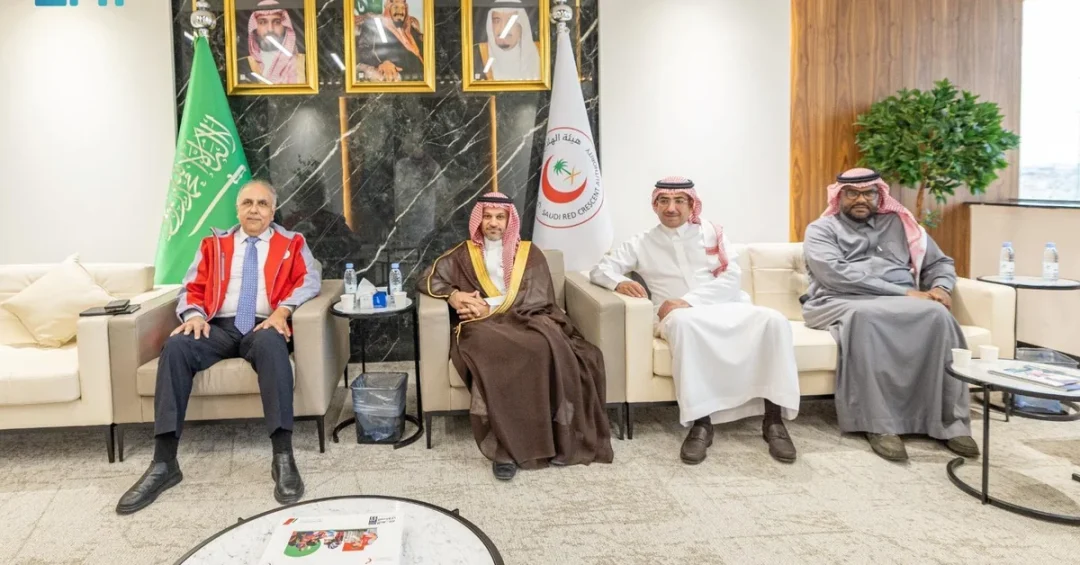
Dr. Jalal Alowaisi, President of the Saudi Red Crescent Authority (SRCA), welcomed Dr. Hazem Bakleh, President of the Syrian Arab Red Crescent (SARC), in Riyadh on February 24, 2025, to strengthen bilateral cooperation in humanitarian and relief efforts. The meeting underscores Saudi Arabia’s commitment to fostering regional partnerships and advancing humanitarian aid initiatives.
Context and Background
The Saudi Red Crescent Authority, established in 1934, is a leading humanitarian organization in the Kingdom, providing emergency medical services and disaster relief both domestically and internationally. Similarly, the Syrian Arab Red Crescent plays a critical role in addressing humanitarian crises in Syria, particularly in conflict-affected areas. This meeting marks a significant step in enhancing collaboration between the two organizations.
Key Details
During the meeting, Dr. Alowaisi and Dr. Bakleh explored strategies to improve joint efforts in disaster response and emergency healthcare. Discussions also focused on mechanisms for exchanging expertise and coordinating relief services to better serve vulnerable populations. The dialogue emphasized the importance of leveraging shared resources and knowledge to address humanitarian challenges effectively.
Implications and Impact
This partnership highlights Saudi Arabia’s proactive role in regional humanitarian efforts, reinforcing its position as a leader in global aid initiatives. By collaborating with SARC, SRCA aims to enhance its capacity to respond to crises in the Middle East, contributing to stability and recovery in conflict-affected regions. The initiative also aligns with broader efforts to strengthen ties between Saudi Arabia and Syria.
Vision 2030 Alignment
The meeting reflects Saudi Arabia’s Vision 2030 goals of building a vibrant society and fostering international partnerships. By enhancing humanitarian cooperation, the Kingdom demonstrates its commitment to global solidarity and sustainable development, furthering its influence as a responsible and compassionate global leader.
20 Questions
Q1. Who attended the meeting between the Saudi and Syrian Red Crescent organizations?
A1. Dr. Jalal Alowaisi, President of the Saudi Red Crescent Authority, and Dr. Hazem Bakleh, President of the Syrian Arab Red Crescent, attended the meeting.
Q2. When did the meeting take place?
A2. The meeting took place on February 24, 2025.
Q3. Where was the meeting held?
A3. The meeting was held in Riyadh, Saudi Arabia.
Q4. What was the purpose of the meeting?
A4. The purpose was to enhance cooperation in humanitarian and relief efforts between the two organizations.
Q5. What organizations were represented?
A5. The Saudi Red Crescent Authority and the Syrian Arab Red Crescent were represented.
Q6. What topics were discussed?
A6. Topics included disaster response, emergency healthcare, expertise exchange, and relief service coordination.
Q7. Why is this meeting significant?
A7. It strengthens bilateral humanitarian ties and improves crisis response capabilities in the region.
Q8. How does this align with Saudi Arabia’s Vision 2030?
A8. It supports Vision 2030’s goals of building a vibrant society and fostering international partnerships.
Q9. What role does SRCA play in Saudi Arabia?
A9. SRCA provides emergency medical services and disaster relief both domestically and internationally.
Q10. What role does SARC play in Syria?
A10. SARC addresses humanitarian crises, particularly in conflict-affected areas of Syria.
Q11. How will this partnership benefit vulnerable populations?
A11. It will enhance relief services and improve disaster response mechanisms.
Q12. What are the expected outcomes of this meeting?
A12. Improved coordination, expertise exchange, and joint humanitarian initiatives.
Q13. How does this reflect Saudi Arabia’s global role?
A13. It demonstrates Saudi Arabia’s leadership in humanitarian aid and regional stability.
Q14. What challenges do humanitarian organizations face in the region?
A14. Challenges include conflict, displacement, and resource limitations in crisis zones.
Q15. How does Saudi Arabia support global humanitarian efforts?
A15. Through partnerships, funding, and active participation in relief initiatives.
Q16. What mechanisms were discussed for expertise exchange?
A16. Mechanisms include training programs, joint workshops, and resource sharing.
Q17. How does this meeting impact Saudi-Syrian relations?
A17. It strengthens bilateral ties and fosters mutual cooperation in humanitarian efforts.
Q18. What is the historical significance of SRCA?
A18. Established in 1934, SRCA has been a cornerstone of Saudi Arabia’s humanitarian efforts.
Q19. How does this collaboration contribute to regional stability?
A19. By addressing humanitarian needs, it supports recovery and reduces instability in conflict areas.
Q20. What is the broader significance of this partnership?
A20. It highlights Saudi Arabia’s commitment to global solidarity and sustainable development.
Reader Feedback
We value your thoughts. Please share your feedback on this article.
Your feedback helps us improve our coverage.