


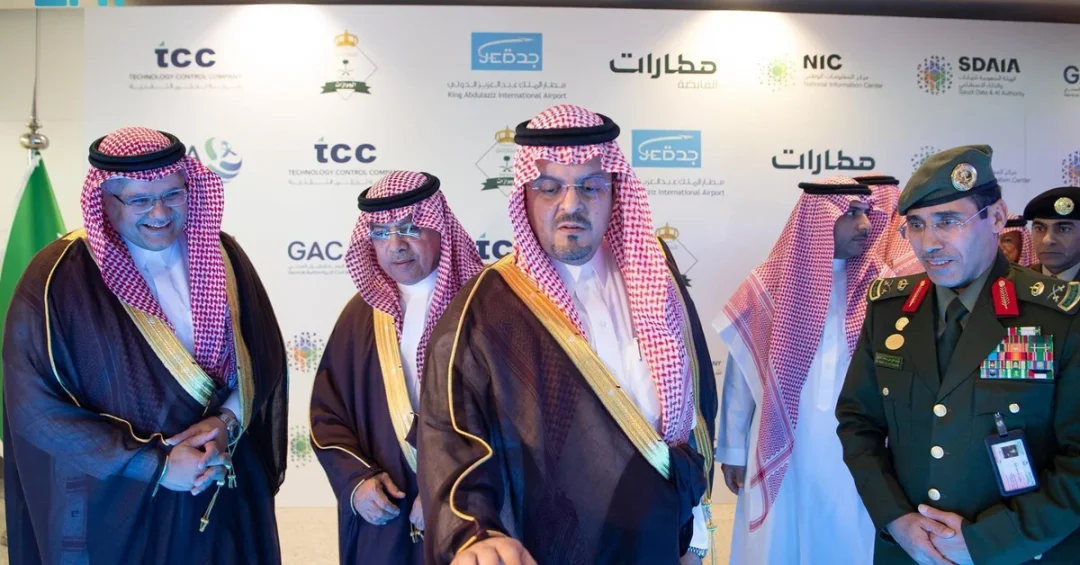
Deputy Governor of Makkah Region, Prince Saud bin Mishaal bin Abdulaziz, inaugurated 70 e-gates at King Abdulaziz International Airport in Jeddah on February 25, 2025. This advanced system aims to enhance travel efficiency by automating check-in and departure procedures, providing passengers with a smoother and more convenient airport experience.
Context and Background
The introduction of e-gates at King Abdulaziz International Airport is part of Saudi Arabia’s broader strategy to modernize its aviation infrastructure. The system leverages cutting-edge technologies, including artificial intelligence, to streamline passenger processing. This initiative follows the successful implementation of e-gates at King Khalid International Airport in Riyadh and Neom Bay Airport, marking a significant step in the Kingdom’s digital transformation journey.
Key Details
The 70 e-gates are strategically distributed across Terminal No. 1 and the Executive Office facilities. Each gate is capable of handling up to 2,500 passengers daily, significantly boosting the airport’s capacity to serve 175,000 travelers per day. The system ensures faster and more secure processing, aligning with global standards for airport efficiency.
Implications and Impact
The deployment of e-gates at King Abdulaziz International Airport is expected to enhance the travel experience for millions of passengers annually. It also positions Jeddah as a key hub for international travel, reinforcing Saudi Arabia’s role as a global leader in aviation innovation. This development is particularly significant as the Kingdom prepares for increased tourist inflows under its Vision 2030 goals.
Vision 2030 Alignment
The inauguration of e-gates at King Abdulaziz International Airport directly supports Saudi Arabia’s Vision 2030 objectives by enhancing technological innovation and improving the quality of services in the aviation sector. This initiative underscores the Kingdom’s commitment to becoming a global leader in smart infrastructure and sustainable tourism.
20 Questions
Q1. Who inaugurated the e-gates at King Abdulaziz International Airport?
A1. Prince Saud bin Mishaal bin Abdulaziz, Deputy Governor of Makkah Region, inaugurated the e-gates.
Q2. How many e-gates were inaugurated?
A2. 70 e-gates were inaugurated.
Q3. Where are the e-gates located?
A3. The e-gates are located in Terminal No. 1 and the Executive Office facilities at King Abdulaziz International Airport.
Q4. What technologies are used in the e-gates?
A4. The e-gates leverage modern technologies and artificial intelligence.
Q5. How many passengers can each e-gate handle daily?
A5. Each e-gate can handle up to 2,500 passengers daily.
Q6. What is the total daily capacity of the airport after the e-gates installation?
A6. The airport can now serve up to 175,000 travelers per day.
Q7. Which other Saudi airports have implemented the e-gate system?
A7. King Khalid International Airport in Riyadh and Neom Bay Airport have implemented the e-gate system.
Q8. What is the primary goal of the e-gates system?
A8. The primary goal is to enhance travel efficiency and provide a smoother airport experience.
Q9. How does the e-gates system benefit passengers?
A9. It benefits passengers by automating check-in and departure procedures, reducing wait times, and improving security.
Q10. What role does AI play in the e-gates system?
A10. AI facilitates faster and more secure passenger processing.
Q11. How does this initiative align with Vision 2030?
A11. It aligns with Vision 2030 by enhancing technological innovation and improving aviation services.
Q12. What is the significance of Jeddah’s airport in Saudi Arabia’s aviation strategy?
A12. Jeddah’s airport is a key hub for international travel, reinforcing Saudi Arabia’s global aviation leadership.
Q13. How will the e-gates impact tourism in Saudi Arabia?
A13. The e-gates will enhance the travel experience, supporting increased tourist inflows under Vision 2030.
Q14. What is the expected regional impact of this development?
A14. It positions Saudi Arabia as a regional leader in airport efficiency and technological innovation.
Q15. How does the e-gates system improve airport security?
A15. It improves security by automating identity verification and reducing human error.
Q16. What is the long-term vision for Saudi Arabia’s aviation sector?
A16. The long-term vision is to become a global leader in smart infrastructure and sustainable tourism.
Q17. How does this initiative support Saudi Arabia’s economic goals?
A17. It supports economic goals by enhancing the tourism sector and attracting international investment.
Q18. What is the significance of automating airport procedures?
A18. Automating procedures improves efficiency, reduces costs, and enhances the passenger experience.
Q19. How does the e-gates system contribute to Saudi Arabia’s digital transformation?
A19. It contributes by integrating advanced technologies and AI into critical infrastructure.
Q20. What future developments are expected in Saudi Arabia’s aviation sector?
A20. Future developments include further technological advancements and expanded airport capacities to meet growing demand.
Reader Feedback
We value your thoughts. Please share your feedback on this article.
Your feedback helps us improve our coverage.