


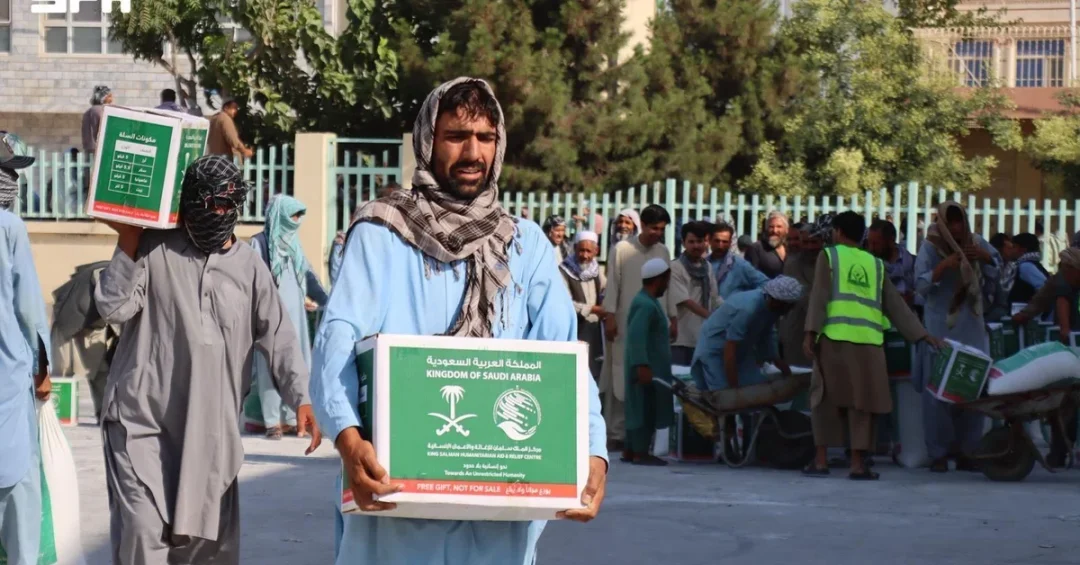
The King Salman Humanitarian Aid and Relief Center (KSrelief) distributed 500 food baskets in Afghanistan’s Balkh Province on July 19, 2026, as part of its ongoing efforts to address food insecurity in the region. The aid benefited 3,500 vulnerable individuals, including returnees from neighboring countries, internally displaced persons, orphans, and those in need, reinforcing Saudi Arabia’s commitment to humanitarian relief worldwide.
Context and Background
KSrelief, established in 2015 by King Salman bin Abdulaziz Al Saud, serves as Saudi Arabia’s primary channel for international humanitarian aid. The center operates under the directives of Custodian of the Two Holy Mosques King Salman and Crown Prince Mohammed bin Salman, aligning with the Kingdom’s Vision 2030 goals of global humanitarian leadership. Afghanistan remains one of the key recipients of KSrelief assistance due to prolonged instability and food shortages.
Key Details
The food baskets distributed in Balkh Province contained essential items such as rice, flour, oil, sugar, and other staples sufficient for a family’s monthly needs. This initiative falls under KSrelief’s 2026 Food Security and Emergency Project, which targets regions with acute humanitarian crises. The project is implemented in coordination with local authorities to ensure efficient and transparent distribution.
Implications and Impact
The aid delivery underscores Saudi Arabia’s role as a leading humanitarian donor, particularly in conflict-affected regions like Afghanistan. By addressing immediate food needs, KSrelief contributes to stability and alleviates suffering among vulnerable populations. The initiative also strengthens bilateral ties between Saudi Arabia and Afghanistan, showcasing the Kingdom’s dedication to supporting global peace and development.
Vision 2030 Alignment
This humanitarian effort reflects Saudi Arabia’s Vision 2030 objective of enhancing its international humanitarian footprint. Through KSrelief, the Kingdom continues to demonstrate its commitment to global solidarity, aligning with the vision’s pillars of a vibrant society, a thriving economy, and an ambitious nation. Such initiatives reinforce Saudi Arabia’s position as a responsible and compassionate global actor.
20 Questions
Q1. What is KSrelief?
A1. KSrelief is the King Salman Humanitarian Aid and Relief Center, established in 2015 to coordinate Saudi Arabia’s international humanitarian efforts.
Q2. When was the food distribution in Balkh Province conducted?
A2. The distribution took place on July 19, 2026, as part of KSrelief’s 2026 Food Security and Emergency Project.
Q3. How many food baskets were distributed?
A3. KSrelief distributed 500 food baskets in Balkh Province.
Q4. Who benefited from the aid?
A4. The aid benefited 3,500 individuals, including returnees, internally displaced persons, orphans, and people in need.
Q5. What items were included in the food baskets?
A5. Each basket contained essentials like rice, flour, oil, and sugar, sufficient for a family’s monthly needs.
Q6. Why is Afghanistan a priority for KSrelief?
A6. Afghanistan faces prolonged instability and food shortages, making it a key recipient of Saudi humanitarian aid.
Q7. How does KSrelief ensure transparent distribution?
A7. KSrelief coordinates with local authorities to ensure efficient and transparent aid distribution.
Q8. What is the 2026 Food Security and Emergency Project?
A8. It is a KSrelief initiative targeting regions with acute humanitarian crises, providing food and emergency relief.
Q9. How does this aid align with Saudi Arabia’s Vision 2030?
A9. The aid reflects Vision 2030’s goal of enhancing Saudi Arabia’s international humanitarian leadership.
Q10. Who oversees KSrelief’s operations?
A10. KSrelief operates under the directives of King Salman and Crown Prince Mohammed bin Salman.
Q11. What is the significance of Balkh Province?
A11. Balkh Province hosts many vulnerable groups, including returnees and displaced persons, making it a critical area for aid.
Q12. How does KSrelief select beneficiaries?
A12. Beneficiaries are identified based on need, prioritizing the most vulnerable populations in crisis-affected regions.
Q13. What other countries has KSrelief assisted?
A13. KSrelief has provided aid in Yemen, Syria, Somalia, and other conflict-affected regions worldwide.
Q14. How does Saudi Arabia fund KSrelief?
A14. KSrelief is funded by the Saudi government, reflecting the Kingdom’s commitment to global humanitarian efforts.
Q15. What are the long-term goals of KSrelief?
A15. KSrelief aims to alleviate suffering, promote stability, and support sustainable development in crisis-affected regions.
Q16. How does this aid impact Saudi-Afghan relations?
A16. The aid strengthens bilateral ties, showcasing Saudi Arabia’s commitment to supporting Afghanistan’s stability.
Q17. What role does Vision 2030 play in humanitarian aid?
A17. Vision 2030 emphasizes Saudi Arabia’s global humanitarian role, aligning aid efforts with national strategic goals.
Q18. How can other countries collaborate with KSrelief?
A18. Countries can partner with KSrelief through joint humanitarian projects or financial contributions to its initiatives.
Q19. What metrics does KSrelief use to measure impact?
A19. KSrelief evaluates impact based on the number of beneficiaries, aid delivered, and improvements in living conditions.
Q20. What future projects does KSrelief plan?
A20. KSrelief plans to expand its food security, healthcare, and education projects in crisis-affected regions globally.
Reader Feedback
We value your thoughts. Please share your feedback on this article.
Your feedback helps us improve our coverage.