


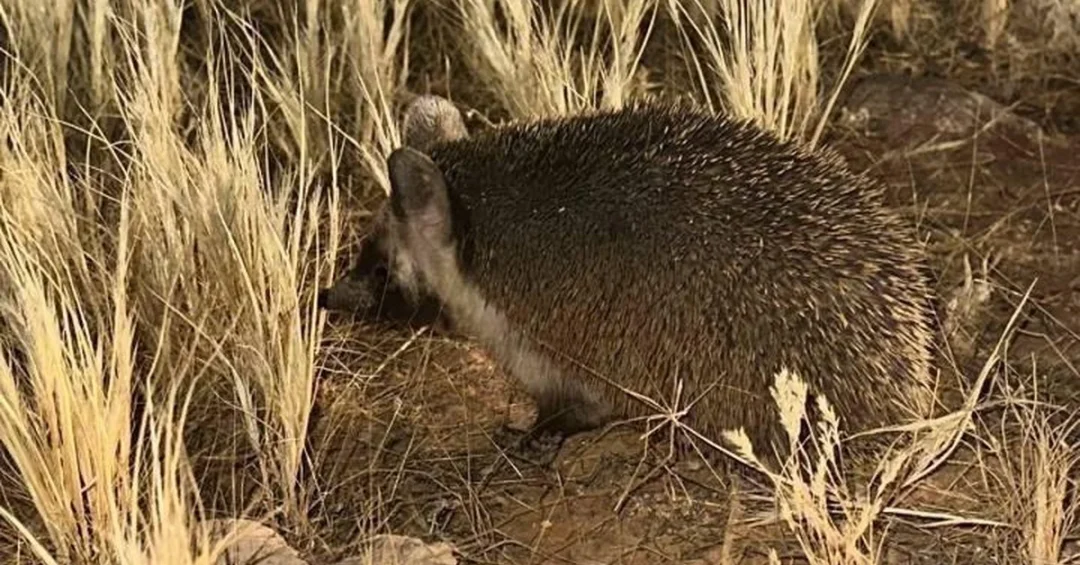
The desert hedgehog (Paraechinus aethiopicus) has been sighted at multiple locations within the Imam Turki bin Abdullah Royal Reserve, marking a significant milestone in Saudi Arabia’s wildlife conservation efforts. The sightings, reported by the Saudi Press Agency (SPA), highlight the success of the Kingdom’s initiatives to protect ecosystems and enhance vegetation cover in its royal reserves.
Context and Background
The Imam Turki bin Abdullah Royal Reserve, located in the Northern Borders Region, is one of Saudi Arabia’s key protected areas, spanning over 91,500 square kilometers. Established to preserve biodiversity and promote eco-tourism, the reserve is part of the Kingdom’s broader environmental strategy under Vision 2030. The desert hedgehog sightings underscore the effectiveness of these conservation measures.
Key Details
The desert hedgehog, one of the smallest hedgehog species, measures between 14 and 28 centimeters in length and weighs between 250 and 500 grams. It is distinguished by its large ears and spines, which provide protection from predators. The repeated sightings within the reserve indicate improved habitat quality and vegetation cover, essential for the species’ survival.
Implications and Impact
The presence of the desert hedgehog reflects the richness of biodiversity in Saudi Arabia’s royal reserves. These sightings are a positive indicator of the sustainability of national wildlife protection efforts, aligning with global conservation goals. The reserve’s success serves as a model for other regions aiming to balance ecological preservation with sustainable development.
Vision 2030 Alignment
The sightings of the desert hedgehog in the Imam Turki bin Abdullah Royal Reserve exemplify Saudi Arabia’s commitment to environmental sustainability under Vision 2030. By protecting endangered species and restoring natural habitats, the Kingdom is fostering a greener future while promoting eco-tourism and biodiversity research, key pillars of its long-term economic and environmental strategy.
20 Questions
Q1. What is the desert hedgehog?
A1. The desert hedgehog (Paraechinus aethiopicus) is one of the smallest hedgehog species, known for its large ears and protective spines.
Q2. Where was the desert hedgehog sighted?
A2. The hedgehog was sighted at multiple locations within the Imam Turki bin Abdullah Royal Reserve in Saudi Arabia.
Q3. Why are these sightings significant?
A3. The sightings indicate improved vegetation cover and habitat quality, reflecting successful conservation efforts.
Q4. How big is the Imam Turki bin Abdullah Royal Reserve?
A4. The reserve spans over 91,500 square kilometers in the Northern Borders Region.
Q5. What is the purpose of the reserve?
A5. The reserve aims to preserve biodiversity and promote eco-tourism under Saudi Arabia’s Vision 2030.
Q6. What are the physical characteristics of the desert hedgehog?
A6. It measures 14-28 cm in length, weighs 250-500 grams, and has large ears and spines.
Q7. How do the spines help the hedgehog?
A7. The spines protect the hedgehog from predators by forming a defensive barrier.
Q8. What does the hedgehog’s presence indicate about the reserve?
A8. It shows improved habitat quality and successful conservation measures.
Q9. How does this align with Vision 2030?
A9. It supports environmental sustainability and biodiversity preservation goals.
Q10. What other wildlife might be found in the reserve?
A10. The reserve hosts diverse species, including birds, mammals, and reptiles, due to its protected ecosystem.
Q11. Who reported the hedgehog sightings?
A11. The sightings were reported by the Saudi Press Agency (SPA).
Q12. What region is the reserve located in?
A12. It is located in the Northern Borders Region of Saudi Arabia.
Q13. How does the reserve contribute to eco-tourism?
A13. By preserving biodiversity, it attracts tourists interested in nature and wildlife.
Q14. What are the global implications of these sightings?
A14. They demonstrate Saudi Arabia’s role in meeting international conservation targets.
Q15. How does the reserve support scientific research?
A15. It provides a natural laboratory for studying biodiversity and ecosystem health.
Q16. What challenges do desert hedgehogs face?
A16. They face habitat loss and predation, making conservation efforts critical.
Q17. How can the public support these efforts?
A17. By promoting awareness and respecting protected areas.
Q18. What is the long-term goal of the reserve?
A18. To sustain biodiversity and support eco-tourism under Vision 2030.
Q19. How does this reflect Saudi Arabia’s environmental policies?
A19. It shows commitment to protecting ecosystems and endangered species.
Q20. What future steps are planned for the reserve?
A20. Continued conservation and potential expansion of eco-tourism initiatives.
Reader Feedback
We value your thoughts. Please share your feedback on this article.
Your feedback helps us improve our coverage.