


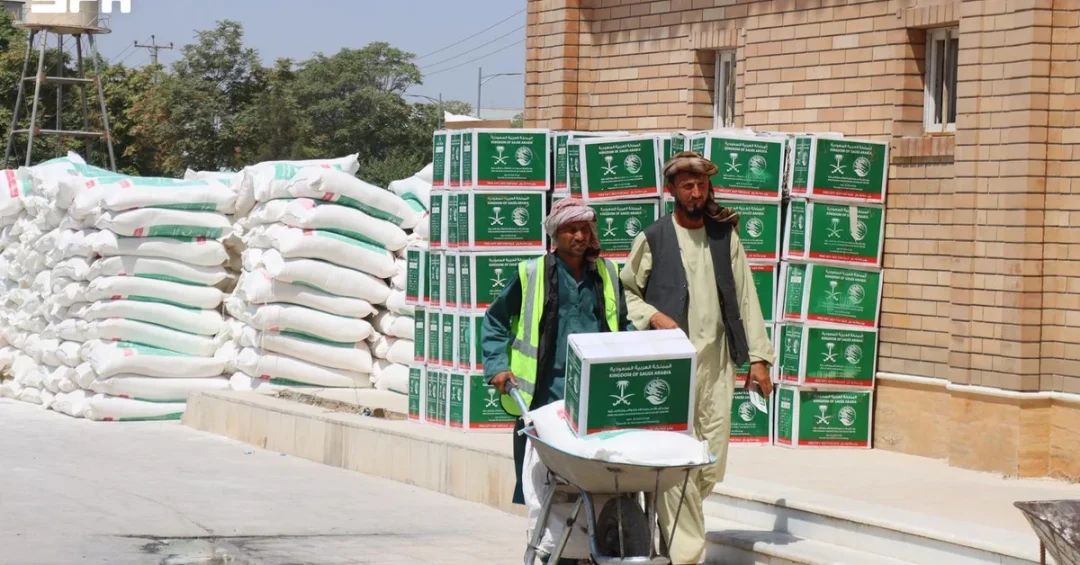
The King Salman Humanitarian Aid and Relief Center (KSrelief) distributed 789 food baskets to vulnerable populations in Afghanistan’s Balkh Province on July 20, 2026, benefiting 5,532 individuals. The aid targeted returnees from neighboring countries, internally displaced persons, people in need, and orphans in Dawlatabad District as part of KSrelief’s 2026 food security and emergency support project in Afghanistan.
Context and Background
KSrelief, the humanitarian arm of Saudi Arabia, has been actively providing aid to Afghanistan amid ongoing humanitarian challenges. The Kingdom’s efforts align with its longstanding commitment to supporting vulnerable communities worldwide. Afghanistan faces severe food insecurity, with millions requiring assistance due to economic instability and climate-related challenges.
Key Details
The distribution in Balkh Province specifically reached 789 families, with each food basket designed to meet basic nutritional needs. This initiative falls under KSrelief’s broader 2026 food security project in Afghanistan, which aims to address acute malnutrition and support livelihoods. The center coordinates closely with local authorities to ensure aid reaches the most vulnerable populations efficiently.
Implications and Impact
This humanitarian intervention demonstrates Saudi Arabia’s role as a key provider of international aid, particularly in conflict-affected regions. The assistance not only addresses immediate food needs but also contributes to regional stability by supporting returnees and displaced persons. Such efforts reinforce Saudi Arabia’s position as a responsible global actor committed to humanitarian principles.
Vision 2030 Alignment
KSrelief’s work in Afghanistan supports Saudi Arabia’s Vision 2030 goal of strengthening international partnerships and humanitarian leadership. By addressing global food security challenges, the Kingdom fulfills its Islamic duty of charity while promoting sustainable development worldwide. These efforts enhance Saudi Arabia’s soft power and align with its vision of a prosperous, interconnected global community.
20 Questions
Q1. What organization distributed the food baskets in Afghanistan?
A1. The King Salman Humanitarian Aid and Relief Center (KSrelief), Saudi Arabia’s official humanitarian organization, distributed the food baskets.
Q2. How many food baskets were distributed?
A2. KSrelief distributed 789 food baskets to vulnerable families in Afghanistan’s Balkh Province.
Q3. When did the distribution take place?
A3. The aid distribution occurred on July 20, 2026, as part of ongoing humanitarian efforts.
Q4. Where exactly in Afghanistan was the aid delivered?
A4. The food baskets were distributed in Dawlatabad District of Balkh Province, northern Afghanistan.
Q5. How many people benefited from this aid?
A5. A total of 5,532 individuals from 789 families received assistance through this initiative.
Q6. Which groups were specifically targeted by this aid?
A6. The aid targeted returnees from neighboring countries, internally displaced persons, people in need, and orphans.
Q7. What project does this distribution belong to?
A7. This was part of KSrelief’s 2026 food security and emergency support project in Afghanistan.
Q8. Why is Afghanistan in need of food assistance?
A8. Afghanistan faces severe food insecurity due to economic instability, conflict, and climate-related challenges affecting agriculture.
Q9. How does KSrelief ensure aid reaches the right people?
A9. KSrelief coordinates with local authorities and follows strict protocols to identify and assist the most vulnerable populations.
Q10. What’s typically included in a KSrelief food basket?
A10. While contents may vary, food baskets generally include staple items like rice, flour, oil, sugar, and other nutritious essentials.
Q11. How does Saudi Arabia decide where to send humanitarian aid?
A11. Saudi Arabia assesses global needs through KSrelief, prioritizing areas with acute humanitarian crises and food insecurity.
Q12. What percentage of Saudi Arabia’s aid goes to Afghanistan?
A12. While exact percentages vary annually, Afghanistan remains a significant recipient of Saudi humanitarian assistance due to ongoing needs.
Q13. How long has KSrelief been operating in Afghanistan?
A13. KSrelief has provided continuous aid to Afghanistan for many years, with programs adapting to evolving humanitarian needs.
Q14. Does Saudi Arabia work with other organizations in Afghanistan?
A14. Yes, KSrelief often collaborates with international agencies and local partners to maximize aid effectiveness in Afghanistan.
Q15. How does this aid support regional stability?
A15. By addressing basic needs, the aid helps prevent further displacement and supports vulnerable populations in returning to their communities.
Q16. What other types of aid does KSrelief provide?
A16. Beyond food security, KSrelief supports healthcare, education, water/sanitation, and shelter projects in crisis-affected regions worldwide.
Q17. How is KSrelief funded?
A17. KSrelief is funded by the Saudi government as part of the Kingdom’s commitment to international humanitarian assistance.
Q18. What’s Saudi Arabia’s motivation for providing international aid?
A18. The Kingdom views humanitarian assistance as both an Islamic duty and a strategic commitment to global stability and development.
Q19. How does this align with Saudi Arabia’s Vision 2030?
A19. Humanitarian leadership supports Vision 2030’s goals of strengthening international partnerships and promoting Saudi Arabia’s positive global role.
Q20. Where can one learn more about KSrelief’s work?
A20. Detailed information about KSrelief’s programs is available on their official website and through Saudi Press Agency announcements.
Reader Feedback
We value your thoughts. Please share your feedback on this article.
Your feedback helps us improve our coverage.