


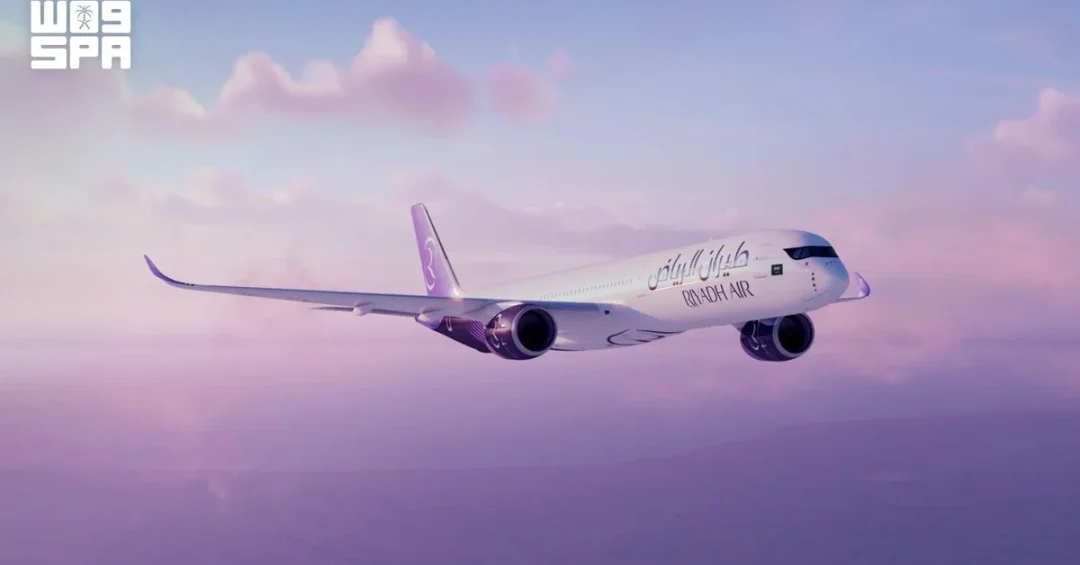
Riyadh Air has expanded its global fleet by exercising purchase rights for six additional Airbus A350-1000 aircraft during the Farnborough International Airshow 2026. This brings the airline’s total confirmed orders for the A350-1000 to 31, reinforcing its commitment to establishing a world-class long-haul network.
Context and Background
Riyadh Air, Saudi Arabia’s newest international carrier, is rapidly expanding its fleet as part of its strategy to connect Riyadh with key global destinations. The airline, which launched its first commercial service between Riyadh and London Heathrow in June 2026, aims to position itself as a leader in sustainable and efficient air travel. The latest order underscores the airline’s ambitious growth plans aligned with Saudi Arabia’s Vision 2030 economic diversification goals.
Key Details
The six additional A350-1000 aircraft will join Riyadh Air’s existing orders, bringing its total Airbus fleet to 91 aircraft, including 60 A321s for medium-haul routes. The airline retains purchase rights for an additional 19 aircraft, providing flexibility for future expansion. The A350-1000, known for its fuel efficiency and long-range capabilities, will serve as the backbone of Riyadh Air’s long-haul operations, connecting Saudi Arabia with Asia, Europe, Oceania, and North America.
Implications and Impact
This expansion enhances Riyadh Air’s ability to compete on global routes, supporting Saudi Arabia’s goal of becoming a major aviation hub. The airline’s commitment to sustainability, including its plan to operate on 100% sustainable aviation fuel (SAF) by 2030, aligns with global environmental standards and strengthens its appeal to eco-conscious travelers. The move also bolsters Saudi Arabia’s tourism sector by improving connectivity to key international markets.
Vision 2030 Alignment
Riyadh Air’s fleet expansion directly supports Saudi Arabia’s Vision 2030 objectives of diversifying the economy and enhancing global connectivity. By investing in modern, fuel-efficient aircraft and sustainable operations, the airline contributes to the Kingdom’s broader goals of reducing carbon emissions and positioning itself as a leader in the global aviation industry. This development marks another step in Saudi Arabia’s transformation into a premier travel and logistics hub.
20 Questions
Q1. How many Airbus A350-1000 aircraft has Riyadh Air now ordered?
A1. Riyadh Air has ordered a total of 31 Airbus A350-1000 aircraft, including the six additional units announced at the Farnborough International Airshow 2026.
Q2. What is the total number of Airbus aircraft ordered by Riyadh Air?
A2. Riyadh Air has ordered 91 Airbus aircraft, comprising 31 A350-1000s and 60 A321s, with purchase rights for an additional 19 aircraft.
Q3. When did Riyadh Air launch its first commercial service?
A3. Riyadh Air launched its first scheduled commercial service between Riyadh (RUH) and London Heathrow (LHR) on June 10, 2026.
Q4. What is the significance of the Airbus A350-1000 for Riyadh Air?
A4. The Airbus A350-1000 will serve as the cornerstone of Riyadh Air’s long-haul operations, enabling connections to major global destinations with its fuel efficiency and long-range capabilities.
Q5. What is Riyadh Air’s sustainability goal for 2030?
A5. Riyadh Air aims to operate its fleet on 100% sustainable aviation fuel (SAF) by 2030, significantly reducing carbon emissions.
Q6. How does Riyadh Air’s expansion align with Saudi Arabia’s Vision 2030?
A6. The expansion supports Vision 2030 by enhancing global connectivity, diversifying the economy, and positioning Saudi Arabia as a leading aviation hub.
Q7. What regions will Riyadh Air connect with its A350-1000 fleet?
A7. The A350-1000 will connect Riyadh with major destinations across Asia, Europe, Oceania, and North America.
Q8. What is the name of the agreement supporting Riyadh Air’s sustainability strategy?
A8. Riyadh Air has a long-term agreement with Rolls-Royce for TotalCare services to support its sustainability strategy.
Q9. How does Riyadh Air’s fleet expansion benefit Saudi Arabia’s tourism sector?
A9. Improved global connectivity through Riyadh Air’s expansion will attract more international tourists, boosting the Kingdom’s tourism industry.
Q10. What is the role of the Airbus A321 in Riyadh Air’s fleet?
A10. The Airbus A321 will serve medium-haul routes, complementing the long-haul capabilities of the A350-1000.
Q11. How many purchase rights does Riyadh Air retain after this order?
A11. Riyadh Air retains purchase rights for an additional 19 aircraft, providing flexibility for future growth.
Q12. What makes the Airbus A350-1000 a preferred choice for long-haul operations?
A12. The A350-1000 is favored for its fuel efficiency, advanced technology, and ability to operate long-distance routes economically.
Q13. How does Riyadh Air’s sustainability commitment compare to global standards?
A13. Riyadh Air’s goal of 100% SAF usage by 2030 aligns with and often exceeds global sustainability benchmarks in the aviation industry.
Q14. What is the expected impact of Riyadh Air’s expansion on Saudi Arabia’s economy?
A14. The expansion will create jobs, boost tourism, and enhance trade, contributing significantly to economic diversification under Vision 2030.
Q15. How does Riyadh Air’s fleet modernization benefit passengers?
A15. Modern aircraft like the A350-1000 offer passengers enhanced comfort, quieter cabins, and improved in-flight amenities.
Q16. What is the significance of the Farnborough International Airshow for Riyadh Air?
A16. The Farnborough Airshow is a key platform for Riyadh Air to showcase its growth and sustainability commitments to a global audience.
Q17. How does Riyadh Air’s strategy differ from other Middle Eastern carriers?
A17. Riyadh Air combines fleet modernization with ambitious sustainability goals, setting it apart as a forward-thinking carrier in the region.
Q18. What are the environmental benefits of sustainable aviation fuel (SAF)?
A18. SAF reduces carbon emissions by up to 80% compared to conventional jet fuel, making it a cleaner alternative for aviation.
Q19. How will Riyadh Air’s expansion affect Saudi Arabia’s global aviation standing?
A19. The expansion will elevate Saudi Arabia’s profile as a competitive player in global aviation, attracting more airlines and passengers to the Kingdom.
Q20. What future developments can be expected from Riyadh Air?
A20. Riyadh Air is expected to announce new routes, further fleet expansions, and innovative sustainability initiatives as it grows its global network.
Reader Feedback
We value your thoughts. Please share your feedback on this article.
Your feedback helps us improve our coverage.