


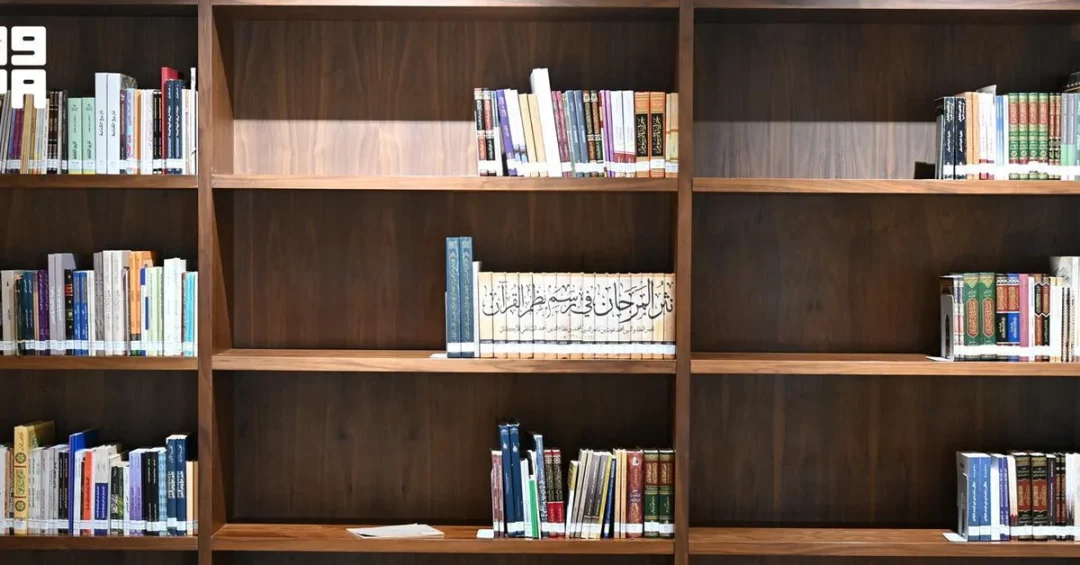
The Prince Mohammed bin Salman Global Center for Arabic Calligraphy has unveiled its extensive library, housing nearly 2,000 specialized titles in 11 languages, making it the world’s largest and first dedicated library for Arabic calligraphy. Located in Madinah, the library serves as a global hub for researchers, practitioners, and enthusiasts of Arabic calligraphy and its related arts.
Context and Background
Arabic calligraphy, a cornerstone of Islamic art and culture, has a rich history spanning centuries. The Prince Mohammed bin Salman Global Center for Arabic Calligraphy was established to preserve, promote, and innovate this heritage. The library’s collection documents the history, tools, and techniques of calligraphy while showcasing its evolution through rare manuscripts, instructional materials, and scholarly works.
Key Details
The library’s collection includes nearly 2,000 titles in 11 languages, alongside 450 rare editions of books. It features specialized encyclopedias, exhibition catalogues, peer-reviewed journals, and academic theses. The center also integrates advanced technologies, such as self-service borrowing, high-resolution scanning devices, and book sanitization tools, to enhance the visitor experience and ensure accessibility for future generations.
Implications and Impact
This initiative positions Saudi Arabia as a global leader in preserving and promoting Arabic calligraphy. By making this cultural heritage accessible to international audiences, the center fosters cross-cultural understanding and appreciation. It also supports academic research and artistic innovation, reinforcing Saudi Arabia’s role as a custodian of Islamic art and culture.
Vision 2030 Alignment
The library aligns with Saudi Arabia’s Vision 2030 goals of preserving cultural heritage and promoting national identity. By showcasing Arabic calligraphy’s artistic and historical significance, the center contributes to the Kingdom’s efforts to position itself as a global cultural hub and a beacon of knowledge and innovation.
20 Questions
Q1. What is the Prince Mohammed bin Salman Global Center for Arabic Calligraphy?
A1. It is a world-leading institution dedicated to preserving and promoting Arabic calligraphy through research, education, and artistic innovation.
Q2. Where is the center located?
A2. The center is located in Madinah, Saudi Arabia.
Q3. How many publications does the library house?
A3. The library houses nearly 2,000 specialized titles.
Q4. In how many languages are the publications available?
A4. Publications are available in 11 international languages.
Q5. What types of materials are included in the library?
A5. The library includes rare manuscripts, instructional booklets, academic theses, peer-reviewed journals, and exhibition catalogues.
Q6. How many rare editions of books are in the library?
A6. The library contains around 450 rare editions of books.
Q7. What technologies are used in the library?
A7. Technologies include self-service borrowing, high-resolution scanning devices, and book sanitization tools.
Q8. How many visitors can the library accommodate?
A8. The library can accommodate 60 visitors and researchers simultaneously.
Q9. What is the purpose of the library?
A9. The library aims to preserve Arabic calligraphy heritage and make it accessible to researchers, practitioners, and future generations.
Q10. How does the center support researchers?
A10. It provides access to specialized resources, advanced technologies, and a comprehensive research environment.
Q11. What is the significance of Arabic calligraphy?
A11. Arabic calligraphy is a vital Islamic art form that reflects cultural, religious, and artistic heritage.
Q12. How does the center promote Arabic calligraphy internationally?
A12. By offering publications in multiple languages and hosting exhibitions, the center fosters global appreciation and understanding.
Q13. What is the role of the center in Saudi Arabia’s cultural vision?
A13. The center supports Saudi Arabia’s Vision 2030 by preserving cultural heritage and promoting national identity.
Q14. How does the library contribute to academic research?
A14. It provides access to rare manuscripts, academic theses, and peer-reviewed journals for scholars worldwide.
Q15. What are the supporting arts featured in the library?
A15. The library features illumination, ornamentation, and inscriptions as supporting arts to Arabic calligraphy.
Q16. How does the center ensure accessibility for future generations?
A16. Through digitization, preservation technologies, and educational programs, the center ensures the continuity of Arabic calligraphy.
Q17. What makes the library unique?
A17. It is the world’s largest and first specialized library dedicated to Arabic calligraphy and its related arts.
Q18. How does the center enhance the visitor experience?
A18. By integrating advanced technologies and providing comprehensive resources, the center offers a high-quality visitor experience.
Q19. What is the global impact of the center?
A19. The center positions Saudi Arabia as a global leader in preserving and promoting Islamic art and culture.
Q20. How does the center align with Vision 2030?
A20. By preserving cultural heritage and fostering innovation, the center contributes to Saudi Arabia’s goals of becoming a global cultural hub.
Reader Feedback
We value your thoughts. Please share your feedback on this article.
Your feedback helps us improve our coverage.