


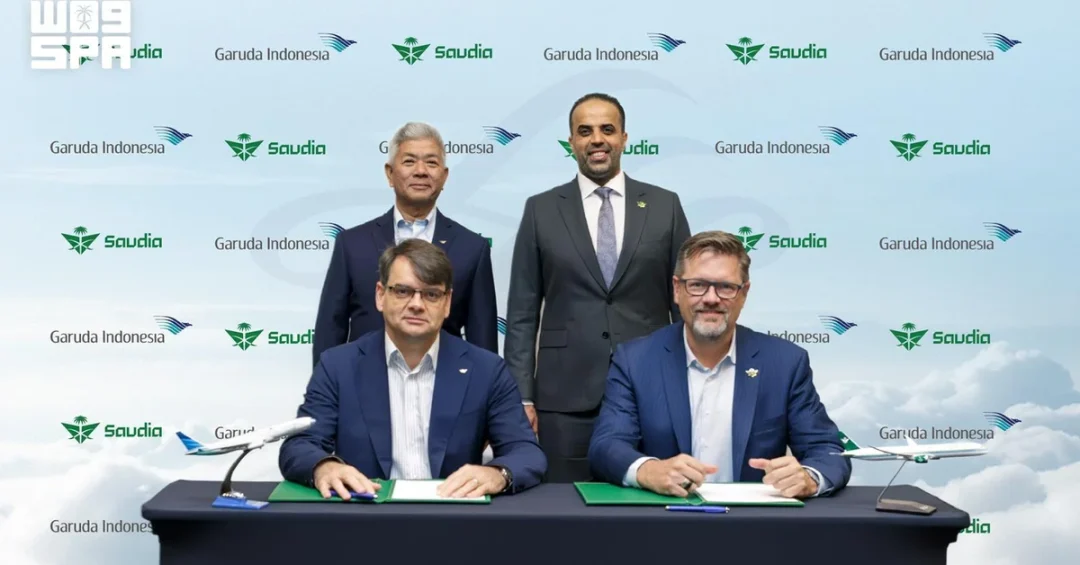
Saudia, Saudi Arabia’s national flag carrier, and Garuda Indonesia have signed a Memorandum of Understanding (MoU) to expand their strategic commercial partnership, enhancing connectivity between their networks and improving services for passengers, particularly Umrah and Hajj pilgrims. The agreement, signed on July 22, 2026, in Jeddah, builds on existing codeshare agreements and mutual membership in the SkyTeam Global Airline Alliance.
Context and Background
The partnership between Saudia and Garuda Indonesia reflects the growing economic and cultural ties between Saudi Arabia and Indonesia. Both airlines have long-standing cooperation through codeshare agreements, allowing passengers to book flights across both networks seamlessly. This MoU marks a significant step forward in deepening their collaboration, with a focus on improving air connectivity and passenger experience.
Key Details
The MoU outlines several areas of cooperation, including network planning, flight schedule coordination, and joint sales and marketing efforts. Passengers will benefit from streamlined travel options, with the ability to book flights across both airlines using a single ticket. The agreement also emphasizes enhancing services for Umrah and Hajj pilgrims, a key demographic for both carriers.
Implications and Impact
This partnership is expected to boost tourism and business travel between Saudi Arabia and Indonesia, as well as improve access to regional and international markets. By leveraging each other’s networks, the airlines can offer more destinations and better connectivity, supporting the growth of passenger traffic and strengthening bilateral relations between the two countries.
Vision 2030 Alignment
The agreement aligns with Saudi Arabia’s Vision 2030 goals of expanding the Kingdom’s global connectivity and enhancing its position as a leading hub for travel and tourism. By fostering strategic partnerships like this, Saudia contributes to the diversification of the economy and the development of the aviation sector, key pillars of Vision 2030.
20 Questions
Q1. What is the purpose of the MoU between Saudia and Garuda Indonesia?
A1. The MoU aims to expand their strategic commercial partnership, enhance connectivity, and improve passenger services, particularly for Umrah and Hajj pilgrims.
Q2. When was the MoU signed?
A2. The MoU was signed on July 22, 2026, in Jeddah.
Q3. What existing agreements do Saudia and Garuda Indonesia have?
A3. Both airlines have codeshare agreements and are members of the SkyTeam Global Airline Alliance.
Q4. How will passengers benefit from this partnership?
A4. Passengers can book flights across both airlines using a single ticket, offering more travel options and seamless connectivity.
Q5. What areas of cooperation are included in the MoU?
A5. The MoU covers network planning, flight schedule coordination, sales and marketing collaboration, and improving passenger services.
Q6. How will Umrah and Hajj pilgrims benefit?
A6. The partnership aims to enhance services for pilgrims, including better airport services and loyalty programs.
Q7. What regions will be connected through this partnership?
A7. The partnership will link Garuda Indonesia’s network in Indonesia and Australia with Saudia’s destinations in the Middle East, Europe, and Africa.
Q8. How does this agreement support Saudi Arabia’s Vision 2030?
A8. It aligns with Vision 2030 by expanding global connectivity and strengthening the aviation sector.
Q9. What is the significance of this partnership for Saudi-Indonesia relations?
A9. It strengthens economic and cultural ties between the two countries and boosts tourism and business travel.
Q10. Will there be any changes to flight schedules?
A10. The airlines will coordinate flight schedules to optimize connectivity and passenger convenience.
Q11. How will loyalty programs be affected?
A11. The partnership includes plans to develop and integrate loyalty programs for both airlines.
Q12. What is the expected impact on passenger traffic?
A12. The partnership is expected to increase passenger traffic by offering more destinations and better connectivity.
Q13. Are there any plans for joint marketing campaigns?
A13. Yes, the MoU includes collaboration on sales and marketing efforts in markets of mutual interest.
Q14. How will airport services be improved?
A14. The airlines will coordinate airport services to enhance the passenger experience, including for Umrah and Hajj pilgrims.
Q15. What technological infrastructure will be developed?
A15. The partnership includes plans to improve technological infrastructure to support seamless travel and loyalty programs.
Q16. How does this partnership benefit business travelers?
A16. Business travelers will have access to more destinations and streamlined booking options.
Q17. What is the role of SkyTeam in this partnership?
A17. Both airlines are members of SkyTeam, which facilitates their existing codeshare agreements and future collaboration.
Q18. Will there be any new routes introduced?
A18. The MoU provides a framework for exploring new routes and optimizing existing ones.
Q19. How does this partnership align with global aviation trends?
A19. It reflects the trend of airlines forming strategic alliances to expand networks and improve services.
Q20. What are the next steps after signing the MoU?
A20. The airlines will work on implementing the agreed areas of cooperation, including network planning and service enhancements.
Reader Feedback
We value your thoughts. Please share your feedback on this article.
Your feedback helps us improve our coverage.