


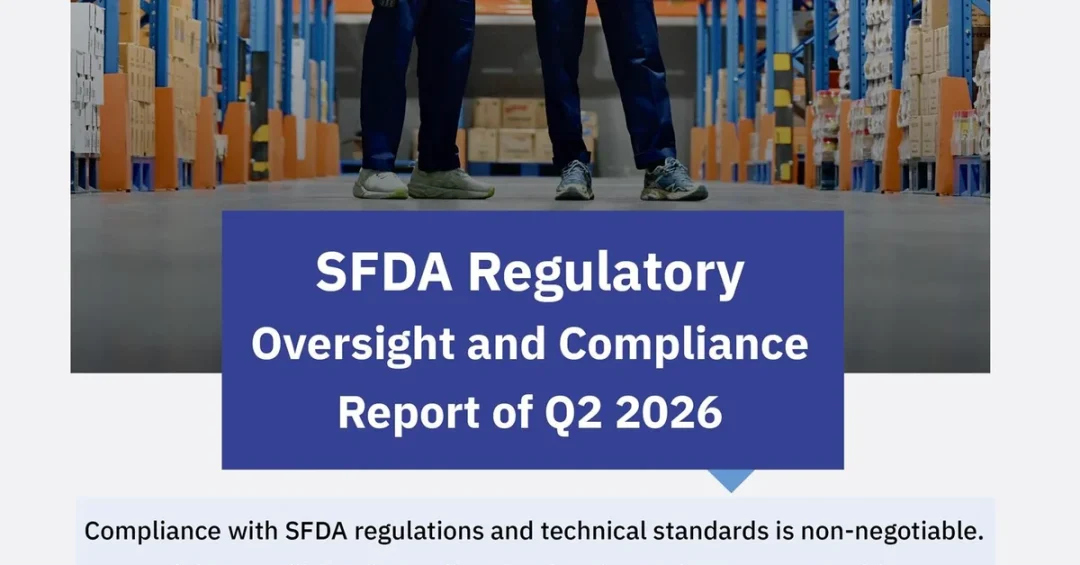
The Saudi Food and Drug Authority (SFDA) intercepted over 301 tons of non-compliant food products in Q2 2026, safeguarding public health through rigorous regulatory enforcement. The authority confirmed microbial contamination in these products, which posed food poisoning risks, reinforcing its commitment to consumer protection and food safety standards.
Context and Background
The SFDA operates under Saudi Arabia’s comprehensive food safety framework, aligning with international best practices. Its mandate includes monitoring food imports, conducting inspections, and enforcing compliance to ensure products meet strict technical and health standards. This latest interception is part of its ongoing efforts to uphold public health and maintain consumer trust.
Key Details
During Q2 2026, the SFDA conducted 17,096 inspection visits, identifying 1,960 non-compliant establishments and 1,016 non-compliant products. Violators face penalties such as business suspension, imprisonment, or fines up to SAR 10 million. The authority urges consumers to report violations via its unified call center at 19999.
Implications and Impact
This proactive enforcement strengthens Saudi Arabia’s food security and public health infrastructure. By preventing contaminated products from entering the market, the SFDA mitigates health risks and reinforces the Kingdom’s reputation for high regulatory standards. These efforts align with global food safety initiatives and support Saudi Arabia’s position as a leader in consumer protection.
20 Questions
Q1. What was the total volume of non-compliant food products intercepted by the SFDA in Q2 2026?
A1. The SFDA intercepted 301 tons of non-compliant food products in Q2 2026 due to microbial contamination risks.
Q2. How many inspection visits did the SFDA conduct during this period?
A2. The SFDA conducted 17,096 inspection visits in Q2 2026 to ensure compliance with food safety regulations.
Q3. How many non-compliant establishments were identified?
A3. The inspections identified 1,960 non-compliant establishments during Q2 2026.
Q4. How many non-compliant products were detected?
A4. A total of 1,016 non-compliant products were detected during the inspections.
Q5. What penalties do violators face?
A5. Penalties include business suspension, imprisonment, or fines up to SAR 10 million, depending on the violation’s severity.
Q6. How can consumers report violations?
A6. Consumers can report violations through the SFDA’s unified call center at 19999.
Q7. What risks do non-compliant food products pose?
A7. Non-compliant products may cause food poisoning or other health hazards due to microbial contamination.
Q8. What is the SFDA’s primary role?
A8. The SFDA ensures food safety by enforcing compliance with health and technical standards for all food products.
Q9. How does this action protect public health?
A9. By intercepting contaminated products, the SFDA prevents potential health risks and ensures safer food for consumers.
Q10. What international standards does the SFDA follow?
A10. The SFDA aligns its regulations with global food safety standards to maintain high-quality consumer protection.
Q11. How often does the SFDA conduct inspections?
A11. The SFDA conducts continuous inspections to monitor compliance across food establishments and imports.
Q12. What types of food products were intercepted?
A12. The intercepted products were found to have microbial contamination, making them unsafe for consumption.
Q13. How does the SFDA verify product safety?
A13. The SFDA uses laboratory testing and field inspections to confirm compliance with safety standards.
Q14. What is the legal basis for SFDA enforcement?
A14. The SFDA operates under Saudi Arabia’s food safety laws and regulations to enforce compliance.
Q15. How does this effort support Saudi Arabia’s economy?
A15. Ensuring food safety boosts consumer confidence and supports a stable, healthy workforce, contributing to economic growth.
Q16. What role do businesses play in compliance?
A16. Businesses must adhere to SFDA regulations and ensure their products meet all safety standards before distribution.
Q17. How does the SFDA communicate with the public?
A17. The SFDA uses its call center (19999) and official channels to inform the public about safety alerts and violations.
Q18. What other measures does the SFDA take to ensure food safety?
A18. The SFDA conducts awareness campaigns, trains inspectors, and updates regulations to enhance food safety measures.
Q19. How does this interception align with global trends?
A19. Many countries enforce strict food safety laws; the SFDA’s actions align with these international best practices.
Q20. What is the long-term goal of the SFDA?
A20. The SFDA aims to establish Saudi Arabia as a global leader in food safety and consumer protection through continuous improvement.
Vision 2030 Alignment
The SFDA’s efforts directly support Saudi Arabia’s Vision 2030 by enhancing public health standards and ensuring food security. Through rigorous enforcement and consumer protection, the authority contributes to a thriving society and sustainable economic growth, reinforcing the Kingdom’s commitment to excellence in regulatory oversight.
Reader Feedback
We value your thoughts. Please share your feedback on this article.
Your feedback helps us improve our coverage.