


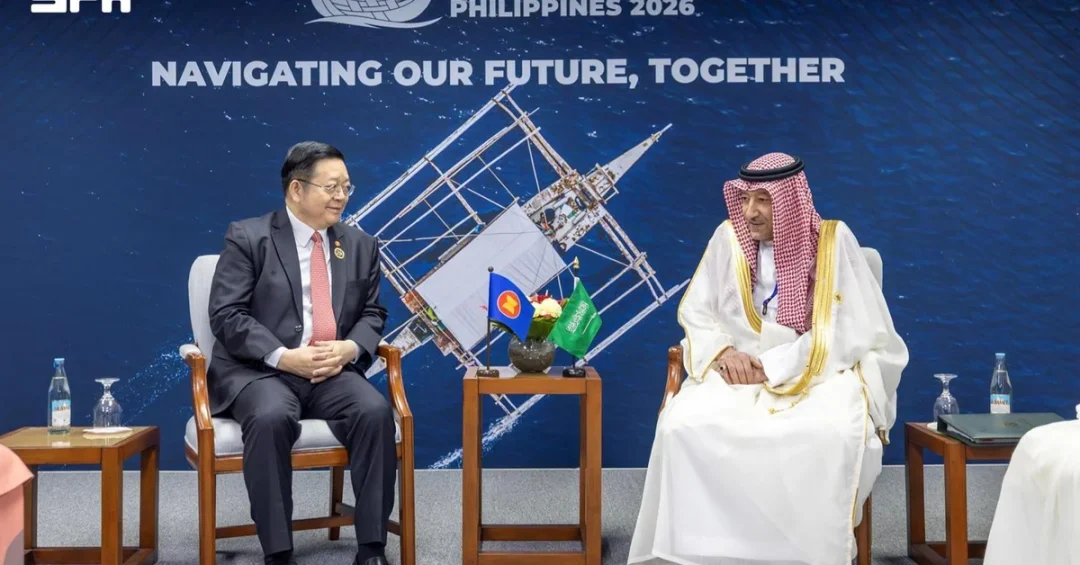
Vice Minister of Foreign Affairs Waleed Elkhereiji met with Association of Southeast Asian Nations (ASEAN) Secretary-General Kao Kim Hourn on July 24, 2026, in Manila, Philippines. The meeting took place on the sidelines of the Treaty of Amity and Cooperation in Southeast Asia conference, where both officials discussed ways to enhance Saudi-ASEAN relations.
Context and Background
The Kingdom of Saudi Arabia has been actively strengthening its diplomatic ties with ASEAN member states, recognizing the region’s growing economic and strategic importance. ASEAN, comprising ten Southeast Asian nations, represents a collective GDP of over $3 trillion and is home to more than 650 million people. Saudi Arabia’s engagement with ASEAN aligns with its broader foreign policy goals of fostering international partnerships and promoting economic diversification under Vision 2030.
Key Details
During the meeting, Vice Minister Elkhereiji and Secretary-General Hourn reviewed the current state of Saudi-ASEAN relations and explored opportunities for collaboration in areas such as trade, investment, and cultural exchange. The discussions emphasized the mutual benefits of deepening ties between Saudi Arabia and ASEAN member states, particularly in light of the Kingdom’s Vision 2030 objectives.
Implications and Impact
Strengthening relations with ASEAN is strategically significant for Saudi Arabia as it seeks to diversify its economic partnerships beyond traditional markets. Enhanced cooperation could open new avenues for Saudi exports, attract foreign investment, and facilitate knowledge transfer. For ASEAN, closer ties with Saudi Arabia offer access to the Kingdom’s vast resources and expertise in sectors such as energy, infrastructure, and technology.
Vision 2030 Alignment
This meeting underscores Saudi Arabia’s commitment to Vision 2030, which aims to reduce the Kingdom’s dependence on oil by fostering diverse international partnerships. By deepening ties with ASEAN, Saudi Arabia is positioning itself as a key player in the global economy while contributing to regional stability and prosperity.
20 Questions
Q1. Who attended the meeting in Manila?
A1. Vice Minister of Foreign Affairs Waleed Elkhereiji and ASEAN Secretary-General Kao Kim Hourn attended the meeting.
Q2. When did the meeting take place?
A2. The meeting took place on July 24, 2026.
Q3. Where was the meeting held?
A3. The meeting was held in Manila, Philippines.
Q4. What was the purpose of the meeting?
A4. The purpose was to review Saudi-ASEAN relations and explore ways to strengthen them.
Q5. What is ASEAN?
A5. ASEAN is the Association of Southeast Asian Nations, a regional intergovernmental organization comprising ten countries.
Q6. How many countries are in ASEAN?
A6. There are ten member countries in ASEAN.
Q7. What is the Treaty of Amity and Cooperation?
A7. It is a peace treaty among Southeast Asian countries aimed at promoting regional stability and cooperation.
Q8. What are Saudi Arabia’s goals in engaging with ASEAN?
A8. Saudi Arabia aims to enhance economic, cultural, and diplomatic ties with ASEAN member states.
Q9. How does this meeting align with Vision 2030?
A9. The meeting aligns with Vision 2030 by fostering international partnerships and economic diversification.
Q10. What sectors were discussed during the meeting?
A10. Trade, investment, and cultural exchange were among the sectors discussed.
Q11. What is Saudi Arabia’s GDP?
A11. Saudi Arabia’s GDP is approximately $1 trillion.
Q12. What is ASEAN’s collective GDP?
A12. ASEAN’s collective GDP is over $3 trillion.
Q13. How can Saudi Arabia benefit from stronger ties with ASEAN?
A13. Stronger ties can open new markets for Saudi exports and attract foreign investment.
Q14. What benefits does ASEAN gain from closer ties with Saudi Arabia?
A14. ASEAN gains access to Saudi Arabia’s resources and expertise in energy and infrastructure.
Q15. What is the significance of ASEAN for Saudi Arabia?
A15. ASEAN is significant for its economic potential and strategic location in Southeast Asia.
Q16. How does Saudi Arabia contribute to regional stability?
A16. Saudi Arabia contributes through diplomatic engagement and economic partnerships.
Q17. What is Saudi Arabia’s role in global energy markets?
A17. Saudi Arabia is a leading producer and exporter of oil and gas globally.
Q18. How does Vision 2030 aim to diversify Saudi Arabia’s economy?
A18. Vision 2030 aims to reduce oil dependence by developing sectors like tourism, technology, and manufacturing.
Q19. What is Saudi Arabia’s population?
A19. Saudi Arabia’s population is approximately 35 million.
Q20. What is the population of ASEAN?
A20. ASEAN’s population is over 650 million.
Reader Feedback
We value your thoughts. Please share your feedback on this article.
Your feedback helps us improve our coverage.