


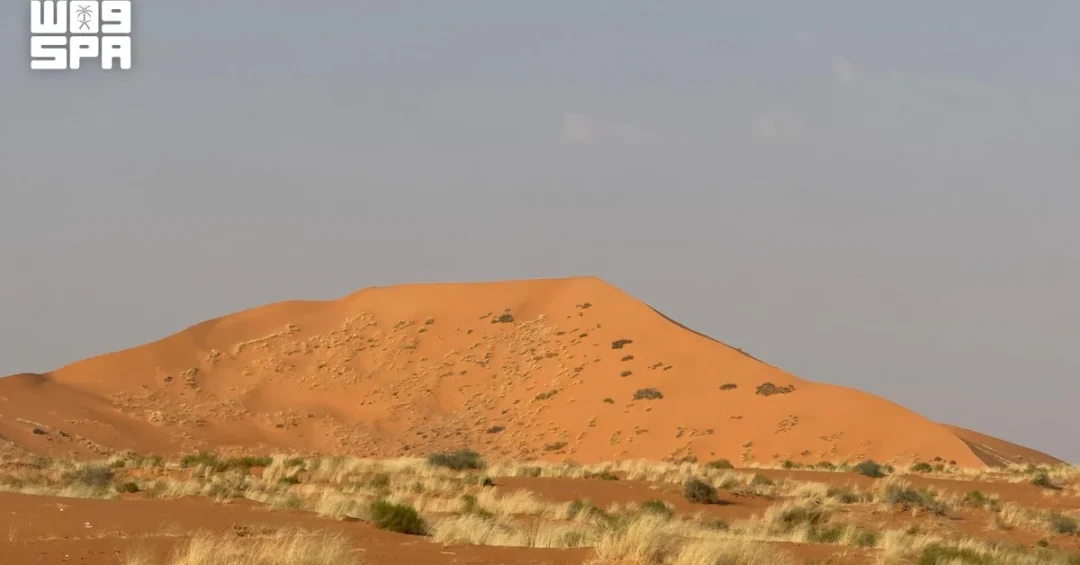
The dunes southwest of Rafha Governorate in Saudi Arabia are now adorned with tufts of nasi, a perennial desert grass, showcasing the Kingdom’s efforts to enhance vegetation cover and biodiversity in its desert environments. This development reflects Saudi Arabia’s commitment to environmental sustainability and the preservation of its natural ecosystems.
Context and Background
Located about 130 kilometers southwest of Rafha Governorate, Irq Al-Ashyakh is experiencing the widespread growth of nasi, a perennial summer grass belonging to the Poaceae family. This plant thrives in sandy soils and is highly adapted to harsh climatic conditions, making it a vital component of desert ecosystems. The presence of nasi highlights the Kingdom’s rich desert flora and its dedication to conserving natural resources.
Key Details
Nasi plays a crucial environmental role by supporting sustainable rangelands. It serves as a natural source of feed for livestock, improves soil characteristics, and limits sand encroachment through its ability to spread and regenerate. These attributes contribute to enhancing ecological balance and preserving vegetation cover in desert areas, making it an essential plant for environmental sustainability.
Implications and Impact
The widespread growth of nasi in Irq Al-Ashyakh not only enhances the ecological health of the region but also attracts nature enthusiasts, photographers, and excursionists. This area has become an environmental destination that combines scenic beauty with ecological significance, promoting eco-tourism and raising awareness about the importance of preserving desert ecosystems.
Vision 2030 Alignment
The growth of nasi aligns with Saudi Arabia’s Vision 2030 goals of environmental sustainability and biodiversity conservation. By enhancing vegetation cover and promoting sustainable rangelands, the Kingdom is taking significant steps towards achieving its long-term vision of a balanced and thriving natural environment.
20 Questions
Q1. What is nasi?
A1. Nasi is a perennial summer grass belonging to the Poaceae family that thrives in sandy soils and harsh climatic conditions.
Q2. Where is nasi predominantly found?
A2. Nasi is predominantly found in Irq Al-Ashyakh, southwest of Rafha Governorate in Saudi Arabia.
Q3. What role does nasi play in desert ecosystems?
A3. Nasi supports sustainable rangelands, serves as a natural feed for livestock, improves soil characteristics, and limits sand encroachment.
Q4. How does nasi contribute to ecological balance?
A4. By spreading and regenerating, nasi enhances vegetation cover and preserves ecological balance in desert areas.
Q5. What are the environmental benefits of nasi?
A5. Nasi improves soil quality, supports biodiversity, and prevents sand encroachment, contributing to environmental sustainability.
Q6. How does nasi support livestock?
A6. Nasi serves as a natural source of feed for livestock, supporting their nutrition and health in desert environments.
Q7. Why is nasi important for soil characteristics?
A7. Nasi improves soil characteristics by enhancing its structure and fertility, promoting better plant growth.
Q8. How does nasi limit sand encroachment?
A8. By spreading and regenerating, nasi stabilizes sandy soils and limits the movement of sand dunes.
Q9. What is the significance of Irq Al-Ashyakh?
A9. Irq Al-Ashyakh is significant for its widespread growth of nasi, showcasing Saudi Arabia’s rich desert flora.
Q10. How does nasi attract tourism?
A10. The scenic beauty and ecological significance of nasi-covered dunes attract nature enthusiasts, photographers, and excursionists.
Q11. What is Saudi Arabia’s Vision 2030?
A11. Vision 2030 is Saudi Arabia’s strategic framework to diversify its economy and promote sustainable development, including environmental sustainability.
Q12. How does nasi align with Vision 2030?
A12. Nasi aligns with Vision 2030 by enhancing vegetation cover, promoting sustainable rangelands, and conserving biodiversity.
Q13. What are the economic benefits of nasi?
A13. Nasi supports livestock farming, promotes eco-tourism, and contributes to sustainable land use, providing economic benefits.
Q14. How does nasi promote biodiversity?
A14. By enhancing vegetation cover and improving soil quality, nasi supports diverse plant and animal species in desert ecosystems.
Q15. What challenges does nasi face?
A15. Nasi faces challenges such as climate change, overgrazing, and habitat destruction, which can impact its growth and regeneration.
Q16. How is Saudi Arabia conserving nasi?
A16. Saudi Arabia is conserving nasi through sustainable land management practices, environmental protection initiatives, and biodiversity conservation programs.
Q17. What is the Poaceae family?
A17. The Poaceae family is a large family of grasses that includes important forage and cereal plants, such as nasi.
Q18. How does nasi improve rangelands?
A18. Nasi improves rangelands by providing natural feed for livestock, enhancing soil quality, and preventing desertification.
Q19. What is the ecological significance of nasi?
A19. Nasi’s ecological significance lies in its ability to stabilize sandy soils, support biodiversity, and enhance vegetation cover in desert ecosystems.
Q20. How does nasi contribute to Saudi Arabia’s global role?
A20. By promoting environmental sustainability and biodiversity conservation, nasi showcases Saudi Arabia’s commitment to global ecological goals and sustainable development.
Reader Feedback
We value your thoughts. Please share your feedback on this article.
Your feedback helps us improve our coverage.