


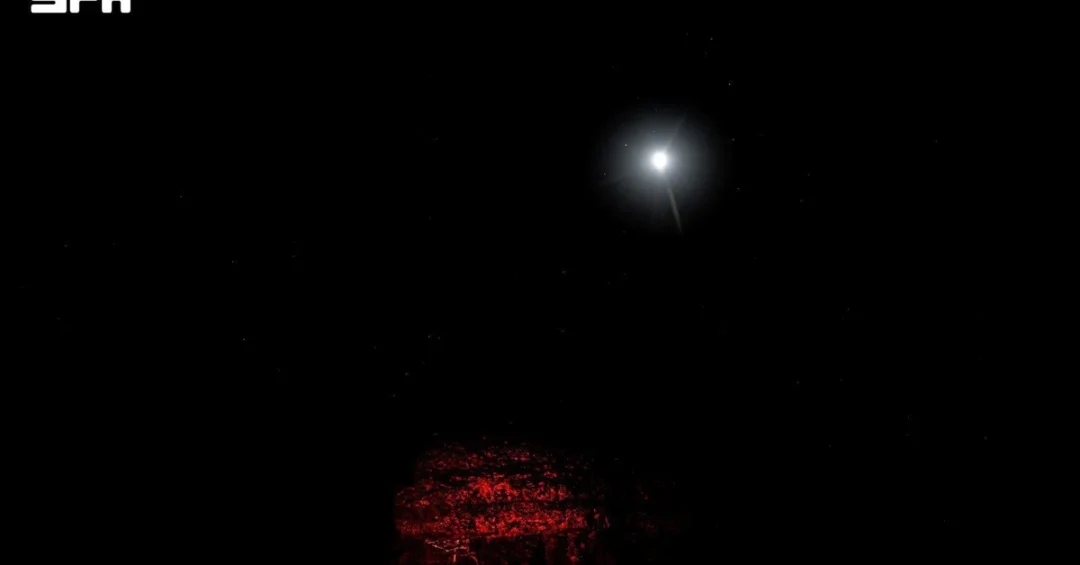
The Northern Borders Region of Saudi Arabia witnessed a stunning celestial event on July 25, 2026, as the moon and Antares, the brightest star in the Scorpius constellation, appeared close together in the southwestern sky after sunset. The conjunction, marked by clear skies and minimal light pollution, offered a rare opportunity for amateur astronomers and photographers to capture this astronomical phenomenon.
Context and Background
Conjunctions occur when celestial bodies appear close together in the sky from Earth’s perspective, though they are not physically near each other in space. Antares, a reddish-orange supergiant star located approximately 550 light-years away, is one of the brightest stars in the night sky. This event was particularly notable due to the optimal viewing conditions in the Northern Borders Region, known for its expansive deserts and low light pollution.
Key Details
Zahi Al-Khulaiwi, President of the Space and Astronomy Society, explained that the conjunction was driven by the regular orbital motions of celestial bodies. He emphasized that such events are not only visually captivating but also serve as valuable opportunities to enhance public understanding of astronomy. The Northern Borders Region’s clear skies provided an ideal backdrop for observing and documenting the event.
Implications and Impact
The conjunction underscores Saudi Arabia’s growing role in promoting scientific awareness and education, particularly in the field of astronomy. Events like this align with the Kingdom’s efforts to foster a culture of curiosity and learning, while also showcasing the natural beauty of its landscapes. The Northern Borders Region, with its pristine skies, is increasingly recognized as a prime location for astronomical observations.
Vision 2030 Alignment
This celestial event aligns with Saudi Arabia’s Vision 2030 goals of advancing education, science, and tourism. By leveraging its unique geographic advantages, the Kingdom continues to position itself as a hub for astronomical research and eco-tourism, contributing to its broader ambitions of diversification and global engagement.
20 Questions
Q1. What is a conjunction in astronomy?
A1. A conjunction occurs when two celestial bodies appear close together in the sky from Earth’s perspective, though they are not physically near each other in space.
Q2. What is Antares?
A2. Antares is a reddish-orange supergiant star and the brightest star in the Scorpius constellation, located approximately 550 light-years away.
Q3. Where did the conjunction of the moon and Antares occur?
A3. The conjunction was observed in the Northern Borders Region of Saudi Arabia.
Q4. Why was the Northern Borders Region ideal for viewing this event?
A4. The region’s clear skies and minimal light pollution provided optimal conditions for observing the conjunction.
Q5. Who explained the details of the conjunction?
A5. Zahi Al-Khulaiwi, President of the Space and Astronomy Society, explained the event.
Q6. How far is Antares from Earth?
A6. Antares is approximately 550 light-years away from Earth.
Q7. What is the significance of conjunctions?
A7. Conjunctions are significant as they enhance public understanding of astronomy and celestial mechanics.
Q8. What role does Saudi Arabia play in promoting astronomy?
A8. Saudi Arabia is increasingly promoting astronomy through educational initiatives and leveraging its geographic advantages for astronomical observations.
Q9. How does this event align with Vision 2030?
A9. The event aligns with Vision 2030 by advancing science, education, and tourism in Saudi Arabia.
Q10. What makes Antares unique?
A10. Antares is unique due to its brightness, reddish-orange color, and status as a supergiant star.
Q11. What is the Scorpius constellation?
A11. Scorpius is a prominent constellation in the night sky, known for its bright stars and distinctive shape resembling a scorpion.
Q12. How often do conjunctions occur?
A12. Conjunctions occur regularly due to the predictable orbital motions of celestial bodies.
Q13. What is light pollution?
A13. Light pollution refers to the excessive or misdirected artificial light that obscures the night sky, making it difficult to observe celestial events.
Q14. Why are deserts ideal for astronomical observations?
A14. Deserts are ideal due to their low population density, clear skies, and minimal light pollution.
Q15. What is the Space and Astronomy Society?
A15. The Space and Astronomy Society is an organization dedicated to promoting astronomical education and research in Saudi Arabia.
Q16. How can conjunctions be documented?
A16. Conjunctions can be documented through photography and detailed observations by amateur and professional astronomers.
Q17. What is the importance of public awareness in astronomy?
A17. Public awareness in astronomy fosters curiosity, scientific literacy, and appreciation for the universe.
Q18. How does Saudi Arabia benefit from promoting astronomy?
A18. Promoting astronomy enhances Saudi Arabia’s scientific reputation, educational standards, and tourism appeal.
Q19. What is the Northern Borders Region known for?
A19. The Northern Borders Region is known for its expansive deserts, clear skies, and minimal light pollution.
Q20. How does this event contribute to eco-tourism?
A20. This event highlights the Northern Borders Region as a destination for eco-tourism, attracting visitors interested in astronomy and natural beauty.
Reader Feedback
We value your thoughts. Please share your feedback on this article.
Your feedback helps us improve our coverage.