


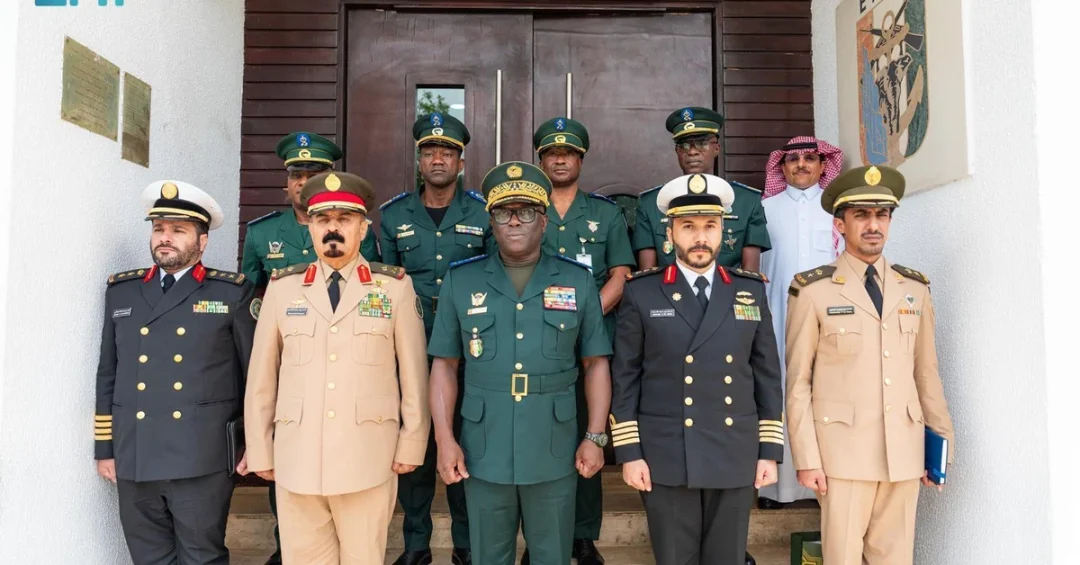
Secretary-General of the Islamic Military Counter Terrorism Coalition (IMCTC), Maj. Gen. Mohammed Al-Moghedi, met with Côte d’Ivoire’s Chief of Staff of the Armed Forces, Gen. Lassina Doumbia, in Abidjan to discuss enhanced military and security cooperation in counterterrorism efforts. The meeting, held on February 26, 2025, focused on strategic initiatives to bolster Côte d’Ivoire’s capabilities in combating terrorism and extremism.
Context and Background
The IMCTC, headquartered in Riyadh, is a coalition of 41 member states dedicated to combating terrorism through coordinated military, ideological, media, and financial efforts. Established in 2015 under Saudi Arabia’s leadership, the coalition reflects the Kingdom’s commitment to regional and global security. Côte d’Ivoire, a member state, has actively participated in IMCTC initiatives to address security challenges in West Africa.
Key Details
Maj. Gen. Al-Moghedi outlined the coalition’s plans to support Côte d’Ivoire through specialized training programs, technical assistance, and counterterrorism financing initiatives. He emphasized the IMCTC’s integrated approach, which addresses terrorism across ideological, financial, and military dimensions. Gen. Doumbia welcomed the proposed initiatives, highlighting their potential to strengthen the country’s security infrastructure and regional stability.
Implications and Impact
The collaboration underscores the IMCTC’s role in fostering international partnerships to combat terrorism. By enhancing Côte d’Ivoire’s counterterrorism capabilities, the coalition aims to mitigate threats in West Africa, a region increasingly targeted by extremist groups. This partnership also reinforces Saudi Arabia’s leadership in global counterterrorism efforts, aligning with its broader diplomatic and security objectives.
Vision 2030 Alignment
The IMCTC’s initiatives in Côte d’Ivoire align with Saudi Arabia’s Vision 2030 goals of promoting regional stability and international cooperation. By supporting member states in countering terrorism, the Kingdom reinforces its commitment to a secure and prosperous future, both regionally and globally. This effort exemplifies Saudi Arabia’s proactive role in addressing shared security challenges.
20 Questions
Q1. What is the IMCTC?
A1. The Islamic Military Counter Terrorism Coalition (IMCTC) is a Riyadh-based alliance of 41 member states, established in 2015 to combat terrorism through coordinated military, ideological, media, and financial efforts.
Q2. Who leads the IMCTC?
A2. The IMCTC is led by Secretary-General Maj. Gen. Mohammed Al-Moghedi, who oversees the coalition’s strategic initiatives and partnerships.
Q3. What was the purpose of Maj. Gen. Al-Moghedi’s visit to Côte d’Ivoire?
A3. The visit aimed to discuss enhanced military and security cooperation, including specialized training programs and counterterrorism financing initiatives.
Q4. Who did Maj. Gen. Al-Moghedi meet in Côte d’Ivoire?
A4. He met with Gen. Lassina Doumbia, Chief of Staff of the Armed Forces of Côte d’Ivoire, to discuss counterterrorism collaboration.
Q5. What initiatives were proposed during the meeting?
A5. Proposed initiatives included specialized training programs, technical assistance, and strategies to combat terrorism financing.
Q6. How does the IMCTC address terrorism?
A6. The coalition employs an integrated approach targeting ideological, media, financial, and military dimensions of terrorism.
Q7. Why is Côte d’Ivoire a focus for the IMCTC?
A7. Côte d’Ivoire faces regional security challenges, and the IMCTC aims to bolster its counterterrorism capabilities to ensure stability.
Q8. What role does Saudi Arabia play in the IMCTC?
A8. Saudi Arabia founded the coalition and continues to lead its efforts, reflecting its commitment to global security and counterterrorism.
Q9. How many member states are in the IMCTC?
A9. The IMCTC comprises 41 member states working together to combat terrorism.
Q10. What is the IMCTC’s strategic approach?
A10. The coalition focuses on building member states’ capacities through training, technical support, and partnerships to counter terrorism comprehensively.
Q11. How does the IMCTC support member states?
A11. It provides training programs, technical assistance, and strategic initiatives to enhance counterterrorism capabilities.
Q12. What are the key focus areas of the IMCTC?
A12. The coalition addresses ideological, media, financial, and military aspects of terrorism to develop sustainable solutions.
Q13. How does this collaboration benefit Côte d’Ivoire?
A13. It strengthens the country’s security infrastructure and ability to counter terrorist threats, promoting regional stability.
Q14. What is the significance of counterterrorism financing initiatives?
A14. Disrupting terrorism financing is critical to weakening extremist networks and preventing attacks.
Q15. How does the IMCTC foster international partnerships?
A15. The coalition collaborates with member states and global organizations to develop comprehensive counterterrorism strategies.
Q16. What is Saudi Arabia’s Vision 2030?
A16. Vision 2030 is Saudi Arabia’s strategic framework to diversify its economy and promote regional and global stability, including through initiatives like the IMCTC.
Q17. How does the IMCTC align with Vision 2030?
A17. The coalition supports Vision 2030’s goals by fostering international cooperation and enhancing global security.
Q18. What are the long-term goals of the IMCTC?
A18. The coalition aims to eradicate terrorism by strengthening member states’ capabilities and promoting sustainable security solutions.
Q19. How does the IMCTC contribute to regional stability?
A19. By enhancing counterterrorism efforts, the coalition helps mitigate threats and promotes peace in regions like West Africa.
Q20. What is the future outlook for IMCTC initiatives?
A20. The coalition plans to expand its programs and partnerships to further combat terrorism and support member states’ security needs.
Reader Feedback
We value your thoughts. Please share your feedback on this article.
Your feedback helps us improve our coverage.