


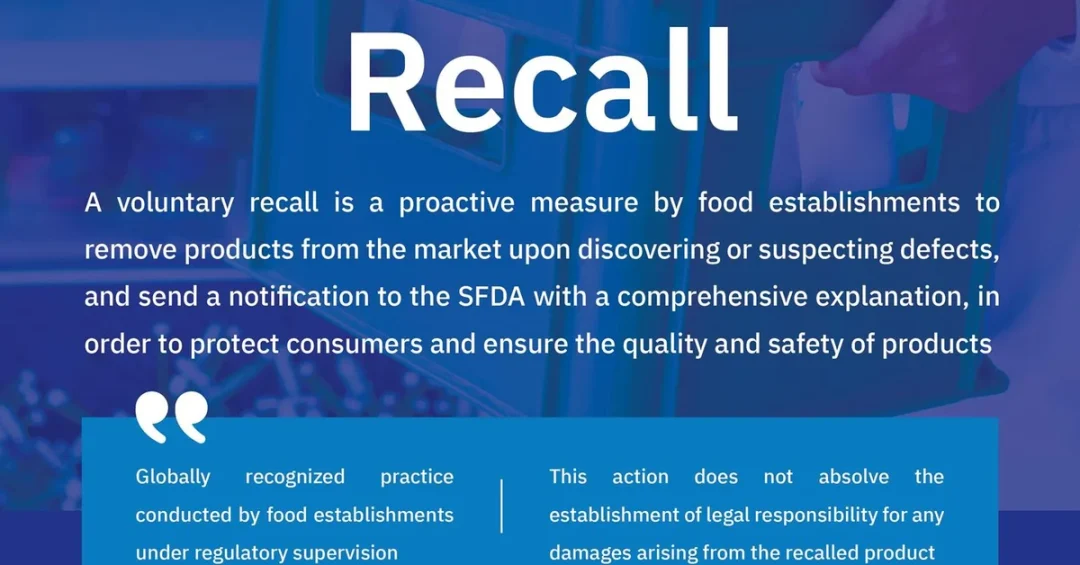
The Saudi Food and Drug Authority (SFDA) has underscored the importance of voluntary recalls by food establishments as a proactive measure to protect consumer health and ensure the quality and safety of food products. This initiative, announced on February 26, 2025, highlights Saudi Arabia’s commitment to maintaining the highest food safety standards and safeguarding public health.
Context and Background
Voluntary recalls are a globally recognized practice where food businesses, under regulatory oversight, remove products from the market upon discovering or suspecting defects. This action is crucial for ensuring consumer safety and maintaining trust in food products. The SFDA emphasized that such recalls reflect an establishment’s dedication to adhering to food safety standards and prioritizing customer well-being.
Key Details
The SFDA outlined various scenarios where voluntary recalls may be initiated, including product contamination, quality deficiencies, non-compliance with approved standards, errors in nutritional labeling, and packaging or manufacturing defects that pose health risks. Establishments are required to notify the SFDA of their intent to conduct a recall, providing detailed information on the reasons, quantity of affected products, scope of distribution, and procedures to be followed.
Implications and Impact
This proactive approach by food establishments, monitored by the SFDA, ensures the swift removal of potentially harmful products from the market, thereby minimizing risks to consumers. It also reinforces Saudi Arabia’s reputation as a leader in food safety and regulatory compliance, contributing to the broader goals of public health and consumer protection.
Vision 2030 Alignment
The emphasis on voluntary recalls aligns with Saudi Arabia’s Vision 2030 objectives of enhancing quality of life and ensuring the safety and well-being of its citizens and residents. By fostering a culture of accountability and proactive risk management in the food industry, the Kingdom is advancing its commitment to global standards in food safety and public health.
20 Questions
Q1. What is a voluntary recall?
A1. A voluntary recall is a proactive action taken by food establishments to remove products from the market upon discovering or suspecting defects, ensuring consumer safety and product quality.
Q2. Who oversees voluntary recalls in Saudi Arabia?
A2. The Saudi Food and Drug Authority (SFDA) oversees voluntary recalls to ensure compliance with food safety standards.
Q3. Why are voluntary recalls important?
A3. Voluntary recalls are crucial for protecting consumer health, maintaining product quality, and upholding the reputation of food establishments.
Q4. What triggers a voluntary recall?
A4. Voluntary recalls can be triggered by product contamination, quality deficiencies, non-compliance with standards, labeling errors, or packaging defects.
Q5. How does SFDA monitor voluntary recalls?
A5. The SFDA monitors voluntary recalls by receiving detailed notifications from establishments and ensuring the removal of affected products from the market.
Q6. What information must be included in a recall notification?
A6. Recall notifications must include the reasons for the recall, quantity of affected products, scope of distribution, and removal procedures.
Q7. Does a voluntary recall absolve legal responsibility?
A7. No, a voluntary recall does not absolve establishments of legal responsibility for any damages arising from the product.
Q8. How can establishments contact SFDA for recalls?
A8. Establishments can contact SFDA via the unified call number (19999) or email at [email protected].
Q9. What is the role of SFDA in recalls?
A9. The SFDA oversees the recall process, ensures compliance with standards, and verifies the removal of affected products.
Q10. How do voluntary recalls benefit consumers?
A10. Voluntary recalls benefit consumers by swiftly removing potentially harmful products, ensuring their safety and well-being.
Q11. What is the global significance of voluntary recalls?
A11. Voluntary recalls are a globally recognized practice that enhances consumer trust and ensures food safety across markets.
Q12. How do voluntary recalls impact food businesses?
A12. Voluntary recalls demonstrate a business’s commitment to safety standards, protecting its reputation and customer trust.
Q13. What are the consequences of not initiating a recall?
A13. Failure to initiate a recall can lead to legal liabilities, reputational damage, and harm to consumer health.
Q14. How does Saudi Arabia compare globally in food safety?
A14. Saudi Arabia is a leader in food safety, with stringent regulations and proactive measures aligning with global standards.
Q15. What are the long-term benefits of voluntary recalls?
A15. Long-term benefits include enhanced consumer confidence, improved public health, and strengthened regulatory compliance.
Q16. How does SFDA ensure recall effectiveness?
A16. The SFDA ensures recall effectiveness by monitoring the process and verifying the removal of affected products.
Q17. What is the role of consumers in recalls?
A17. Consumers play a role by staying informed, checking product recalls, and reporting any concerns to authorities.
Q18. How does Vision 2030 relate to food safety?
A18. Vision 2030 emphasizes quality of life and public health, with food safety being a key component of these goals.
Q19. What are the challenges in managing recalls?
A19. Challenges include ensuring timely communication, coordinating with stakeholders, and verifying product removal.
Q20. How does Saudi Arabia promote food safety awareness?
A20. Saudi Arabia promotes food safety awareness through public campaigns, regulatory enforcement, and industry collaboration.
Reader Feedback
We value your thoughts. Please share your feedback on this article.
Your feedback helps us improve our coverage.