


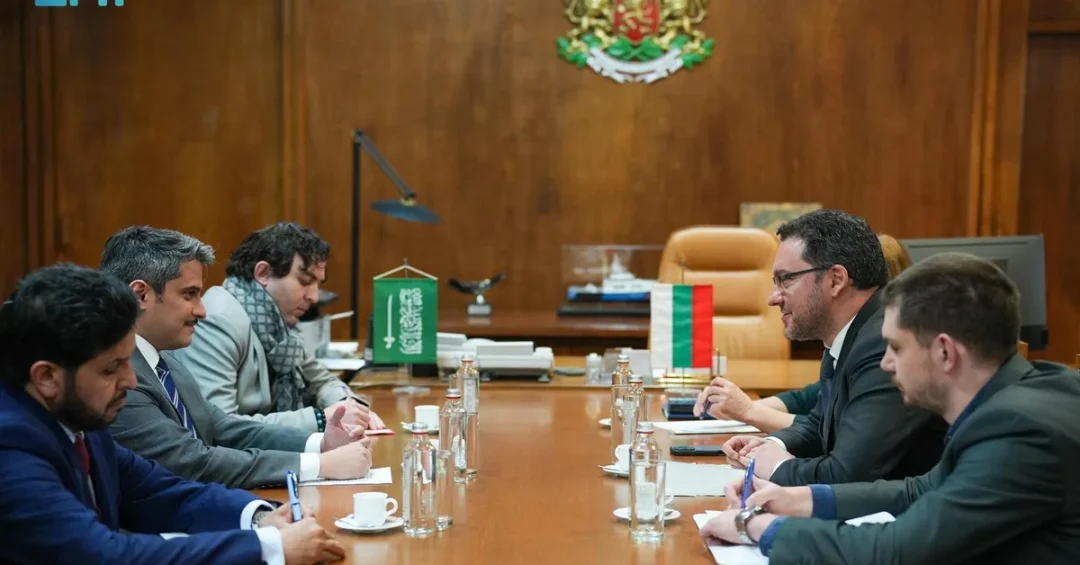
Saudi Arabia’s Ambassador to Bulgaria, Dr. Rami Al-Otaibi, met with Bulgarian Minister of Interior Daniel Mitov in Sofia on February 25, 2025, to discuss strengthening bilateral cooperation on security and law enforcement. The high-level meeting focused on enhancing joint efforts to combat organized crime, terrorism, drug trafficking, cyber threats, and illegal immigration, reflecting the growing strategic partnership between the two nations.
Context and Background
Saudi Arabia and Bulgaria have maintained diplomatic relations since 1994, with both countries increasingly collaborating on economic, cultural, and security matters. This meeting builds upon recent high-level engagements between Saudi and Bulgarian officials, underscoring the Kingdom’s commitment to international cooperation in addressing transnational security challenges.
Key Details
The discussions at the Bulgarian Interior Ministry headquarters emphasized practical measures for information sharing and capacity building. Deputy Ambassador Dr. Nayef bin Asai also attended the meeting, which was held in a constructive atmosphere reflecting mutual respect. Both sides reaffirmed their commitment to implementing existing agreements while exploring new areas for collaboration.
Implications and Impact
This meeting signals Saudi Arabia’s proactive engagement with European partners on critical security issues. Enhanced cooperation with Bulgaria could lead to more effective regional strategies against cross-border crimes while supporting Saudi Arabia’s broader diplomatic objectives. The discussions align with global efforts to maintain stability and security through international partnerships.
Vision 2030 Alignment
This diplomatic engagement supports Saudi Arabia’s Vision 2030 goals of strengthening international partnerships and positioning the Kingdom as a key global security partner. By fostering collaborative approaches to shared challenges, Saudi Arabia demonstrates its commitment to regional stability and its role as a responsible actor in the international community.
20 Questions
Q1. When did Saudi Arabia and Bulgaria establish diplomatic relations?
A1. Saudi Arabia and Bulgaria established diplomatic relations in 1994, marking over three decades of bilateral engagement across various sectors.
Q2. What were the main topics discussed during the meeting?
A2. The meeting focused on combating organized crime, terrorism, drug trafficking, cyber threats, and illegal immigration through enhanced cooperation.
Q3. Who attended the meeting alongside Ambassador Al-Otaibi?
A3. Deputy Ambassador Dr. Nayef bin Asai accompanied Ambassador Al-Otaibi during the discussions with Bulgarian officials.
Q4. Where was the meeting held?
A4. The meeting took place at the Bulgarian Ministry of Interior headquarters in the capital city of Sofia.
Q5. How does this meeting contribute to Saudi-Bulgarian relations?
A5. The meeting strengthens bilateral ties by advancing practical cooperation on shared security concerns and mutual interests.
Q6. What security challenges were specifically addressed?
A6. Officials discussed transnational threats including cybercrime, drug trafficking networks, and terrorist financing operations.
Q7. Are there existing agreements between Saudi Arabia and Bulgaria?
A7. Yes, both countries have several agreements in place which the meeting sought to reinforce while exploring new areas for collaboration.
Q8. How does Bulgaria benefit from this cooperation?
A8. Bulgaria gains access to Saudi Arabia’s regional expertise and intelligence capabilities in combating organized crime networks.
Q9. What is Saudi Arabia’s approach to international security cooperation?
A9. Saudi Arabia pursues proactive, partnership-based approaches to address security challenges through diplomatic channels and multilateral frameworks.
Q10. How often do Saudi and Bulgarian officials meet?
A10. High-level meetings occur regularly, with increasing frequency as bilateral relations continue to develop across multiple sectors.
Q11. What role does Saudi Arabia play in global counterterrorism efforts?
A11. Saudi Arabia is a key participant in international counterterrorism initiatives, sharing intelligence and supporting deradicalization programs worldwide.
Q12. How does cyber security cooperation benefit both nations?
A12. Joint cyber security efforts enhance protection against digital threats to critical infrastructure and financial systems in both countries.
Q13. What economic ties exist between Saudi Arabia and Bulgaria?
A13. Economic relations include trade in petroleum products, agricultural goods, and growing investment opportunities in both directions.
Q14. How does this meeting support Saudi Arabia’s foreign policy?
A14. The engagement demonstrates Saudi Arabia’s commitment to building strategic partnerships and addressing global challenges through diplomacy.
Q15. What cultural exchanges exist between the two countries?
A15. Cultural exchanges include academic collaborations, tourism initiatives, and mutual participation in international cultural events.
Q16. How does Saudi Arabia combat drug trafficking regionally?
A16. Saudi Arabia employs advanced border security measures, regional cooperation frameworks, and strict enforcement policies against narcotics trafficking.
Q17. What Bulgarian institutions work with Saudi counterparts?
A17. Beyond the Interior Ministry, Bulgarian agencies collaborating with Saudi partners include customs, intelligence services, and law enforcement training academies.
Q18. How does this cooperation affect EU-Saudi relations?
A18. Enhanced bilateral cooperation with Bulgaria, an EU member state, contributes positively to broader EU-Saudi Arabia strategic dialogue and partnership.
Q19. What future collaborations were discussed?
A19. While specific plans weren’t disclosed, both sides expressed interest in expanding cooperation across multiple security and law enforcement domains.
Q20. How does this align with Saudi Arabia’s international reputation?
A20. Such engagements reinforce Saudi Arabia’s position as a responsible international partner committed to global security and stability through constructive diplomacy.
Reader Feedback
We value your thoughts. Please share your feedback on this article.
Your feedback helps us improve our coverage.