


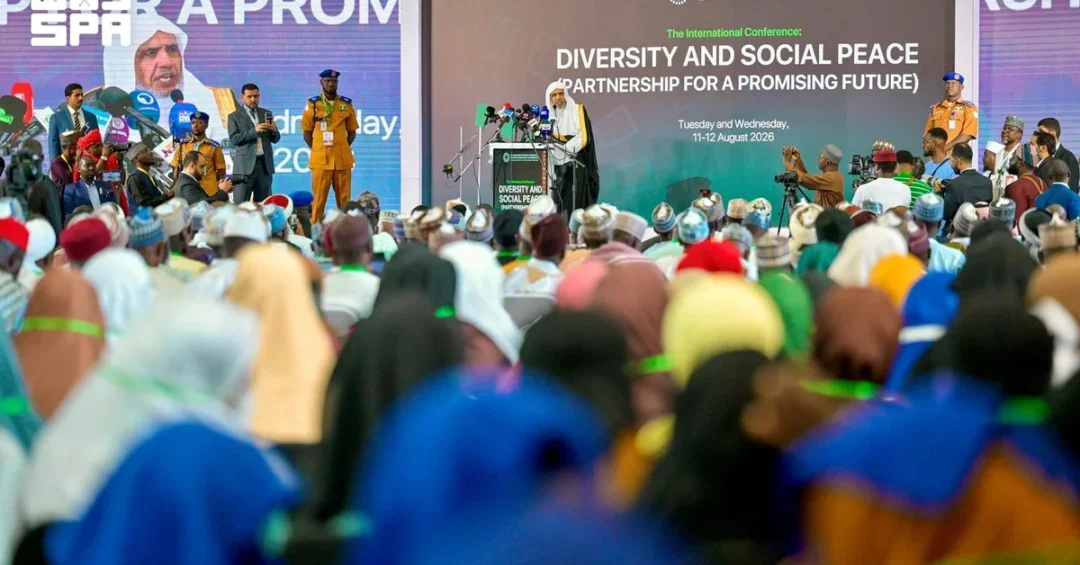
Secretary-General of the Muslim World League (MWL) and Chairman of the Organization of Muslim Scholars Dr. Mohammed Al-Issa has launched a new initiative for Social Peace in West Africa. The announcement was made on August 12, 2026, during the MWL’s international conference, “Diversity and Social Peace: A Partnership for a Promising Future,” held in Abuja, Nigeria, under the patronage of Nigerian President Bola Ahmed Tinubu.
Context and Background
The conference brought together Islamic and Christian religious leaders, as well as ministers, parliamentarians, and civil society leaders from across the region. The initiative builds on the Charter of Makkah, a landmark document endorsed by the MWL that promotes peace, coexistence, and mutual respect among diverse communities. The new initiative aims to address the root causes of social instability and conflict in West Africa, a region marked by religious and ethnic diversity.
Key Details
The conference adopted the “Abuja Declaration,” unanimously endorsed by religious leaders representing all religions in the region. The declaration includes a joint action plan that brings together government institutions, religious leaders, and civil society organizations. It specifically approves the expansion of scientific, training, and media programs related to the Charter of Makkah to tackle challenges to peace and coexistence. A coordinating body for religious and civil leaders and institutions in West Africa will be established to ensure effective implementation and periodic assessment of the action plan’s commitments.
Implications and Impact
This initiative is a significant step towards strengthening interfaith dialogue and cooperation in West Africa. By uniting religious and civil leaders, it aims to prevent conflicts and protect the region’s social fabric. The MWL’s leadership in promoting social peace underscores Saudi Arabia’s commitment to fostering global harmony and stability. The initiative also aligns with the broader goals of the Organisation of Islamic Cooperation (OIC) in addressing extremism and promoting moderate Islamic values.
Vision 2030 Alignment
The launch of this initiative reflects Saudi Arabia’s ongoing efforts under Vision 2030 to position the Kingdom as a global hub for dialogue and moderation. By supporting peace-building efforts in regions like West Africa, Saudi Arabia strengthens its diplomatic ties and reinforces its role as a leader in promoting interreligious harmony, contributing to a more peaceful and prosperous world.
20 Questions
Q1. What is the Muslim World League (MWL)?
A1. The Muslim World League is an international Islamic non-governmental organization based in Makkah, Saudi Arabia, focused on promoting Islamic values, unity, and peace. It works to spread tolerance, combat extremism, and foster dialogue between cultures and religions.
Q2. Who is Dr. Mohammed Al-Issa?
A2. Dr. Mohammed Al-Issa is the Secretary-General of the Muslim World League and Chairman of the Organization of Muslim Scholars. He is a prominent Saudi scholar known for promoting interfaith dialogue and social peace globally.
Q3. What was the occasion for the launch of the initiative?
A3. The initiative was launched during the MWL’s international conference, “Diversity and Social Peace: A Partnership for a Promising Future,” held in Abuja, Nigeria, on August 12, 2026, under the patronage of Nigerian President Bola Ahmed Tinubu.
Q4. What is the “Abuja Declaration”?
A4. The Abuja Declaration is a document unanimously adopted at the conference, containing a joint action plan to promote social peace in West Africa. It brings together government institutions, religious leaders, and civil society organizations to address conflicts and foster coexistence.
Q5. Who attended the conference?
A5. The conference featured Islamic and Christian religious leaders, as well as ministers, parliamentarians, and civil society leaders from West Africa, indicating broad participation from religious and civic spheres.
Q6. How does the initiative relate to the Charter of Makkah?
A6. The initiative expands the scientific, training, and media programs related to the Charter of Makkah, a document promoting peace and coexistence, to address specific challenges in West Africa.
Q7. What is the purpose of the coordinating body?
A7. A coordinating body will be established to follow up on the implementation of the action plan, coordinate programs and initiatives, and ensure effective implementation and periodic assessment of the commitments.
Q8. What are the root causes the initiative aims to address?
A8. The initiative aims to address the root causes of intellectual and social problems, particularly extremist ideologies, by promoting education, training, and media programs that foster peace and mutual understanding.
Q9. How does this initiative contribute to global peace?
A9. By promoting social peace in West Africa, the initiative helps prevent conflicts and fosters stability, contributing to global peace and harmony across different cultures and religions.
Q10. What is the role of Saudi Arabia in this initiative?
A10. Saudi Arabia, as the host country of the MWL, supports the initiative through its Vision 2030 goals of promoting moderation and dialogue, positioning the Kingdom as a global leader in interreligious harmony.
Q11. How can the initiative help in conflict prevention?
A11. By uniting religious leaders and civil society, the initiative strengthens partnerships in conflict prevention, helping to address grievances and promote dialogue before disputes escalate into violence.
Q12. What is the significance of the conference being held in Nigeria?
A12. Nigeria is a key country in West Africa with significant religious and ethnic diversity, making it an ideal venue to address regional challenges and demonstrate the initiative’s practical application.
Q13. How does the MWL plan to ensure the success of the initiative?
A13. The MWL plans to ensure success through binding agreements among all parties, a coordinating body for implementation, and periodic assessments to track progress and adjust strategies.
Q14. What is the relevance of the initiative to Vision 2030?
A14. Vision 2030 supports initiatives that strengthen Saudi Arabia’s global role in promoting peace and dialogue. This initiative aligns with the Kingdom’s commitment to fostering international cooperation and sustainable development.
Q15. What are the expected outcomes of the initiative?
A15. Expected outcomes include improved interfaith relations, reduced social tensions, strengthened partnerships between religious and civil organizations, and long-term social stability in West Africa.
Q16. How does the initiative protect the national fabric of West African countries?
A16. It emphasizes protecting the national fabric in all its religious and ethnic diversity by promoting inclusive dialogue, mutual respect, and policies that safeguard the rights of all communities.
Q17. Who is Bola Ahmed Tinubu, and what was his role?
A17. Bola Ahmed Tinubu is the President of Nigeria. He provided patronage for the conference, indicating high-level governmental support for the initiative.
Q18. How does the Charter of Makkah relate to this initiative?
A18. The Charter of Makkah, endorsed by the MWL, serves as a foundation for promoting peace and coexistence. This initiative expands its programs to address specific challenges in West Africa.
Q19. Are there plans for similar initiatives in other regions?
A19. While the current focus is West Africa, the initiative’s framework could be adapted to other regions facing similar challenges, based on the success and lessons learned from this effort.
Q20. How can individuals or organizations get involved?
A20. Interested parties can engage through the coordinating body to be established, participate in MWL programs, or partner with local religious and civil organizations to support the initiative’s objectives.
Reader Feedback
We value your thoughts. Please share your feedback on this article.
Your feedback helps us improve our coverage.