


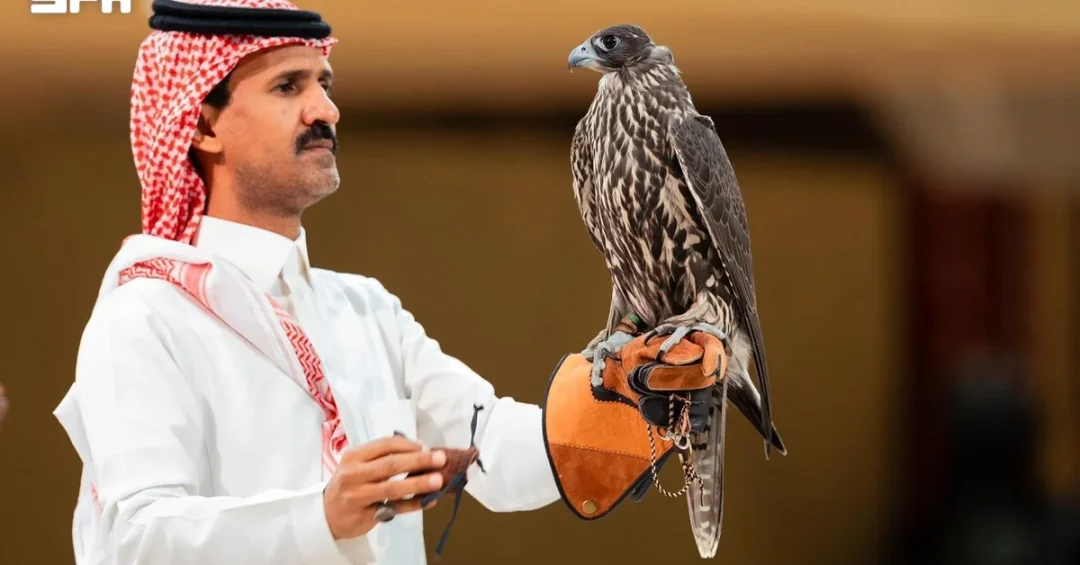
RIYADH — The International Falcon Breeders Auction, organized by the Saudi Falcons Club (SFC) in Malham, north of Riyadh, is showcasing a diverse array of falcon species, including Gyrfalcons, Peregrines, Sakers, and hybrids, each with distinctive traits that appeal to falconers worldwide. Running until August 25, the auction offers a unique opportunity for enthusiasts to observe and select from a wide range of falcons bred by local and international farms, highlighting the Kingdom’s commitment to preserving and promoting the heritage of falconry.
Context and Background
The auction, a key event in the falconry calendar, is organized by the Saudi Falcons Club, a leading institution dedicated to the preservation and development of falconry as a cultural heritage and a modern sport. Held in Malham, the event brings together breeders, falconers, and experts from across the globe to exchange knowledge and showcase the finest examples of falcon breeding. This year’s auction features a rich variety of species, each with unique characteristics in size, color, build, and performance, catering to the specific needs and preferences of falconers.
Key Details
Samer Dhiab Al-Sulaimi, a representative of a local participating farm, provided insights into the distinctive traits of the species on display. “Gyrfalcons are distinguished by their large size, strong build, and diverse coloration, ranging from white and gray to darker shades,” he explained, noting that breeding farms develop different lines based on targeted traits. “Peregrines are known for their speed, streamlined build, and pointed wings, making them particularly valued for their flight and diving capabilities.” Al-Sulaimi also highlighted the Saker falcon, which boasts a powerful build and a longstanding status among falconers, deeply rooted in the region’s falconry and hunting traditions.
In addition to pure species, the auction features hybrids that combine traits from multiple species, such as Gyr-Peregrine hybrids and Mathlouth Al-Gyr. Through selective breeding, producers aim to develop specific traits like speed, size, color, or performance, meeting the diverse demands of falconry competitions and hunting scenarios. “Differences among falcons extend beyond species or category names,” added Al-Sulaimi, “as falconers also consider the breeding line, individual traits, family performance records, and the intended purpose, particularly given the differing specifications sought for racing falcons and other forms.”
Implications and Impact
The auction serves as a vital platform for falconers and enthusiasts to view various species and categories in one location, learn about the production of local and international farms, and explore their experiences in selective breeding and developing production lines. This exchange of knowledge and expertise not only enhances the local falconry community but also contributes to the broader international dialogue on falconry conservation and breeding practices. The event underscores Saudi Arabia’s role as a global hub for falconry, attracting participants and visitors from around the world and reinforcing the Kingdom’s commitment to preserving its cultural heritage.
Vision 2030 Alignment
The International Falcon Breeders Auction aligns seamlessly with Saudi Arabia’s Vision 2030, which emphasizes the preservation of cultural heritage and the promotion of quality-of-life initiatives. By supporting and promoting falconry, the Kingdom is not only safeguarding a cherished tradition but also fostering a vibrant community that attracts tourism and international engagement. The auction exemplifies the Kingdom’s dedication to sustainability, cultural pride, and global cooperation, reinforcing its status as a leader in preserving and promoting the timeless art of falconry for generations to come. As the event continues through August 25, it stands as a testament to Saudi Arabia’s rich heritage and its forward-looking vision for a prosperous and culturally vibrant future.
20 Questions
Q1. What is the International Falcon Breeders Auction?
A1. The International Falcon Breeders Auction is an event organized by the Saudi Falcons Club (SFC) in Malham, north of Riyadh, where falconers and enthusiasts can view and purchase various falcon species and hybrids from local and international breeding farms.
Q2. Where is the auction being held?
A2. The auction is held in Malham, north of Riyadh, Saudi Arabia, a location chosen for its accessibility and association with falconry activities, providing a suitable venue for this prestigious event.
Q3. Who organizes the auction?
A3. The auction is organized by the Saudi Falcons Club (SFC), a prominent Saudi institution dedicated to the preservation and development of falconry as a cultural and sporting tradition.
Q4. When did the auction start and when does it end?
A4. The auction began in early August 2026 and will continue through August 25, providing ample time for falconers to explore and select their preferred birds.
Q5. What falcon species are featured at the auction?
A5. The auction features Gyrfalcons, Peregrines, Sakers, and various hybrids such as Gyr-Peregrine crosses, each distinguished by specific physical and performance traits.
Q6. Why are Gyrfalcons considered unique?
A6. Gyrfalcons are the largest of the falcon species, known for their strong build and diverse coloration ranging from white to gray and darker shades, making them highly sought after for their imposing presence.
Q7. What makes Peregrine falcons special?
A7. Peregrines are celebrated for their exceptional speed, streamlined build, and pointed wings, which make them superior in flight and diving capabilities, favored for racing and hunting.
Q8. How do Saker falcons differ from other species?
A8. Sakers are noted for their powerful build and deep-rooted association with falconry in the region, valued for their strength and stamina in hunting and traditional falconry practices.
Q9. What are hybrids in falconry?
A9. Hybrids are falcons bred from two different species, such as Gyr-Peregrine crosses, designed to combine the best traits of each parent, like speed, size, or coloration, for specific falconry purposes.
Q10. What is Mathlouth Al-Gyr?
A10. Mathlouth Al-Gyr is a hybrid falcon type commonly found among falconers, typically a cross involving Gyrfalcon and other species, bred to achieve desired traits and performance.
Q11. How do breeders develop specific traits in falcons?
A11. Breeders use selective breeding lines to enhance traits such as speed, size, color, and overall performance, in line with the requirements of falconry competitions and hunting scenarios.
Q12. What factors do falconers consider when selecting a falcon?
A12. Falconers consider the species, breeding line, individual traits, family performance records, and the intended purpose, such as racing or hunting, to ensure the falcon meets their needs.
Q13. How does the auction benefit falconers?
A13. The auction allows falconers to see various species and categories in one place, learn about breeding practices, and select from a wide range of high-quality falcons, saving time and providing access to diverse options.
Q14. How does the auction support falconry heritage in Saudi Arabia?
A14. By organizing such auctions, the Saudi Falcons Club promotes falconry heritage, educates the public, and encourages the continuation of traditional falconry practices, aligning with cultural preservation goals.
Q15. Are international farms participating in the auction?
A15. Yes, the auction features production from local and international farms, providing a global perspective on falcon breeding and allowing falconers to explore diverse breeding programs from around the world.
Q16. What role does the Saudi Falcons Club play in the event?
A16. The Saudi Falcons Club organizes and oversees the auction, ensuring high standards, promoting the sport, and facilitating knowledge exchange between breeders and falconers.
Q17. Can visitors attend the auction?
A17. Yes, the auction is open to falconers and enthusiasts, offering an opportunity to view the birds, interact with breeders, and gain insights into falconry practices and breeding innovations.
Q18. What is the significance of the auction’s location in Malham?
A18. Malham, north of Riyadh, is a key area for falconry in Saudi Arabia, offering suitable environments for the event and making it accessible to participants and visitors from the capital and beyond.
Q19. How does the auction contribute to Vision 2030?
A19. The auction supports Vision 2030 by promoting cultural heritage, enhancing quality of life, and attracting international interest, aligning with the Kingdom’s goals of diversification and cultural preservation.
Q20. What future does falconry have in Saudi Arabia?
A20. Falconry has a bright future in Saudi Arabia, with continued support from events like this auction, advanced breeding programs, and the Kingdom’s commitment to preserving cultural traditions while embracing modernity.
Reader Feedback
We value your thoughts. Please share your feedback on this article.
Your feedback helps us improve our coverage.