


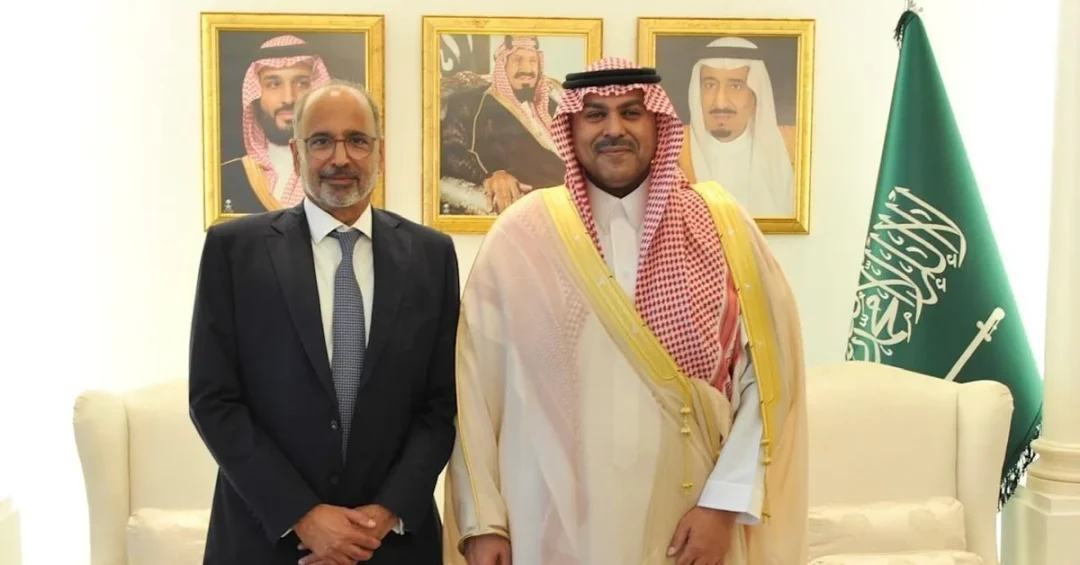
The Saudi Ambassador to Lebanon, Fahad Al-Dosari, met today with the Deputy Special Coordinator for Lebanon and UN Resident and Humanitarian Coordinator, Imran Riza, at the embassy in Beirut to discuss the country’s general situation and the United Nations’ humanitarian efforts. The meeting underscores Saudi Arabia’s ongoing engagement with international partners to support stability and humanitarian initiatives in Lebanon.
Context and Background
This meeting comes amid continued international focus on Lebanon’s socio-economic challenges and the vital role of humanitarian assistance. Saudi Arabia has historically been a key supporter of Lebanon’s stability, contributing to various humanitarian and development programs. The discussion between Ambassador Al-Dosari and Mr. Riza highlights the Kingdom’s commitment to fostering dialogue and cooperation with UN agencies to address pressing needs.
Key Details
During the meeting at the Saudi Embassy in Beirut, the two officials reviewed the overall situation in Lebanon, with particular emphasis on the United Nations’ humanitarian operations. The meeting reflects the strengthening of coordination between Saudi diplomatic missions and UN field representatives, ensuring aligned efforts to alleviate suffering and promote recovery. Ambassador Al-Dosari reaffirmed Saudi Arabia’s dedication to supporting Lebanon’s people through both bilateral and multilateral channels.
Implications and Impact
The engagement between Saudi Arabia and the United Nations in Lebanon has significant implications for regional stability. By maintaining open communication with UN officials, the Kingdom demonstrates its proactive role in facilitating humanitarian access and supporting international efforts to address the needs of vulnerable communities. This cooperation also reinforces Lebanon’s potential for recovery, which is essential for the broader Middle East region, and showcases Saudi Arabia’s enduring commitment to its neighbors.
Vision 2030 Alignment
This meeting aligns with Saudi Arabia’s Vision 2030, which emphasizes the Kingdom’s role as a leader in regional stability and global humanitarian efforts. Through such diplomatic engagements, Saudi Arabia not only bolsters its standing as a reliable partner but also contributes to a more secure and prosperous region. The ongoing collaboration with UN agencies in Lebanon exemplifies the Kingdom’s long-term vision of fostering peace and sustainable development, reaffirming its strategic commitment to supporting those in need.
20 Questions
Q1. Who received Imran Riza in Beirut?
A1. Saudi Ambassador to Lebanon, Fahad Al-Dosari, received Imran Riza at the Saudi embassy in Beirut on August 13, 2026, to discuss Lebanon’s situation and UN humanitarian efforts.
Q2. What is Imran Riza’s official title?
A2. Imran Riza serves as the Deputy Special Coordinator for Lebanon and the UN Resident and Humanitarian Coordinator, leading UN humanitarian and development activities in the country.
Q3. Where did the meeting take place?
A3. The meeting took place at the headquarters of the Saudi Embassy in Beirut, Lebanon, as reported by the Saudi Press Agency.
Q4. What was the main focus of the discussion?
A4. The discussion focused on reviewing the general situation in Lebanon and the United Nations’ actions, particularly in the humanitarian field, to address the country’s ongoing challenges.
Q5. Why is this meeting important?
A5. The meeting is important as it underscores Saudi Arabia’s active diplomatic engagement with the UN, reinforcing its commitment to supporting Lebanon’s stability and humanitarian needs through close coordination.
Q6. How does Saudi Arabia support humanitarian efforts in Lebanon?
A6. Saudi Arabia supports humanitarian efforts in Lebanon through financial aid, relief programs, and coordination with UN agencies, helping to address urgent needs and foster sustainable development.
Q7. What role does the UN play in Lebanon?
A7. The UN coordinates humanitarian assistance, supports development projects, and works with local authorities to address socio-economic challenges, with the Deputy Special Coordinator overseeing these efforts.
Q8. How does this meeting relate to Vision 2030?
A8. The meeting aligns with Vision 2030 by demonstrating Saudi Arabia’s role as a regional leader in diplomacy and humanitarian support, strengthening its global partnerships and commitment to regional stability.
Q9. What is the significance of Saudi-UN cooperation in Lebanon?
A9. The cooperation ensures effective aid delivery, promotes political dialogue, and helps maintain Lebanon’s stability, which is vital for the region and reflects Saudi Arabia’s responsible international role.
Q10. When did the meeting occur?
A10. The meeting occurred on August 13, 2026, as reported by the Saudi Press Agency, with the time recorded at 19:16 local time (16:16 GMT).
Q11. What did Ambassador Al-Dosari and Mr. Riza review?
A11. They reviewed the general situation in Lebanon, including the country’s socio-economic conditions and the operational aspects of UN humanitarian programs, to ensure coordinated responses.
Q12. Does Saudi Arabia have a history of supporting Lebanon?
A12. Yes, Saudi Arabia has a long history of supporting Lebanon through financial aid, humanitarian assistance, and diplomatic initiatives, reflecting its commitment to Lebanon’s sovereignty and prosperity.
Q13. How does the UN’s work impact Lebanon’s humanitarian situation?
A13. The UN’s work provides crucial aid to vulnerable populations, supports health and education programs, and helps stabilize communities, though challenges remain due to the complex economic crisis.
Q14. What is the role of a Deputy Special Coordinator?
A14. The Deputy Special Coordinator assists the Special Coordinator in political and humanitarian efforts, coordinates UN activities, and ensures alignment with the UN’s broader strategy in Lebanon.
Q15. What are the key challenges in Lebanon today?
A15. Lebanon faces economic instability, high unemployment, and infrastructure issues, all of which require sustained humanitarian aid and long-term development support from international actors.
Q16. How does Saudi Arabia’s engagement help Lebanon’s recovery?
A16. Saudi Arabia’s engagement helps Lebanon’s recovery through financial support, investment in key sectors, and advocacy for political reforms, which encourages other countries to contribute.
Q17. What is the outcome of such diplomatic meetings?
A17. The outcomes include strengthened bilateral ties, improved aid coordination, and a clear understanding of needs, leading to more effective humanitarian interventions and policy support.
Q18. How does this meeting affect Saudi-UN relations?
A18. The meeting enhances Saudi-UN relations by demonstrating mutual trust and cooperation, which is crucial for addressing global humanitarian crises and achieving shared development goals.
Q19. What future steps are expected after this meeting?
A19. Future steps likely include increased joint initiatives, follow-up meetings, and continuous monitoring of humanitarian projects to ensure that assistance reaches those in need efficiently.
Q20. How can readers stay informed about Saudi Arabia’s role in Lebanon?
A20. Readers can follow the Saudi Press Agency and official UN channels, which provide updates on diplomatic engagements and humanitarian efforts, ensuring transparency and accurate information.
Reader Feedback
We value your thoughts. Please share your feedback on this article.
Your feedback helps us improve our coverage.