


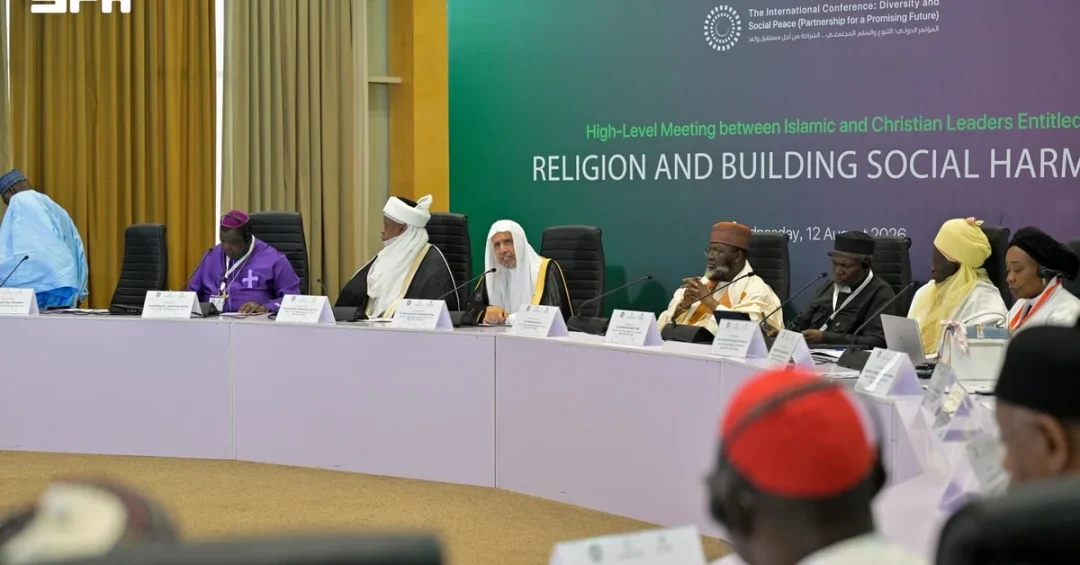
Makkah, August 14, 2026, SPA — The Secretary-General of the Muslim World League (MWL) and Chairman of the Organization of Muslim Scholars, Sheikh Dr. Mohammed Al-Issa, participated in a high-level roundtable discussion with Muslim and Christian leaders from the region, focused on the theme “Religion and the Promotion of Social Harmony” and ways to strengthen joint action to prevent conflicts and protect the national fabric in its religious and ethnic diversity.
Context and Background
The meeting is part of the League’s initiative for social peace in West Africa and the “Abuja Declaration,” adopted by religious leaders representing various religions and denominations in the region, under the patronage of the President of the Federal Republic of Nigeria, Bola Ahmed Tinubu. This gathering underscores the MWL’s commitment to fostering interfaith dialogue and cooperation, aligning with the Kingdom of Saudi Arabia’s leadership in promoting global peace and understanding.
Key Details
The meeting was marked by the signing of several memoranda of understanding (MoUs) between religious and civil organizations in Nigeria, including an MoU between the MWL and the Interfaith Mediation Centre of Nigeria, as well as others aimed at enhancing cooperation between Muslim and Christian institutions in the fields of peace and social harmony. The Coordination Body bringing together religious and civil leaders and institutions from West Africa will be responsible for monitoring the implementation of these MoUs and the commitments of the League’s social peace initiative as outlined in the “Abuja Declaration.”
Implications and Impact
This initiative demonstrates Saudi Arabia’s proactive role in supporting conflict prevention and social cohesion across West Africa. By facilitating dialogue and formal agreements between religious communities, the MWL contributes to stability and development in the region, which also benefits economic and security cooperation with the Kingdom. The emphasis on protecting diverse national fabrics aligns with international efforts to foster inclusive societies.
Vision 2030 Alignment
The MWL’s efforts in Nigeria reflect the Kingdom’s broader Vision 2030 goals of promoting moderation, tolerance, and international cooperation. By strengthening interfaith ties, Saudi Arabia continues to build bridges between cultures and religions, reinforcing its role as a global leader in peacemaking and humanitarian action. This initiative exemplifies how Saudi Arabia leverages its diplomatic and religious influence to further global harmony, consistent with the aspirations of Vision 2030.
20 Questions
Q1. What event did Sheikh Dr. Mohammed Al-Issa participate in?
A1. He participated in a high-level roundtable discussion with Muslim and Christian leaders in Nigeria, focusing on social harmony and conflict prevention.
Q2. What was the theme of the roundtable?
A2. The theme was “Religion and the Promotion of Social Harmony,” addressing how religious leaders can work together to prevent conflicts and protect national unity.
Q3. Who is Sheikh Dr. Mohammed Al-Issa?
A3. He is the Secretary-General of the Muslim World League and Chairman of the Organization of Muslim Scholars, a prominent Saudi religious leader.
Q4. What is the Muslim World League (MWL)?
A4. A global Islamic non-governmental organization based in Makkah, Saudi Arabia, focused on promoting Islamic values, peace, and interfaith dialogue.
Q5. Where did the roundtable take place?
A5. The article does not specify the exact venue, but it was part of an initiative in Nigeria, under the patronage of Nigeria’s President.
Q6. What is the “Abuja Declaration”?
A6. A declaration adopted by religious leaders in West Africa to promote social peace and unity, endorsed under Nigeria’s President Bola Ahmed Tinubu.
Q7. Who is Bola Ahmed Tinubu?
A7. The President of the Federal Republic of Nigeria, who patronized the religious leaders’ meeting and the Abuja Declaration.
Q8. What did the meeting result in?
A8. The signing of several memoranda of understanding between religious and civil organizations to enhance cooperation in peace and social harmony.
Q9. What is the significance of the Interfaith Mediation Centre of Nigeria?
A9. It is a Nigerian organization that works to mediate between religious communities, and it signed an MoU with MWL to strengthen joint efforts.
Q10. How will the MoUs be implemented?
A10. A coordination body of religious and civil leaders from West Africa will monitor the implementation of these agreements.
Q11. Why is this initiative important for West Africa?
A11. It promotes interreligious harmony, helps prevent conflicts, and supports social cohesion in a diverse region.
Q12. How does this align with Saudi Arabia’s Vision 2030?
A12. Vision 2030 emphasizes moderation and global cooperation; this initiative exemplifies Saudi leadership in promoting peace and tolerance.
Q13. What is the role of the Muslim World League in Africa?
A13. The MWL works to foster interfaith dialogue and social peace in African regions, as seen with this initiative.
Q14. Did the meeting include only Nigerian leaders?
A14. It included Muslim and Christian leaders from the region, indicating broader West African participation.
Q15. What is meant by “national fabric” in the article?
A15. It refers to the cultural and religious diversity of a nation, which the leaders aim to protect through joint action.
Q16. How does the MWL contribute to conflict prevention?
A16. By facilitating dialogue and agreements between religious groups, it helps reduce tensions and address root causes of conflict.
Q17. What specific MoUs were signed?
A17. The article mentions an MoU with the Interfaith Mediation Centre and others between Muslim and Christian institutions, but specifics are not listed.
Q18. What is the role of the Coordination Body?
A18. It will follow up on the implementation of the MoUs and the commitments of the Abuja Declaration.
Q19. Why is this news relevant to ksa.com readers?
A19. It highlights Saudi Arabia’s active role in promoting global peace and interreligious understanding, aligning with Vision 2030.
Q20. What are the expected outcomes of this initiative?
A20. Reduced conflicts, enhanced social harmony, and stronger ties between Muslim and Christian communities in West Africa.
Reader Feedback
We value your thoughts. Please share your feedback on this article.
Your feedback helps us improve our coverage.