


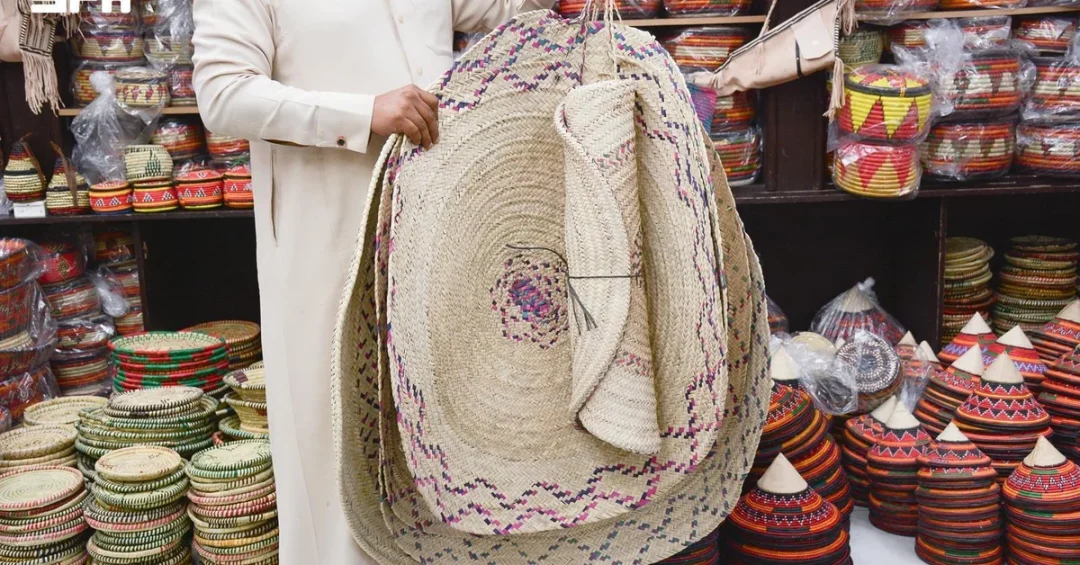
Traditional palm frond weaving in Najran Region continues to thrive as a cherished handicraft, showcasing the skill of local artisans who transform natural materials into everyday essentials. As reported by the Saudi Press Agency on August 14, 2026, this craft remains a vibrant part of the region’s cultural heritage, with artisans producing items such as mats, baskets, cushions, hand fans, and ropes.
Context and Background
Najran, located in the southwest of Saudi Arabia, is known for its rich cultural traditions and agricultural heritage, particularly its palm groves. Palm frond weaving has been practiced for centuries, passed down through generations as both a practical skill and an art form. Today, it symbolizes the region’s deep connection to its natural environment and its commitment to preserving cultural identity amidst modernization.
Key Details
In the historic market of the Aba Al-Saud neighborhood, shops display a wide array of intricately woven items that blend traditional patterns with modern design. Artisans emphasize that the craft requires precision and patience: fronds must be carefully selected, prepared, and then woven into diverse shapes and vibrant colors. Several female artisans highlighted that they inherited the craft across generations, refining their techniques to produce functional, modern items while preserving authentic cultural identity.
Implications and Impact
The continuation of palm frond weaving not only sustains a traditional skill but also supports local economies and cultural tourism. By offering handcrafted goods in historic markets, Najran attracts visitors interested in authentic Saudi culture. This craft also empowers local women, providing them with opportunities for income generation and creative expression, contributing to the social and economic vitality of the region.
Vision 2030 Alignment
This preservation of cultural heritage aligns seamlessly with Saudi Arabia’s Vision 2030, which emphasizes the importance of preserving national identity and heritage while fostering economic diversification. By promoting traditional crafts and tourism, the Kingdom ensures that such time-honored skills continue to thrive, contributing to a vibrant society and a diversified economy. As Saudi Arabia opens up to the world, crafts like palm frond weaving showcase the country’s rich cultural tapestry and its people’s enduring ingenuity.
20 Questions
Q1. What is the traditional craft highlighted in Najran?
A1. The traditional craft highlighted is palm frond weaving, which involves transforming natural palm fronds and fibers into useful items like mats, baskets, cushions, hand fans, and ropes.
Q2. Where does this craft take place?
A2. This craft is practiced in the Najran Region of Saudi Arabia, with items displayed in the historic market of the Aba Al-Saud neighborhood.
Q3. What products are made through palm frond weaving?
A3. Artisans produce mats, baskets, cushions, hand fans, and ropes, among other items.
Q4. What skills does the craft require?
A4. The craft requires precision and patience, involving careful selection and preparation of fronds before weaving them into various shapes and colors.
Q5. Who are the artisans practicing this craft?
A5. The artisans include both men and women, with several female artisans noted for inheriting the craft across generations.
Q6. How is the craft passed down?
A6. The craft is inherited across generations, with techniques refined over time to produce modern items while preserving cultural identity.
Q7. What is the significance of the historic market in Aba Al-Saud?
A7. The historic market in Aba Al-Saud serves as a venue where artisans display and sell their woven items, contributing to local commerce and cultural tourism.
Q8. How does palm frond weaving reflect cultural heritage?
A8. It demonstrates the deep connection between the region’s inhabitants and their natural environment, preserving traditional skills and cultural identity.
Q9. What role do women play in this craft?
A9. Women are active artisans, inheriting and refining techniques, and contributing to the craft’s continuity and economic empowerment.
Q10. How does the craft blend tradition with modernity?
A10. Artisans incorporate modern designs and vibrant colors while maintaining traditional weaving methods, producing items that appeal to contemporary tastes.
Q11. What materials are used in the craft?
A11. The primary materials are natural palm fronds and fibers, sourced from the region’s palm groves.
Q12. How does this craft support the local economy?
A12. The sale of woven items in markets generates income for artisans and attracts tourists, boosting local economic activity.
Q13. Does this craft have any environmental benefits?
A13. Using natural palm fronds is sustainable and eco-friendly, as it utilizes renewable resources without harmful chemicals.
Q14. Why is this craft important for cultural preservation?
A14. It preserves a traditional art form and knowledge, ensuring that cultural practices are not lost to modernization.
Q15. How does this craft contribute to tourism in Najran?
A15. Authentic handcrafted items attract visitors interested in experiencing Saudi culture, enhancing the region’s appeal as a tourist destination.
Q16. What challenges do artisans face?
A16. Challenges include competition from factory-made goods and the need to maintain interest among younger generations, though efforts to modernize designs help address these.
Q17. How does the Saudi government support such crafts?
A17. The government promotes cultural heritage through initiatives aligned with Vision 2030, such as festivals, training programs, and market support.
A18. Palm frond weaving is part of the broader cultural heritage that Vision 2030 aims to preserve and promote as part of national identity.
Q19. What is the future outlook for this craft?
A19. The craft is likely to continue evolving with modern innovations, while its cultural value and tourism appeal ensure its sustainability.
Q20. How can one learn more about palm frond weaving in Najran?
A20. Interested individuals can visit the historic market in Aba Al-Saud, participate in cultural tours, or engage with local artisans and craft centers.
Reader Feedback
We value your thoughts. Please share your feedback on this article.
Your feedback helps us improve our coverage.