


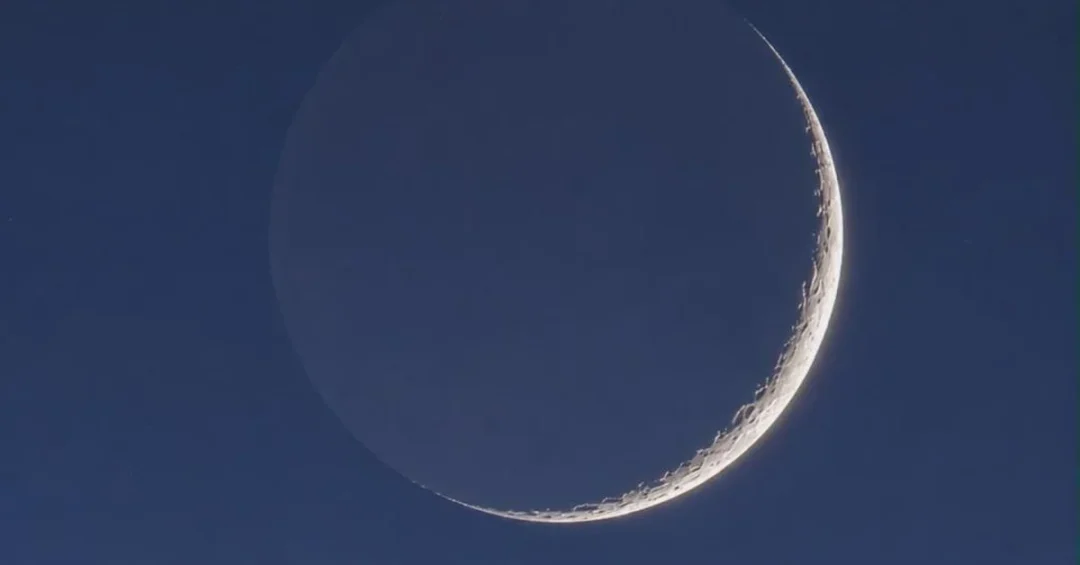
The skies of Saudi Arabia are set to offer clear viewing and photography opportunities tonight for the crescent moon of Rabi Al-Awwal along the western horizon after sunset, as confirmed by the Jeddah Astronomy Society. Head of the society, Majed Abu Zahra, stated that the moon reached conjunction on August 12 at 8:37 PM Makkah time, marking the start of the new lunar cycle. Since then, the crescent has gradually moved away from the sun, rising higher in the evening sky each night, according to a report from the Saudi Press Agency (SPA).
Context and Background
The sighting of the crescent moon holds significant cultural and religious importance in Saudi Arabia, as it marks the beginning of the Islamic lunar month of Rabi Al-Awwal. This month is celebrated by Muslims worldwide for the birth of the Prophet Muhammad (peace be upon him). The Kingdom, as the custodian of Islam’s holiest sites, plays a central role in the Islamic calendar, and astronomical observations like this one are part of a long tradition of blending science with faith.
Key Details
Abu Zahra noted that skywatchers can also observe a phenomenon known as earthshine, where the unlit portion of the moon is faintly illuminated by sunlight reflecting off Earth’s surface. This subtle glow enhances the crescent’s beauty as it moves eastward across the night sky. The Jeddah Astronomy Society, a leading scientific body in the Kingdom, regularly provides guidance and educational resources for such celestial events, supporting both amateur astronomers and the general public in exploring the night sky.
Implications and Impact
This celestial event underscores Saudi Arabia’s growing interest in astronomy and science education, part of a broader societal transformation under the Quality of Life Program. By encouraging citizens and residents to engage with natural phenomena, the Kingdom fosters a culture of curiosity and learning. Internationally, Saudi Arabia’s astronomical insights contribute to global knowledge and promote scientific collaboration, reflecting its supportive role in regional scientific networks.
Vision 2030 Alignment
The promotion of astronomy and scientific literacy aligns seamlessly with Saudi Arabia’s Vision 2030, which seeks to build a vibrant society with abundant opportunities for personal growth and cultural enrichment. By embracing both its Islamic heritage and modern scientific advancements, the Kingdom is positioning itself as a leader in the Middle East, inspiring future generations to look up at the stars with wonder and ambition.
20 Questions
Q1. When is the crescent moon of Rabi Al-Awwal expected to be visible in Saudi Arabia?
A1. The crescent moon is expected to be visible tonight, August 14, 2026, along the western horizon after sunset, provided atmospheric conditions remain clear, as reported by the Saudi Press Agency.
Q2. Who announced the details about the crescent moon sighting?
A2. The announcement was made by Majed Abu Zahra, Head of the Jeddah Astronomy Society, an official Saudi scientific body dedicated to astronomical research and public education.
Q3. What astronomical event marked the start of the new lunar cycle?
A3. The new lunar cycle began on August 12 at 8:37 PM Makkah time, when the moon reached conjunction with the sun, a moment known as the new moon phase.
Q4. What is the significance of the crescent moon in Islamic culture?
A4. The crescent moon marks the start of each Islamic month, and Rabi Al-Awwal is particularly significant as the month of the Prophet Muhammad’s birth, celebrated by Muslims globally.
Q5. What is earthshine, and why is it visible during the crescent moon?
A5. Earthshine is a phenomenon where sunlight reflects off Earth’s surface and faintly illuminates the dark side of the moon, making the full outline of the moon visible alongside the crescent.
Q6. How does the Jeddah Astronomy Society support skywatching in Saudi Arabia?
A6. The society provides educational resources, organizes viewing events, and offers expert guidance to help the public and astronomers observe celestial phenomena effectively.
Q7. What conditions are necessary for optimal crescent moon viewing?
A7. Clear atmospheric conditions and an unobstructed view of the western horizon without light pollution or weather interference are essential for the best viewing experience.
Q8. Why is Rabi Al-Awwal a special month for Saudi Arabia?
A8. As the month of the Prophet’s birth, it holds deep religious significance, and Saudi Arabia, as the host of Islamic holy sites, plays a central role in related traditions and celebrations.
Q9. How does this astronomical event relate to Vision 2030?
A9. The promotion of astronomy aligns with Vision 2030’s goal to enhance quality of life and encourage cultural and educational enrichment among citizens and residents.
Q10. What role does the Saudi Press Agency play in disseminating this information?
A10. The Saudi Press Agency is the official state news agency, ensuring accurate and timely dissemination of announcements like this to the public and international audiences.
Q11. Can visitors to Saudi Arabia witness astronomical events like this?
A11. Yes, visitors can participate in public skywatching events and enjoy the country’s natural beauty, as Saudi Arabia’s Vision 2030 promotes tourism and cultural exchange.
Q12. What other celestial phenomena might be visible in the coming nights?
A12. In the coming nights, the moon will rise higher each evening, and skywatchers might observe the waxing crescent with continued earthshine, along with other stars and planets.
Q13. How does the conjunction of the moon and sun occur?
A13. Conjunction occurs when the moon and Earth are nearly aligned with the sun, causing the moon to appear invisible and initiating the new lunar cycle.
Q14. What is the Jeddah Astronomy Society’s main mission?
A14. The society aims to promote astronomical education, research, and public awareness, contributing to the development of scientific culture in Saudi Arabia.
Q15. Why is it important to observe the moon according to the Islamic calendar?
A15. Accurate moon sighting maintains the authenticity of the Islamic calendar, which affects religious observances like fasting and Hajj, reinforcing the Kingdom’s commitment to Islamic traditions.
Q16. How does the Ministry of Tourism benefit from such celestial events?
A16. Celestial events attract tourists interested in astronomy and nature, boosting domestic tourism and showcasing Saudi Arabia’s unique cultural and natural offerings.
Q17. Are there any ongoing research projects about moon observation?
A17. Organizations like the Jeddah Astronomy Society conduct ongoing research and collaborate with international partners to enhance lunar observation techniques and data collection.
Q18. What time is best for observing the crescent moon?
A18. The best time is shortly after sunset, when the sky darkens but the moon remains above the western horizon, making it easier to spot the thin crescent.
Q19. How does this event reflect Saudi Arabia’s commitment to science?
A19. The Kingdom’s investment in astronomy education and public engagement demonstrates a strategic focus on scientific advancement and innovation, key pillars of Vision 2030.
Q20. What advice would experts give to first-time skywatchers?
A20. Experts advise choosing a high vantage point with a clear horizon, arriving early to adapt to darkness, and using binoculars or a telescope to enhance the experience.
Reader Feedback
We value your thoughts. Please share your feedback on this article.
Your feedback helps us improve our coverage.