


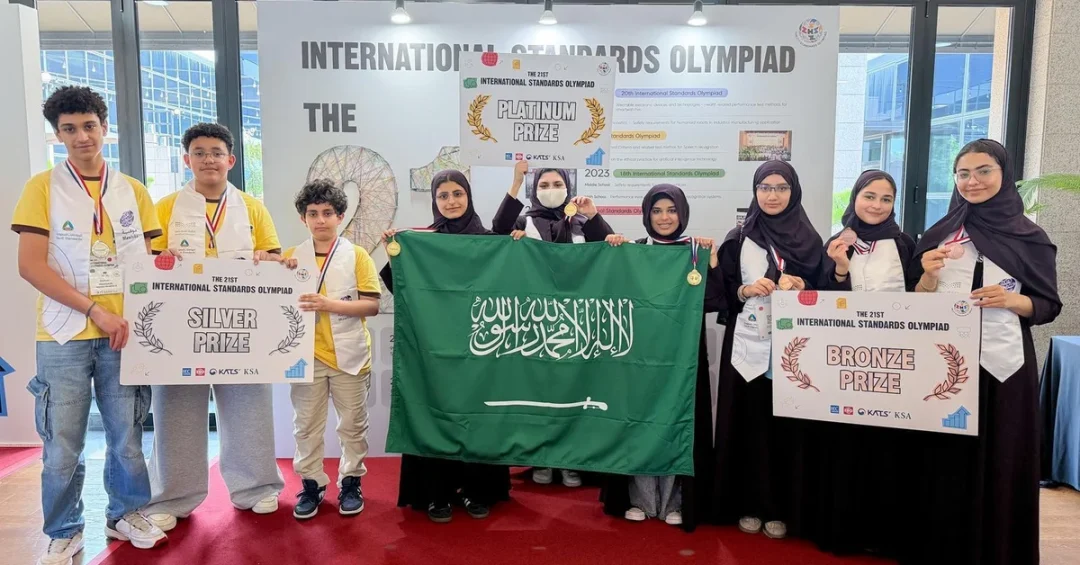
Saudi Arabia’s national standards team has achieved a historic milestone at the 21st International Standards Olympiad, securing the competition’s highest honor, the Platinum Award, along with a silver and a bronze medal. The event, hosted by South Korea from August 12 to 14, 2026, saw the Kingdom’s team excel among international competitors, marking the first time Saudi Arabia has claimed the prestigious Platinum Award since its debut in the competition in 2024.
Context and Background
The International Standards Olympiad, organized annually, brings together young talents from around the world to solve complex problems related to standardization, promoting excellence in the field. This year’s edition in Seoul, the capital of South Korea, featured rigorous challenges that tested participants’ knowledge, creativity, and practical skills. Saudi Arabia’s participation underscores the Kingdom’s commitment to fostering innovation and technical expertise among its youth, aligned with the ambitious goals of Vision 2030 to diversify the economy and build a knowledge-based society.
Key Details
The Platinum Award, the highest accolade in the Olympiad, is granted to only one team per edition, recognizing exceptional performance. The Saudi team received the award from the Prime Minister of South Korea, adding to its significance. In addition to the Platinum Award, the Saudi contingent secured one silver and one bronze medal, demonstrating consistent excellence across various categories. This achievement brings Saudi Arabia’s cumulative tally to eight international awards since its first participation in 2024: one platinum, one gold, three silvers, two bronzes, and one honorary mention.
Implications and Impact
This success reflects the effectiveness of Saudi Arabia’s educational and training initiatives in science, technology, engineering, and mathematics (STEM). It also highlights the Kingdom’s growing presence in international academic and professional arenas. The participation of Saudi youth in such global competitions not only enhances their skills but also promotes cross-cultural exchange and collaboration. The recognition on an international stage positions Saudi Arabia as a rising hub for talent and innovation in the region, contributing to its reputation as a leader in the Arab and Islamic worlds.
Vision 2030 Alignment
This achievement aligns seamlessly with Saudi Arabia’s Vision 2030, which emphasizes the importance of developing human capital and fostering a culture of innovation and excellence. By nurturing young talents in standardization and other technical fields, the Kingdom is building a capable generation ready to contribute to a diversified, sustainable economy. The Platinum Award serves as a testament to the progress made under Vision 2030 and inspires future achievements that will further enhance the Kingdom’s global standing and prosperity.
20 Questions
Q1. What is the International Standards Olympiad?
A1. The International Standards Olympiad is a global competition for students to solve problems related to standardization, promoting knowledge and skills in setting technical standards. It brings together young talents from various countries to compete in different challenges.
Q2. When and where was the 21st edition held?
A2. The 21st edition of the International Standards Olympiad was held from August 12 to 14, 2026, in Seoul, South Korea. The event provided a platform for international participants to showcase their abilities.
Q3. What award did Saudi Arabia win?
A3. Saudi Arabia won the Platinum Award, the highest honor in the Olympiad, which is given to only one team overall. The Kingdom also received a silver and a bronze medal, marking a significant achievement.
Q4. How many teams win the Platinum Award?
A4. Only one team wins the Platinum Award in each edition of the Olympiad. This exclusive recognition is reserved for the top-performing team among all participants, making it a highly prestigious honor.
Q5. What is the significance of the Prime Minister’s Award?
A5. The Platinum Award is also known as the Prime Minister’s Award, presented by the Prime Minister of South Korea. This underscores the high-level recognition and importance of the competition.
Q6. How many total awards has Saudi Arabia won since 2024?
A6. Since its first participation in 2024, Saudi Arabia has won a total of eight awards: one platinum, one gold, three silvers, two bronzes, and one honorary mention.
Q7. When did Saudi Arabia first participate in the Olympiad?
A7. Saudi Arabia first participated in the International Standards Olympiad in 2024. In just two years, the Kingdom has made remarkable progress, achieving the top award in 2026.
Q8. What does the Platinum Award signify for Saudi Arabia?
A8. The Platinum Award signifies Saudi Arabia’s outstanding performance and growing expertise in the field of standardization. It highlights the Kingdom’s commitment to fostering talent and excellence among its youth.
Q9. How does this achievement relate to Vision 2030?
A9. This achievement directly supports Vision 2030 by demonstrating investment in human capital and education. It aligns with the Kingdom’s goal of building a knowledge-based economy and nurturing innovative talent.
Q10. Who organized the 21st International Standards Olympiad?
A10. The 21st International Standards Olympiad was organized by South Korea, which hosted the event in its capital, Seoul. The competition attracted participants from various countries.
Q11. What is the role of the Saudi Standards, Metrology and Quality Organization?
A11. The Saudi Standards, Metrology and Quality Organization (SASO) is responsible for setting standards and quality regulations in the Kingdom. It likely played a key role in preparing the national team for the Olympiad.
Q12. What is the importance of standardization in Saudi Arabia?
A12. Standardization is crucial for ensuring product quality, safety, and efficiency in various sectors. It supports Saudi Arabia’s economic diversification and integration into global markets.
Q13. How does the Olympiad help students?
A13. The Olympiad helps students develop problem-solving skills, teamwork, and understanding of international standards. It prepares them for careers in standardization, engineering, and related fields.
Q14. What is the Platinum Award’s uniqueness?
A14. The Platinum Award is unique because it is awarded to only one team per edition, making it the highest individual recognition in the competition. It symbolizes excellence and superior performance.
Q15. What are the benefits of participating in such competitions?
A15. Participation enhances technical knowledge, fosters international collaboration, and builds confidence among students. It also promotes Saudi Arabia’s image as a hub for talent and innovation.
Q16. Does Saudi Arabia plan to participate in future Olympiads?
A16. Saudi Arabia is likely to continue participating in future Olympiads to further develop its students’ skills and maintain its competitive edge. The success in 2026 encourages further engagement.
Q17. How does this achievement impact Saudi youth?
A17. This achievement inspires Saudi youth to pursue excellence in STEM fields. It demonstrates that they can compete and succeed at the highest international levels, motivating them to aim for similar achievements.
Q18. What other medals did Saudi Arabia win in 2026?
A18. In addition to the Platinum Award, Saudi Arabia won one silver and one bronze medal in the 2026 Olympiad. This shows consistent performance across different categories.
Q19. What is the source of this information?
A19. The information is based on an official report from the Saudi Press Agency (SPA), which announced the results. SPA is a reliable and authoritative source for Saudi news.
Q20. What is the next step for Saudi Arabia in standardization?
A20. Saudi Arabia may leverage this success to enhance its national standards programs and increase participation in global forums. It could also promote standardization education in schools and universities.
Reader Feedback
We value your thoughts. Please share your feedback on this article.
Your feedback helps us improve our coverage.