


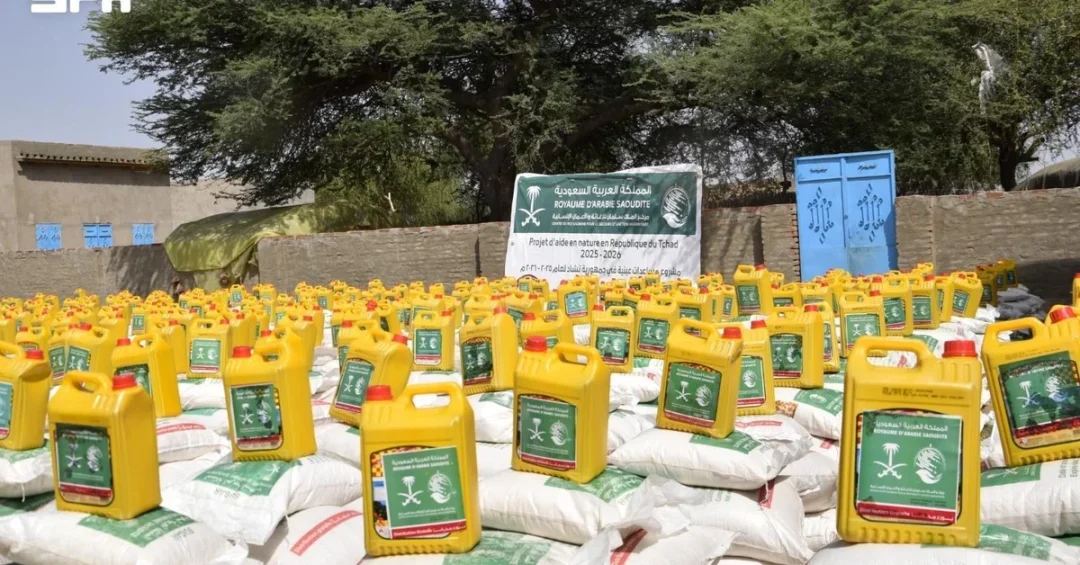
RIYADH — The King Salman Humanitarian Aid and Relief Center (KSrelief) distributed 1,000 food baskets on Saturday to the most vulnerable groups and refugees in the Republic of Chad, benefiting 6,000 individuals. The distribution, announced by the Saudi Press Agency (SPA), is part of the 2026 in-kind assistance distribution project in Chad, reflecting Saudi Arabia’s continued commitment to humanitarian causes worldwide.
Context and Background
Chad, a landlocked country in Central Africa, faces significant food insecurity and hosts a large refugee population, many fleeing conflict in neighboring countries. The distribution of food baskets is part of ongoing efforts to alleviate suffering and support stability in the region. Saudi Arabia, through KSrelief, has consistently provided aid to nations in crisis, reinforcing its role as a global humanitarian leader.
Key Details
The food baskets are designed to provide essential nutrition to vulnerable groups and refugees, with each basket containing staple items to sustain a family for a period. The initiative targets 6,000 individuals, ensuring that aid reaches those most in need. KSrelief, named after Custodian of the Two Holy Mosques King Salman bin Abdulaziz Al Saud, operates numerous projects worldwide, focusing on food security, health, and education.
International Impact
This distribution underscores Saudi Arabia’s broader humanitarian strategy and its partnership with international organizations. By supporting refugees and vulnerable communities in Chad, the Kingdom contributes to the United Nations Sustainable Development Goals, particularly Zero Hunger (SDG 2). The aid also fosters goodwill and stability in a region plagued by humanitarian challenges, enhancing Saudi Arabia’s diplomatic ties with African nations.
Vision 2030 Alignment
This humanitarian intervention aligns with Saudi Vision 2030, which emphasizes the Kingdom’s role as a global leader in humanitarian and relief work. By extending support to those in need, Saudi Arabia reinforces its commitment to international cooperation and solidarity, fulfilling the vision of a vibrant society that contributes to global welfare. The ongoing efforts of KSrelief are a testament to the Kingdom’s dedication to making a positive impact beyond its borders.
20 Questions
Q1. What is the King Salman Humanitarian Aid and Relief Center (KSrelief)?
A1. KSrelief is a Saudi Arabian humanitarian organization established in 2015 to coordinate and deliver relief aid globally. It operates under the directives of the Saudi government and focuses on food security, health, education, and shelter in crisis-affected countries.
Q2. Where did KSrelief distribute the food baskets?
A2. The distribution took place in the Republic of Chad, specifically in areas hosting the most vulnerable groups and refugees. The exact locations were not specified, but the aid targets those in dire need.
Q3. How many food baskets were distributed?
A3. A total of 1,000 food baskets were distributed on Saturday, August 17, 2026, as part of the ongoing project in Chad.
Q4. How many individuals benefited from this distribution?
A4. The food baskets benefited 6,000 individuals, based on an average of six people per family or household.
Q5. What is the purpose of the 2026 in-kind assistance distribution project in Chad?
A5. The project aims to provide essential food aid to vulnerable groups and refugees in Chad, addressing food insecurity and supporting their basic needs throughout 2026.
Q6. Who announced this distribution?
A6. The Saudi Press Agency (SPA) reported the announcement, citing officials from KSrelief. The information was released via official Saudi channels.
Q7. What does the distribution of food baskets entail?
A7. Each food basket typically contains staple items such as flour, rice, sugar, oil, and other non-perishable foods, providing a family with sustenance for several weeks.
Q8. Why is Chad in need of food assistance?
A8. Chad faces chronic food insecurity due to climate shocks, displacement, and poverty. It also hosts a large number of refugees, straining local resources and necessitating international aid.
Q9. How does this aid reflect Saudi Arabia’s foreign policy?
A9. Saudi Arabia’s foreign policy emphasizes humanitarian assistance and solidarity with developing nations. This aid underscores its commitment to international cooperation and peace, as part of its broader diplomatic strategy.
Q10. What is the role of KSrelief in Saudi Arabia’s Vision 2030?
A10. Under Vision 2030, Saudi Arabia aims to enhance its global humanitarian role. KSrelief acts as the primary vehicle for delivering aid, showcasing the Kingdom’s dedication to human welfare and international responsibility.
Q11. Has KSrelief been active in Chad previously?
A11. Yes, KSrelief has implemented various projects in Chad, including food security, health, and education programs. This distribution is part of a continuous effort to support the country.
Q12. What are the main challenges in delivering aid to Chad?
A12. Challenges include logistics, security, and reaching remote areas. Coordination with local authorities and international partners is crucial to ensure aid reaches those in need.
Q13. How does the aid support refugees in Chad?
A13. Refugees often lack access to adequate food and services. The food baskets provide a safety net, easing their immediate needs and reducing pressure on host communities.
Q14. What is the significance of the Kingdom’s humanitarian efforts?
A14. Saudi Arabia’s humanitarian efforts demonstrate its leadership in addressing global crises, aligning with its values and responsibilities as a major Islamic and international power.
Q15. Are there any partnerships involved in this distribution?
A15. KSrelief often partners with international organizations and local agencies for on-the-ground delivery. Partnerships ensure efficiency and aid reaches the intended beneficiaries.
Q16. What is the timeline for the 2026 project in Chad?
A16. The project spans the year 2026, with distributions planned throughout the year based on needs and assessments.
Q17. How can individuals or organizations support KSrelief’s mission?
A17. Support can be provided through donations, partnerships, or volunteering. KSrelief’s official channels offer gateways for contributions.
Q18. What are the expected outcomes of this food distribution?
A18. The immediate outcome is reduced hunger and improved nutrition among beneficiaries. Long-term, it contributes to stability and resilience.
Q19. How does this aid align with international humanitarian principles?
A19. It aligns with principles of neutrality, humanity, and impartiality, focusing solely on need, irrespective of nationality or creed.
Q20. What future projects is KSrelief planning for Chad?
A20. KSrelief continuously assesses needs and plans projects in health, education, and food security. Specific future plans may be announced through official SPA reports.
Reader Feedback
We value your thoughts. Please share your feedback on this article.
Your feedback helps us improve our coverage.