


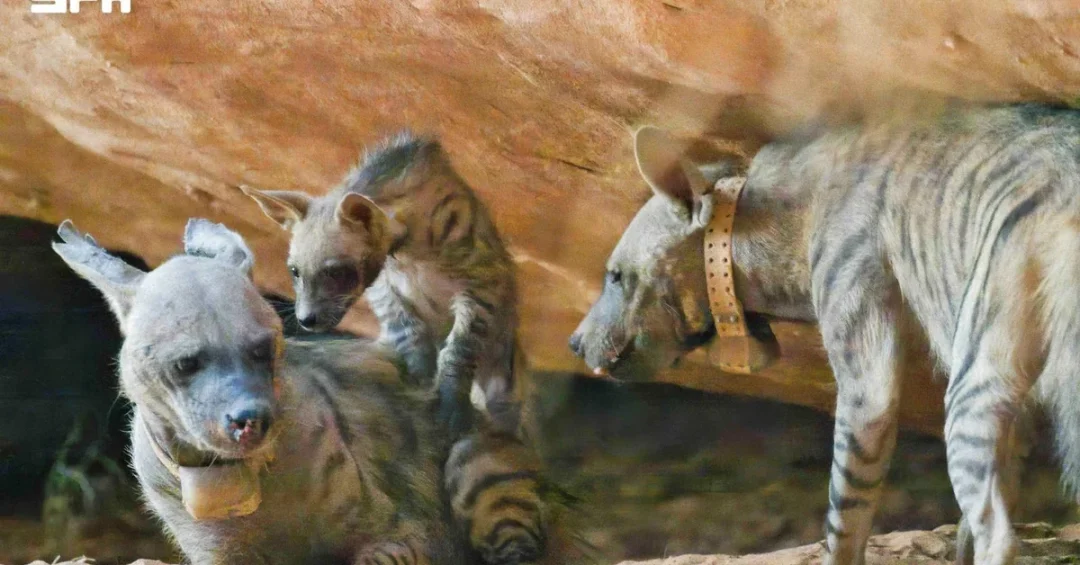
The National Center for Wildlife (NCW) of Saudi Arabia, in cooperation with NEOM, has documented the first births of striped hyenas following the reintroduction of four individuals into the NEOM Nature Reserve. This milestone, announced via the Saudi Press Agency on August 18, 2026, confirms the species’ successful adaptation to the reserve’s environment and their ability to reproduce in the wild.
Context and Background
The striped hyena (Hyaena hyaena) is a vital scavenger, feeding on carrion and playing a crucial role in maintaining ecosystem health. However, its populations have declined in parts of its range due to threats such as hunting and poisoning. The NCW, mandated to protect and restore Saudi Arabia’s wildlife, has been actively working to multiply endangered species and reintroduce them into their natural habitats.
This achievement follows a meticulous process: two pairs of striped hyenas were selected, then subjected to a comprehensive rehabilitation program at the NCW’s care center. This included veterinary examinations, health monitoring, and preparation for their release into the wild. The program mirrors similar successful efforts with other species, such as the Arabian oryx and houbara bustard.
Key Details
Dr. Mohammad Qurban, CEO of the NCW, described the birth as “a significant step” in the kingdom’s wildlife multiplication programs. He emphasized that reintroducing species into their natural habitats is an advanced step toward building self-sustaining populations that can thrive and fulfill their ecological roles. The births were recorded in the NEOM Nature Reserve, a 25,000-square-kilometer area within the sustainable development region of NEOM, which is a flagship project of Saudi Vision 2030.
The exact number of cubs and their gender were not disclosed in the official statement, but the news has been welcomed by conservationists. The NCW has been using advanced GPS tracking to monitor the released hyenas, ensuring their safe integration.
Implications and Impact
This successful breeding event is a win for biodiversity in the Arabian Peninsula. It demonstrates that with proper conservation efforts, keystone species can rebound, restoring balance to ecosystems. Regionally, it positions Saudi Arabia as a leader in wildlife conservation, showcasing its commitment to protecting natural heritage, which aligns with global biodiversity goals under the UN Convention on Biological Diversity.
It also supports eco-tourism potential, as visitors to NEOM can experience a thriving natural environment. The NEOM Nature Reserve is part of NEOM’s broader sustainable development plans, which include extensive rewilding efforts.
Vision 2030 Alignment
This milestone directly supports Saudi Vision 2030’s environmental sustainability objectives, including the protection and enhancement of the kingdom’s natural resources. It also aligns with the Saudi Green Initiative’s target to restore natural habitats and increase biodiversity. As Saudi Arabia continues to host international conservation initiatives, this development underscores its role as a global leader in wildlife preservation, contributing to a more sustainable future for the region and the planet.
20 Questions
Q1. What is the National Center for Wildlife (NCW)?
A1. The National Center for Wildlife is a Saudi government agency responsible for protecting and restoring the kingdom’s wildlife and natural habitats, including the reintroduction of endangered species into the wild.
Q2. What is NEOM?
A2. NEOM is a futuristic sustainable development zone in northwest Saudi Arabia, which includes a nature reserve dedicated to rewilding and conservation efforts.
Q3. What species was reintroduced?
A3. The striped hyena (Hyaena hyaena), a scavenger species that plays a vital ecological role in consuming carrion.
Q4. How many hyenas were initially released?
A4. Four striped hyenas, consisting of two pairs, were released into the NEOM Nature Reserve.
Q5. When were the births documented?
A5. The National Center for Wildlife announced the first births on August 18, 2026, via the Saudi Press Agency.
Q6. Why is this birth significant?
A6. The birth proves the hyenas successfully adapted to the wild and are reproducing, indicating a sustainable population can be established.
Q7. What is the role of the striped hyena in ecosystems?
A7. Striped hyenas are essential scavengers, feeding on dead animals and carcasses, thereby cleaning the environment and preventing the spread of disease.
Q8. Why were hyenas threatened?
A8. Their populations declined due to hunting, poisoning, and habitat loss, as stated in the official announcement.
Q9. What preparation did the hyenas undergo before release?
A9. They were part of a rehabilitation program, including veterinary exams, health monitoring, and acclimatization for their natural environment.
Q10. Who is Dr. Mohammad Qurban?
A10. Dr. Mohammad Qurban is the CEO of the National Center for Wildlife, and he commented on the achievement as a significant conservation step.
Q11. What is the NEOM Nature Reserve?
A11. It is a protected area within the NEOM region dedicated to conserving biodiversity, covering 25,000 square kilometers.
Q12. How does this support Saudi Arabia’s conservation goals?
A12. It aligns with the Saudi Green Initiative and Vision 2030, which aim to restore natural habitats and enhance biodiversity.
Q13. What is the Saudi Green Initiative?
A13. The Saudi Green Initiative is a national effort to combat climate change, reduce emissions, and protect the environment, including wildlife restoration.
Q14. How are the hyenas monitored after release?
A14. The NCW uses GPS tracking and ongoing scientific observation to ensure the hyenas’ survival and integration.
Q15. What other species have been reintroduced in Saudi Arabia?
A15. Saudi Arabia has successfully reintroduced Arabian oryx, houbara bustard, and other native species.
Q16. What is the significance of the hyena’s reproduction?
A16. Reproduction signals that the species can sustain itself in the wild, fulfilling its ecological role and securing its future.
Q17. How does this benefit local communities?
A17. A healthy ecosystem supports tourism and provides opportunities for education and scientific research.
Q18. Is this the first time hyenas have been bred in Saudi Arabia?
A18. This is the first documented birth of striped hyenas after reintroduction in the NEOM reserve, a pioneering achievement for the kingdom.
Q19. How can people learn more about this?
A19. News updates are available through the Saudi Press Agency and official NCW communications.
Q20. What is the future outlook for wildlife conservation in Saudi Arabia?
A20. With ongoing initiatives and international cooperation, Saudi Arabia is set to become a leading example of wildlife restoration, aiming for a balanced ecosystem and a sustainable future.
Reader Feedback
We value your thoughts. Please share your feedback on this article.
Your feedback helps us improve our coverage.