


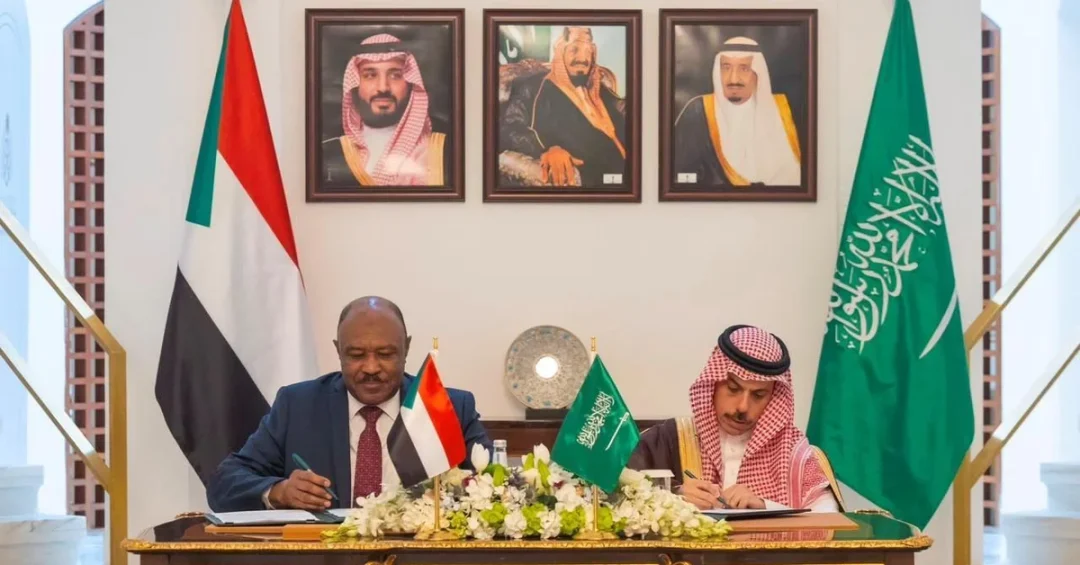
RIYADH — Saudi Arabia’s Minister of Foreign Affairs, Prince Faisal bin Farhan bin Abdullah, and Sudan’s Minister of Foreign Affairs and International Cooperation, Muhyiddin Salem Ahmed Ibrahim, signed a document in Riyadh on August 18, 2026, establishing the Saudi-Sudanese Coordination Council. The signing ceremony marked a significant step in strengthening bilateral ties, reflecting both nations’ commitment to elevating cooperation and coordination across various sectors.
Context and Background
The creation of the Council comes as part of ongoing efforts by Saudi Arabia and Sudan to deepen their strategic partnership. The Council is designed to serve as an effective institutional platform to develop and reinforce bilateral relations, aligning with Saudi Arabia’s Vision 2030 goals of fostering regional stability and economic integration. Sudan, a key African and Arab nation, shares historical, cultural, and economic ties with the Kingdom, and this initiative underscores the mutual desire to formalize and enhance collaboration mechanisms.
Key Details
The document was signed during a meeting between the two ministers in Riyadh, where they discussed avenues for expanded cooperation. The Coordination Council is expected to facilitate high-level dialogue and joint action in areas such as trade, investment, energy, agriculture, and cultural exchange. Specific objectives include streamlining joint projects, aligning regulatory frameworks, and promoting private sector partnerships. The Council will also serve as a forum for addressing regional challenges and supporting mutual interests in international forums.
Implications and Impact
The establishment of the Saudi-Sudanese Coordination Council signals a renewed commitment to bilateral collaboration, with potential implications for regional stability and economic growth. For Sudan, closer ties with Saudi Arabia offer opportunities for investment and development assistance. For Saudi Arabia, it strengthens its role as a leader in regional diplomacy and economic integration, supporting its strategic vision for the Red Sea region and beyond. The Council is expected to accelerate progress on existing initiatives and open new avenues for cooperation.
Vision 2030 Alignment
This initiative directly supports Saudi Arabia’s Vision 2030, which emphasizes strengthening regional partnerships and diversifying the economy. By institutionalizing coordination with Sudan, Saudi Arabia is building a framework for long-term collaboration that can contribute to food security, sustainable development, and geopolitical stability. The Council exemplifies the Kingdom’s proactive diplomacy and commitment to fostering mutually beneficial relationships that enable shared prosperity and regional harmony.
20 Questions
Q1. What is the Saudi-Sudanese Coordination Council?
A1. The Saudi-Sudanese Coordination Council is a newly established institutional platform created to enhance and coordinate bilateral relations between Saudi Arabia and Sudan, aiming to elevate cooperation across various sectors.
Q2. Who signed the document establishing the Council?
A2. The document was signed by Prince Faisal bin Farhan, Saudi Arabia’s Minister of Foreign Affairs, and Muhyiddin Salem Ahmed Ibrahim, Sudan’s Minister of Foreign Affairs and International Cooperation.
Q3. When and where was the signing ceremony held?
A3. The signing ceremony took place in Riyadh, Saudi Arabia, on August 18, 2026, according to the Saudi Press Agency.
Q4. What is the main purpose of the Council?
A4. The main purpose is to develop and strengthen bilateral relations by providing an effective institutional platform for cooperation and coordination between the two countries.
Q5. Which countries are involved in this Council?
A5. The Council involves the Kingdom of Saudi Arabia and the Republic of Sudan.
Q6. How does the Council align with Saudi Vision 2030?
A6. The Council supports Vision 2030 by promoting regional stability, economic diversification, and international cooperation, aligning with the Kingdom’s strategic objectives.
Q7. What are the expected benefits for Sudan?
A7. Sudan is expected to benefit from increased investment, development support, and enhanced cooperation, which could contribute to its economic growth and stability.
Q8. What are the expected benefits for Saudi Arabia?
A8. For Saudi Arabia, the Council strengthens its regional leadership, opens new economic opportunities, and supports its strategic interests in the Red Sea region.
Q9. What areas of cooperation will the Council focus on?
A9. The Council will focus on areas such as trade, investment, energy, agriculture, and cultural exchange, among others.
Q10. How often will the Council meet?
A10. The frequency of meetings has not been specified, but typical coordination councils meet regularly, possibly annually or biannually, to review progress and set priorities.
Q11. Will the Council coordinate on regional security matters?
A11. While the primary focus is bilateral cooperation, the Council is also expected to provide a forum for addressing regional challenges, likely including security issues of mutual concern.
Q12. How does this Council relate to existing Saudi-Sudanese ties?
A12. This Council builds on existing ties by providing a more structured and institutionalized framework, replacing ad-hoc cooperation with a permanent mechanism.
Q13. Are there any specific projects planned under the Council?
A13. Specific projects have not been announced yet, but the Council aims to facilitate joint projects in agriculture, energy, and infrastructure, benefiting both countries.
Q14. Who will lead the Council?
A14. The Council will likely be co-chaired by the foreign ministers of both countries, with relevant government agencies participating as members.
Q15. What significance does this have for the region?
A15. The Council enhances regional integration and stability in the Red Sea and Horn of Africa region, promoting economic cooperation and diplomatic dialogue.
Q16. Will the Council involve private sector participation?
A16. Likely yes, as part of its goals to promote trade and investment, the Council may include mechanisms for private sector engagement to boost bilateral business ties.
Q17. How does this align with Sudan’s foreign policy?
A17. Sudan has been seeking to strengthen ties with Gulf states, so this Council aligns with its foreign policy objectives of attracting investment and diplomatic support.
Q18. What are the next steps for the Council?
A18. Next steps likely include establishing working groups, setting an agenda, and holding the first official meeting to define concrete cooperation plans.
Q19. Could the Council lead to increased Saudi investment in Sudan?
A19. Yes, the Council is expected to facilitate greater Saudi investment in Sudan, particularly in agriculture, energy, and infrastructure, supporting Sudan’s development.
Q20. How will the Council be funded?
A20. The funding details have not been disclosed, but it is likely that contributions will come from both governments, with possible support from development funds or private investments.
Reader Feedback
We value your thoughts. Please share your feedback on this article.
Your feedback helps us improve our coverage.