


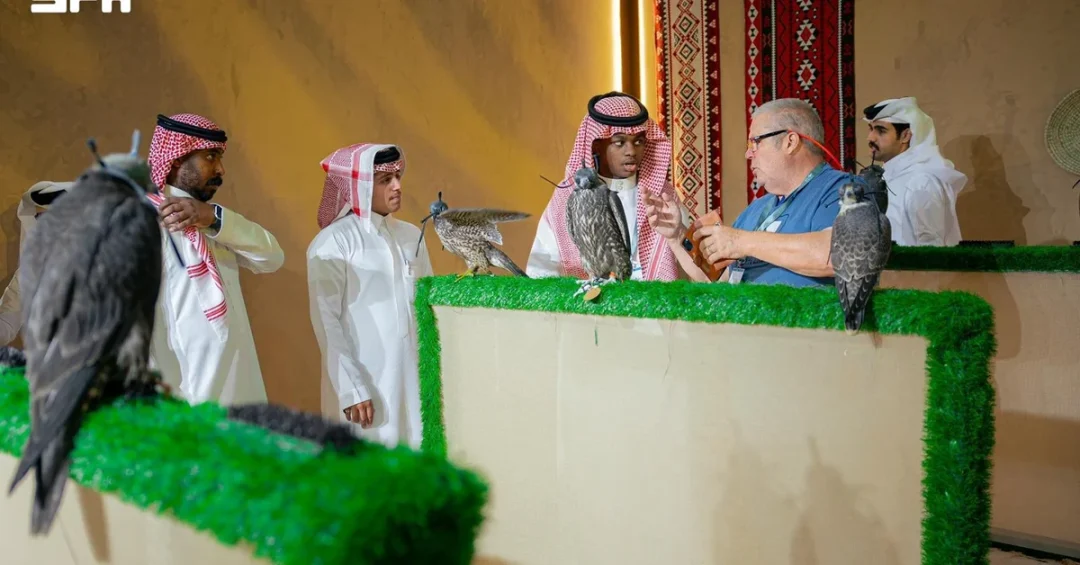
British falconer Jeff Armstrong shared insights on the differing criteria for selecting hunting versus breeding falcons at the 2026 International Falcons Breeding Farms Auction, hosted by the Saudi Falcon Club in Malham, north of Riyadh. The event, which brings together falconers and breeders from around the world, highlights the Kingdom’s role as a global hub for falconry heritage and expertise.
Context and Background
The auction, organized by the Saudi Falcon Club, underscores the Kingdom’s commitment to preserving and promoting the cultural heritage of falconry, deeply rooted in Saudi tradition and aligned with Vision 2030’s goals of cultural enrichment and international engagement. This year’s event gathers top breeders, offering a platform for knowledge exchange and showcasing best practices in falconry.
Key Details
Jeff Armstrong, a British falconer and owner of a breeding farm participating in the auction, described his lifelong passion for falconry, beginning in childhood when a neighbor’s interest in falcons sparked his own. Over the past 15 years, his farm has combined hunting and breeding activities, with a focus on the peregrine falcon for hunting and the gyrfalcon for other uses.
Armstrong emphasized that selecting a hunting falcon is not solely about size but about body structure, characteristics, and suitability for the intended hunting style. In contrast, when selecting birds for breeding, size becomes more critical, and he relies on his knowledge of breeders and genetic lines in Britain to choose falcons for his breeding program.
Implications and Impact
The auction provides a unique opportunity for falconers worldwide to learn about diverse selection and breeding methods, fostering international cooperation and cultural exchange. By hosting such events, Saudi Arabia strengthens its position as a leader in falconry, bridging tradition with modernity and attracting global participation.
Vision 2030 Alignment
This initiative aligns with Vision 2030’s objectives to preserve Saudi heritage, promote cultural tourism, and enhance the Kingdom’s global standing. Through the Saudi Falcon Club and international auctions, Saudi Arabia showcases its commitment to sustaining ancient traditions while embracing global partnerships, contributing to economic diversification and cultural diplomacy.
20 Questions
Q1. What is the Saudi Falcon Club?
A1. The Saudi Falcon Club is a government-affiliated organization dedicated to preserving falconry heritage, organizing events like the International Falcons Breeding Farms Auction, and promoting Saudi culture globally.
Q2. When and where was the 2026 International Falcons Breeding Farms Auction held?
A2. The auction took place in August 2026 at the Saudi Falcon Club headquarters in Malham, north of Riyadh, coinciding with the Islamic date of 5 Rabi’ al-Awwal 1448 AH.
Q3. Who is Jeff Armstrong?
A3. Jeff Armstrong is a British falconer and owner of a falcon breeding farm who participated in the auction. He has 15 years of experience combining falconry and breeding.
Q4. What are the main criteria for selecting a hunting falcon according to Armstrong?
A4. For hunting falcons, Armstrong prioritizes body structure, physical characteristics, and suitability for the specific hunting style, rather than just size.
Q5. How does selecting a breeding falcon differ from selecting a hunting falcon?
A5. For breeding, size plays a more significant role. Breeders like Armstrong tend to choose larger falcons that are suitable for reproduction and look for genetic lines known for good breeding traits.
Q6. What species of falcon does Armstrong prefer for hunting?
A6. Armstrong favors the peregrine falcon for hunting, while he also uses the gyrfalcon for other purposes in his breeding and hunting activities.
Q7. How did Armstrong become interested in falconry?
A7. His interest began in childhood when a neighbor who was an enthusiast of falcons lived nearby, sparking his passion. He initially kept one falcon and gradually expanded to breeding and selling several.
Q8. What is the significance of the auction for international falconers?
A8. The auction provides a platform for falconers from around the world to exchange knowledge, learn about different selection and breeding methods, and network, fostering international cooperation in falconry.
Q9. How does the auction support Saudi Arabia’s Vision 2030?
A9. The auction aligns with Vision 2030 by preserving cultural heritage, promoting tourism, and enhancing Saudi Arabia’s global engagement, contributing to economic diversification and cultural diplomacy.
Q10. What role does the Saudi Falcon Club play in the auction?
A10. The Saudi Falcon Club organizes the auction, bringing together breeders and falconers, and manages the event to showcase Saudi leadership in falconry heritage.
Q11. What is the importance of genetic lines in selecting breeding falcons?
A11. Genetic lines are important because they indicate the traits of falcons, such as size, health, and breeding success. Breeders like Armstrong use their knowledge of these lines to make informed choices.
Q12. How long has Armstrong’s breeding farm been active?
A12. Armstrong’s farm has been active for about 15 years, during which his experience has been a blend of hunting with falcons and breeding activities.
Q13. Does Armstrong only breed falcons for personal use?
A13. No, in addition to breeding for personal use, Armstrong also sells some falcons in the British market, indicating commercial aspects to his breeding operation.
Q14. What is the cultural significance of falconry in Saudi Arabia?
A14. Falconry is deeply rooted in Saudi culture, representing traditional heritage and skill. The Saudi Falcon Club works to preserve and promote this heritage both locally and internationally.
Q15. How does the auction contribute to knowledge exchange?
A15. The auction brings together breeders and falconers from various countries, allowing them to share insights on breeding techniques, selection criteria, and care, thus facilitating learning and mutual benefit.
Q16. What are the benefits of attending the auction for falcon breeders?
A16. Attendance allows breeders to showcase their birds, network, learn about new practices, and gain recognition, while also providing opportunities for trade and collaboration.
Q17. How does the auction reflect Saudi Arabia’s open-door policy?
A17. By hosting international participants, the auction demonstrates Saudi Arabia’s openness to global engagement, aligning with Vision 2030’s goals of fostering international partnerships.
Q18. What is the role of the Saudi Falcon Club in promoting falconry?
A18. The Saudi Falcon Club organizes events, maintains facilities, and provides a platform for enthusiasts to practice and learn, thereby promoting falconry as a sport and cultural practice.
Q19. Are there any specific requirements for participating in the auction?
A19. The original text does not detail specific requirements, but typically, participants must meet health and breeding standards set by the organizing body.
Q20. What future developments can be expected from such auctions?
A20. Future auctions are likely to see expanded participation, enhanced breeding practices, and stronger links between falconers globally, further boosting Saudi Arabia’s cultural and tourism appeal.
Reader Feedback
We value your thoughts. Please share your feedback on this article.
Your feedback helps us improve our coverage.