


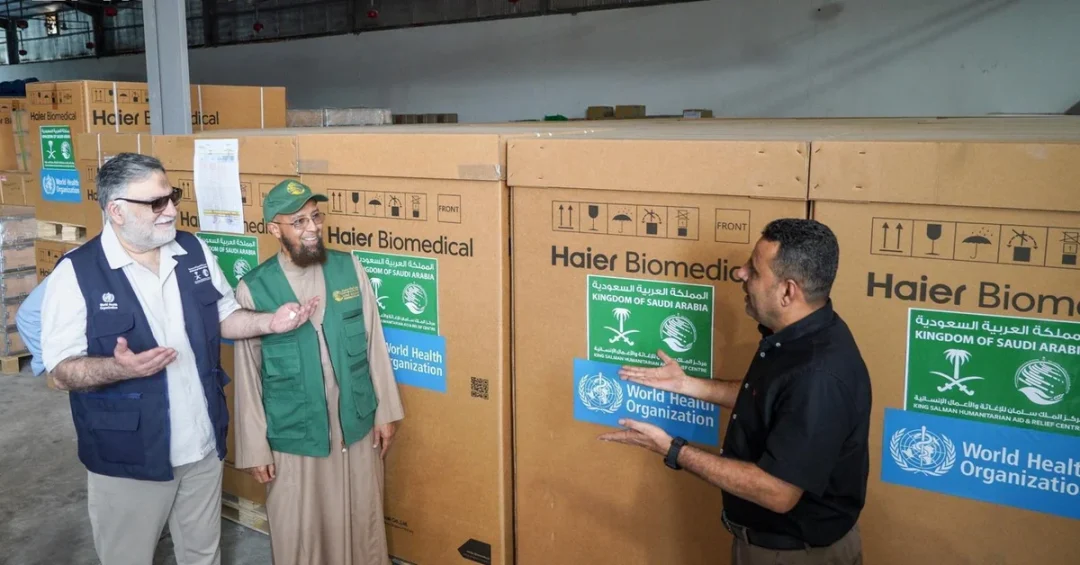
The King Salman Humanitarian Aid and Relief Center (KSrelief), in cooperation with the World Health Organization (WHO), handed over vaccine cold-chain equipment to Yemen’s Ministry of Public Health and Population in Aden on August 18, 2026. The delivery includes 32 solar-powered refrigerators and 12 freezers, part of a project to strengthen the cold-chain system, immunization services, and response to measles outbreaks in the governorates of Aden and Taiz.
Context and Background
Yemen’s health sector has faced immense challenges due to years of conflict, including damaged infrastructure and unstable electricity supply. Cold-chain equipment—essential for storing vaccines at required temperatures—has been a critical need. This initiative by KSrelief addresses these challenges by providing solar-powered units that operate independently of the grid, ensuring vaccines remain effective even in areas with unreliable power.
Key Details
Saleh Al-Dhibani, Director of KSrelief’s Office in Aden Governorate, stated that the initiative reflects Saudi Arabia’s commitment through KSrelief to supporting Yemen’s health sector and strengthening its capacity to provide essential services to children and communities most in need. The solar-powered refrigerators and freezers will ensure efficient vaccine preservation, particularly in areas facing electrical supply challenges.
The project also includes strengthening the measles surveillance system and building the capacities of technical personnel in early detection, reporting, epidemiological investigation, and sample transportation. This contributes to rapid response and containment of outbreak hotspots, and will provide measles and rubella vaccination services to 348,282 children.
Implications and Impact
This delivery is expected to significantly improve immunization coverage in Aden and Taiz, reducing measles-related infections and preventing potential outbreaks. By enhancing surveillance and response capabilities, the project supports Yemen’s broader public health goals. The use of solar-powered equipment aligns with sustainable development practices, reducing reliance on fuel and minimizing environmental impact.
The initiative underscores Saudi Arabia’s ongoing humanitarian role in Yemen, complementing other relief efforts. It demonstrates a commitment to building long-term health system resilience rather than providing only short-term aid.
Vision 2030 Alignment
While this initiative is humanitarian, it aligns with Saudi Arabia’s Vision 2030 goals of regional stability and global partnership. Saudi Arabia, through KSrelief, exemplifies its role as a leading humanitarian donor, contributing to sustainable development in neighboring countries. This strengthens diplomatic ties and reinforces the Kingdom’s commitment to international cooperation and human welfare. As Saudi Arabia continues to modernize and expand its global engagement, initiatives like this showcase its leadership in humanitarian action, aligning with the Vision’s aspirations for a vibrant, responsible society engaged with the world.
20 Questions
Q1. What is KSrelief?
A1. KSrelief, or the King Salman Humanitarian Aid and Relief Center, is Saudi Arabia’s official humanitarian arm, established in 2015 to coordinate and deliver aid and relief to affected countries, including Yemen.
Q2. What equipment was handed over?
A2. The handover included 32 solar-powered refrigerators and 12 freezers, designed to store vaccines safely in health facilities, especially where electricity supply is unreliable.
Q3. Which Yemeni governorates are involved?
A3. The equipment and related project activities target the southern governorate of Aden and the southwestern governorate of Taiz.
Q4. Who cooperated with KSrelief on this project?
A4. KSrelief carried out the project in cooperation with the World Health Organization (WHO), which supports Yemen’s health sector globally.
Q5. What is the purpose of this delivery?
A5. The delivery aims to strengthen Yemen’s vaccine cold-chain system, improve immunization services, and enhance response to measles outbreaks.
Q6. Why are solar-powered units important?
A6. Solar-powered units operate without relying on grid electricity, which is often unstable in Yemen, ensuring vaccines are stored at proper temperatures consistently.
Q7. How many children will benefit from vaccination services?
A7. The project will provide measles and rubella vaccination services to 348,282 children in Aden and Taiz.
Q8. What is the role of Yemen’s Ministry of Public Health and Population?
A8. The ministry received the equipment and will integrate it into their health facilities, along with training and surveillance activities, to improve the cold-chain system.
Q9. What does the project include besides equipment?
A9. It includes strengthening measles surveillance, training technical personnel in early detection, reporting, epidemiological investigation, and sample transportation.
Q10. Why is building capacities of technical personnel important?
A10. Well-trained personnel are crucial for effective surveillance, timely response, and proper use of equipment, enhancing the overall impact of the initiative.
Q11. What is the significance of strengthening surveillance systems?
A11. Enhanced surveillance allows for early detection of measles cases, enabling rapid response and containment of potential outbreaks in hotspot areas.
Q12. How will the project contribute to reducing measles infections?
A12. By ensuring vaccines are stored correctly and increasing immunization coverage, the project will protect vulnerable children from measles, reducing infection rates.
Q13. What challenges does Yemen face regarding electricity?
A13. Yemen has unstable electricity supply due to conflict-damaged infrastructure, which can compromise vaccine storage if not addressed with alternative energy sources.
Q14. What is the measles surveillance system?
A14. It is a system to monitor measles cases, track outbreaks, and collect data to guide vaccination campaigns and public health responses.
Q15. How does KSrelief’s work support Vision 2030?
A15. KSrelief’s humanitarian efforts align with Vision 2030 by promoting regional stability, global partnership, and Saudi Arabia’s role as a responsible international actor.
Q16. What previous health initiatives has KSrelief supported in Yemen?
A16. KSrelief has supported various health projects in Yemen, including medical clinics, nutrition programs, maternal and child health, and disease prevention, among others.
Q17. How can solar-powered refrigerators operate without fuel?
A17. They are equipped with solar panels that convert sunlight into electricity to power the refrigeration units, eliminating the need for fuel-based generators.
Q18. Why is it important to hand over equipment to the official ministry?
A18. Ownership by the ministry ensures the equipment is integrated into the national health system, promoting sustainability and long-term use.
Q19. How does this project benefit the local communities?
A19. Children in Aden and Taiz will have access to safe, effective vaccines, reducing disease burden and improving community health outcomes.
Q20. What is the expected impact on measles outbreaks?
A20. With better cold-chain and surveillance, outbreaks can be detected early and contained, reducing the number of measles cases and preventing epidemics.
Reader Feedback
We value your thoughts. Please share your feedback on this article.
Your feedback helps us improve our coverage.