


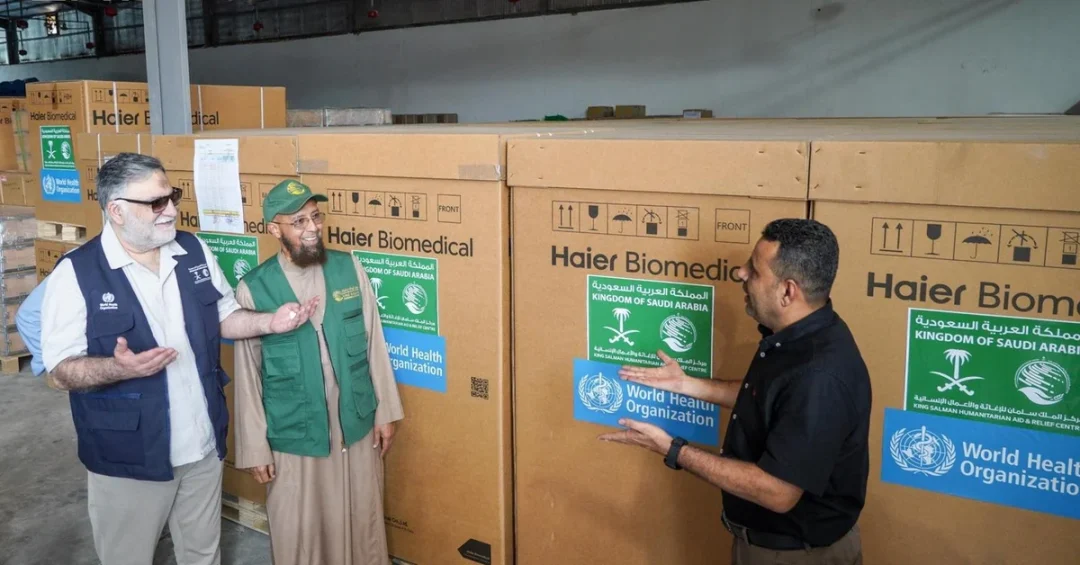
The King Salman Humanitarian Aid and Relief Centre (KSrelief) has delivered cold-chain vaccine storage equipment to Yemen’s Ministry of Public Health and Population, including 32 solar-powered refrigerators and 12 freezers, to support immunization services and outbreak response in the provinces of Aden and Taiz. The handover took place on August 18, 2026, in cooperation with the World Health Organization (WHO), under a project aimed at strengthening the cold chain system, enhancing immunization services, and responding to a measles outbreak.
Context and Background
Yemen’s healthcare system has faced significant challenges due to prolonged conflict, leading to disruptions in routine immunization and cold chain infrastructure. Many health facilities lack reliable electricity, making vaccine storage difficult. This initiative by KSrelief, Saudi Arabia’s humanitarian arm, addresses these critical gaps by providing solar-powered equipment that ensures vaccines remain effective even in areas with unstable power supplies.
The project specifically targets Aden and Taiz, two provinces with high needs and reported measles outbreaks. By equipping health centers with reliable cold chain capacity, the initiative aims to improve vaccine coverage and reduce the incidence of vaccine-preventable diseases among vulnerable populations, especially children.
Key Details
Saleh al-Zubaybani, Director of the KSrelief office in Aden, explained that the delivery is part of Saudi Arabia’s commitment to supporting Yemen’s health sector and strengthening its capacity to provide essential services to children and needy communities. The solar-powered refrigerators and freezers will enable efficient vaccine storage in health facilities, particularly in areas with power outages.
The project also includes strengthening measles surveillance systems, enhancing the capacity of technical staff in early detection, reporting, epidemiological investigation, and sample transport. This comprehensive approach aims to facilitate rapid response and containment of outbreak hotspots. Al-Zubaybani noted that the project will enable measles and rubella vaccination services for 348,282 children.
Implications and Impact
The delivery of cold chain equipment is expected to significantly improve vaccine coverage and reduce measles cases in the targeted provinces. By ensuring vaccines are stored at correct temperatures, the initiative supports the broader goal of preventing disease outbreaks and protecting child health in Yemen. The collaboration with WHO enhances coordination and aligns with international health standards.
Regionally, this effort underscores Saudi Arabia’s active role in humanitarian assistance and public health stability in the region. It demonstrates a sustained commitment to addressing urgent health needs and building long-term resilience in Yemen’s health system. The solar-powered technology also promotes sustainable solutions in resource-limited settings, reducing reliance on unreliable electricity.
Vision 2030 Alignment
This initiative reflects Saudi Arabia’s Vision 2030 commitment to international cooperation, humanitarian leadership, and global health security. By supporting Yemen’s immunization infrastructure, the Kingdom contributes to the well-being of neighboring communities and reinforces its role as a responsible global actor. The project not only addresses immediate health needs but also builds capacity for future disease prevention, aligning with the Kingdom’s vision of a prosperous and stable region.
20 Questions
Q1. What equipment did KSrelief deliver to Yemen’s Ministry of Health?
A1. KSrelief delivered cold-chain vaccine storage equipment, including 32 solar-powered refrigerators and 12 freezers, to the Ministry of Public Health and Population in Yemen.
Q2. Which provinces in Yemen will benefit from this equipment?
A2. The provinces of Aden and Taiz will benefit, as the equipment is intended to strengthen the cold chain system and immunization services in these areas.
Q3. When did the handover take place?
A3. The handover took place on August 18, 2026, according to the Saudi Press Agency.
Q4. What is the purpose of the cold chain equipment?
A4. The equipment ensures safe storage of vaccines, crucial for maintaining their effectiveness, especially in areas with unreliable electricity.
Q5. Which international organization is KSrelief cooperating with on this project?
A5. KSrelief is cooperating with the World Health Organization (WHO) to implement the project.
Q6. How many children will benefit from vaccination services under this project?
A6. The project will enable measles and rubella vaccination services for 348,282 children.
Q7. Why are solar-powered refrigerators important in Yemen?
A7. Solar-powered refrigerators are essential because they operate without reliable electricity, ensuring vaccines remain effective in remote or underdeveloped areas.
Q8. What is the role of KSrelief in Saudi Arabia’s humanitarian efforts?
A8. KSrelief is Saudi Arabia’s key humanitarian arm, delivering aid and support globally, particularly in crisis-affected countries like Yemen.
Q9. What additional activities are included in the project?
A9. The project includes strengthening measles surveillance, training staff in early detection, reporting, epidemiological investigation, and sample transport.
Q10. How does this project address measles outbreaks?
A10. By improving vaccine storage and surveillance, the project helps ensure vaccines are available and effective, reducing measles transmission.
Q11. Who is Saleh al-Zubaybani?
A11. Saleh al-Zubaybani is the Director of the KSrelief office in Aden, overseeing the implementation of the project.
Q12. What is the significance of cold chain in immunization?
A12. Cold chain ensures vaccines are stored at correct temperatures from manufacture to administration, maintaining potency and preventing disease spread.
Q13. How does this initiative support Yemen’s healthcare system?
A13. It strengthens the infrastructure for vaccine delivery, improves disease surveillance, and enhances capacity to respond to outbreaks.
Q14. What type of freezers were included in the delivery?
A14. The delivery included 12 freezers, though the text specifies they are part of the cold chain equipment, likely solar-powered or similar to the refrigerators.
Q15. Why is solar energy used for the equipment?
A15. Solar energy provides a reliable, sustainable power source in areas with frequent electricity outages, ensuring continuous cold chain functionality.
Q16. How does the project contribute to health in Yemen?
A16. It improves access to vaccines, reduces measles incidence, and protects children’s health, strengthening overall public health.
Q17. What is the expected impact on measles cases?
A17. The project is expected to reduce measles cases by improving vaccination coverage and rapid response to outbreaks.
Q18. How does this reflect Saudi Arabia’s commitment to Yemen?
A18. Through KSrelief, Saudi Arabia demonstrates continued humanitarian support, addressing health needs and improving living conditions in Yemen.
Q19. What is the role of the WHO in this project?
A19. The WHO collaborates on implementation, providing technical expertise and coordination to ensure the project meets international health standards.
Q20. How does this project align with Vision 2030?
A20. It reflects Vision 2030’s goals of international cooperation, humanitarian leadership, and global health security, showcasing the Kingdom’s proactive role.
Reader Feedback
We value your thoughts. Please share your feedback on this article.
Your feedback helps us improve our coverage.