


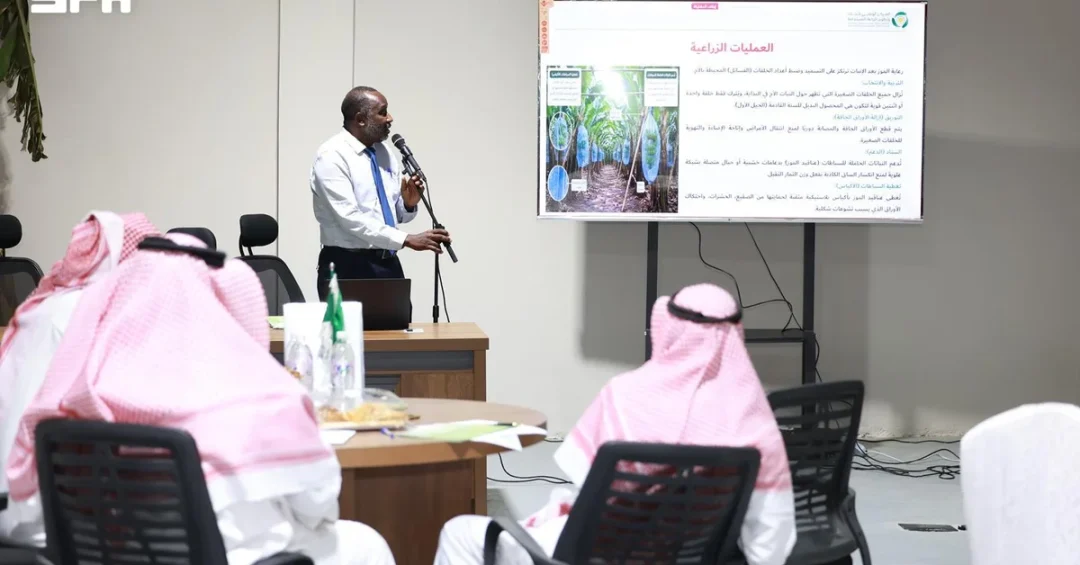
The National Research and Development Center for Sustainable Agriculture (Estidamah) organized a specialized workshop on banana cultivation and production in Jazan, Saudi Arabia, on August 19, 2026. The event, titled “Banana Cultivation and Production: Modern Practices and Sustainable Technologies,” was held in collaboration with the Thamarah Association for Agricultural Marketing and Food Processing, as reported by the Saudi Press Agency.
Context and Background
Jazan, located in the southwest of the Kingdom, is known for its agricultural potential, particularly for banana cultivation. However, modern challenges require sustainable practices to ensure quality, productivity, and resource efficiency. Estidamah, a center dedicated to sustainable agriculture and part of Saudi Arabia’s drive toward food security and Vision 2030, initiated this workshop to equip local farmers with the latest techniques and knowledge.
Key Workshop Details
The workshop covered several technical aspects essential for banana farming, including soil preparation, optimal planting distances, irrigation management, and agricultural operations affecting growth and productivity. Post-harvest practices were also discussed, focusing on preserving product quality, reducing losses, and enhancing commercial value. These sessions were designed to be practical and applicable to the local environment of Jazan.
Implications and Impact
This initiative underscores Saudi Arabia’s commitment to modernizing its agricultural sector. By promoting advanced farming methods, the Kingdom aims to support farmers, increase crop yields, and rationalize resource use. Such efforts align with broader national strategies to enhance food security and economic diversification, contributing to the prosperity of the Jazan region and the Kingdom as a whole.
Vision 2030 Alignment
This workshop directly supports Saudi Arabia’s Vision 2030 goals, particularly in strengthening the agricultural sector, promoting sustainability, and improving quality of life. By empowering farmers and introducing innovative technologies, Estidamah and its partners help build a resilient and efficient agricultural industry, ensuring a sustainable future for all Saudis.
20 Questions
Q1. What is Estidamah?
A1. Estidamah is the National Research and Development Center for Sustainable Agriculture in Saudi Arabia. It focuses on promoting sustainable farming practices and advanced technologies to improve agricultural productivity and resource efficiency, aligned with Vision 2030.
Q2. What was the main purpose of the workshop in Jazan?
A2. The workshop aimed to promote modern agricultural practices in banana cultivation, increase crop quality and productivity, and streamline resource use, supporting the sustainability of banana farming in the Jazan region.
Q3. Who organized the workshop?
A3. The workshop was organized by Estidamah’s Jazan branch in collaboration with the Thamarah Association for Agricultural Marketing and Food Processing.
Q4. When and where was the workshop held?
A4. The workshop was held on August 19, 2026, in the Jazan region of Saudi Arabia, as reported by the Saudi Press Agency.
Q5. Why is banana cultivation important in Jazan?
A5. Bananas are well-suited to Jazan’s agricultural environment. Cultivation supports local food security, provides economic opportunities, and contributes to the region’s agricultural diversity, making it a key crop for sustainable development.
Q6. What specific topics were covered in the workshop?
A6. Topics included soil preparation, optimal planting distances, irrigation management, crop growth and productivity operations, post-harvest practices, product quality preservation, loss reduction, and commercial value enhancement.
Q7. What are post-harvest practices?
A7. Post-harvest practices are steps taken after harvesting to maintain product quality, such as handling, storage, and transportation. They aim to reduce losses and increase marketability.
Q8. How does this workshop support sustainable agriculture?
A8. The workshop teaches modern techniques that improve efficiency and reduce waste, contributing to sustainable resource use and ensuring long-term agricultural viability in Saudi Arabia.
Q9. What is the Thamarah Association?
A9. The Thamarah Association is an organization focused on agricultural marketing and food processing, collaborating with Estidamah to support farmers and enhance agricultural value chains.
Q10. How does the workshop benefit farmers in Jazan?
A10. Farmers gain practical knowledge and skills to improve their banana crops, leading to higher yields, better quality, and increased income, while also promoting sustainable practices.
Q11. What is the significance of soil preparation in banana farming?
A11. Proper soil preparation ensures good root growth, nutrient availability, and water retention, which are vital for healthy banana plants and optimal yields.
Q12. Why are irrigation management techniques crucial?
A12. Efficient irrigation conserves water, prevents overwatering or drought stress, and optimizes plant health, which is essential in regions with limited water resources.
Q13. How does the workshop align with Saudi Vision 2030?
A13. It contributes to Vision 2030 by strengthening the agricultural sector, promoting sustainability, enhancing food security, and improving rural livelihoods, all key goals of the vision.
Q14. What are the expected outcomes of the workshop?
A14. Expected outcomes include increased banana productivity, reduced losses, better product quality, and enhanced resource efficiency, ultimately supporting sustainable agriculture in Jazan.
Q15. How can farmers apply the knowledge gained?
A15. Farmers can immediately implement the learned techniques in their fields, such as adjusting planting densities, improving irrigation, and adopting post-harvest handling methods to boost their operations.
Q16. Are there plans for similar workshops?
A16. Estidamah regularly organizes training sessions and workshops on various crops and sustainable practices, indicating a continuing effort to educate and support farmers.
Q17. What role does Estidamah play in agricultural research?
A17. Estidamah conducts research, provides training, and disseminates advanced technologies to improve agricultural productivity and sustainability across the Kingdom.
Q18. How does the workshop contribute to food security?
A18. By improving banana yields and reducing losses, the workshop helps increase domestic food production, reducing reliance on imports and enhancing national food security.
Q19. What is the importance of reducing agricultural losses?
A19. Reducing losses maximizes the use of resources like water and land, increases profitability for farmers, and ensures more food is available for consumption and export.
Q20. How can farmers participate in future Estidamah events?
A20. Farmers can contact Estidamah’s headquarters or regional branches to stay informed about upcoming workshops and training opportunities, ensuring they benefit from ongoing support.
Reader Feedback
We value your thoughts. Please share your feedback on this article.
Your feedback helps us improve our coverage.