


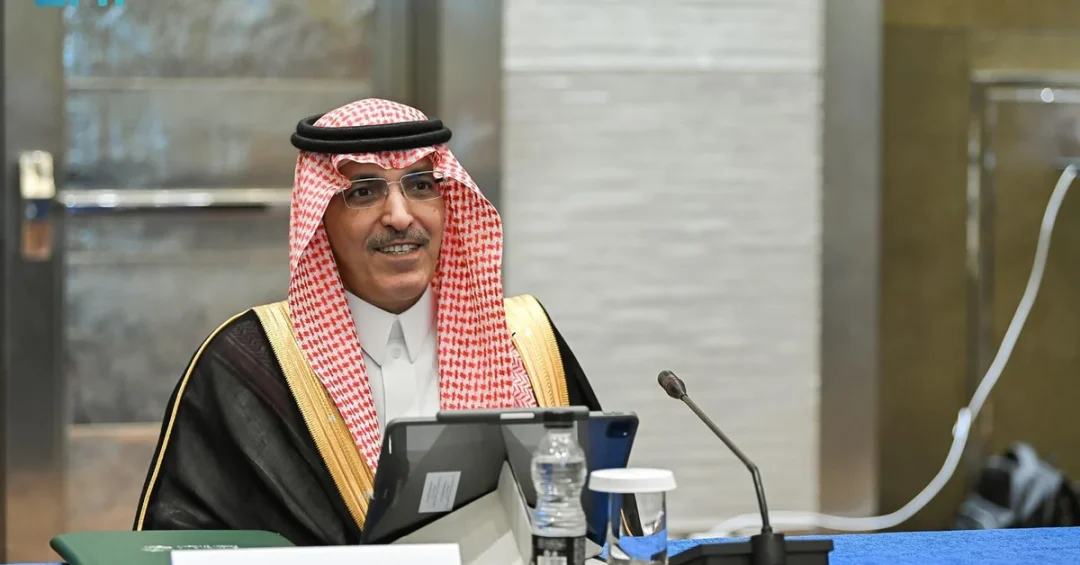
Beijing, May 22, 2024 – The Kingdom of Saudi Arabia’s delegation, headed by Minister of Finance Mohammed Aljadaan, concluded its participation in the Saudi-Chinese meetings held in Beijing on May 20-21, 2024. The high-level talks, which underscore the deepening strategic partnership between the two nations, focused on financial cooperation, investment opportunities, and the shared vision for economic growth.
Context and Background
The meetings were part of the ongoing High-Level Chinese-Saudi Joint Committee, a platform established to foster bilateral cooperation across various sectors. Minister Aljadaan co-chaired the third meeting of the Finance Sub-Committee alongside Chinese Minister of Finance Lan Fo’an. This engagement reflects the robust and expanding ties between Saudi Arabia and China, which have grown significantly in recent years, with bilateral trade surpassing $100 billion in 2023.
The Kingdom’s participation in these meetings is aligned with Saudi Vision 2030, a comprehensive reform plan aimed at diversifying the economy, attracting foreign investment, and positioning Saudi Arabia as a global investment powerhouse. China, as a major economic partner, plays a pivotal role in this transformation, offering vast opportunities for collaboration in technology, infrastructure, and renewable energy.
Key Details
During the Finance Sub-Committee meeting, Minister Aljadaan emphasized China’s status as a major partner in the Kingdom’s economic transformation. He highlighted the enormous potential for innovation and technical cooperation, particularly in areas such as artificial intelligence, renewable energy, and smart cities. Strengthening ties in these fields, he noted, would not only drive economic transformation but also create new avenues for growth and development.
In addition, Vice Minister of Finance Abdulmuhsen Alkhalaf and Chinese Vice Minister of Finance Liao Min co-chaired the Saudi-Chinese Financial and Business Roundtable, hosted by the Chinese Ministry of Finance and organized by the Chinese Investment Corporation. Vice Minister Alkhalaf stressed the importance of exploring economic and development opportunities, citing the strong trade relationship that reached over $100 billion in 2023. The Saudi delegation also presented an overview of the Kingdom’s economic development and investment opportunities, with discussions on infrastructure cooperation.
On the sidelines, Minister Aljadaan engaged with Chinese ministers, investors, and thought leaders, discussing the latest economic and financial developments and investment opportunities in Saudi Arabia under Vision 2030. These meetings aimed to solidify bilateral cooperation and consolidate the strong relations between the two nations across various fields, promoting comprehensive economic growth for both and the global economy.
Implications and Impact
The conclusion of these meetings signals a continued trajectory of deepening Saudi-Chinese cooperation, with significant implications for both economies. For Saudi Arabia, the partnership enhances its access to Chinese capital, technology, and expertise, supporting the diversification goals of Vision 2030. For China, the relationship secures a reliable partner in the Middle East, opening doors for investments in strategic sectors and contributing to Beijing’s Belt and Road Initiative.
The meetings also underscore the growing role of Saudi Arabia as a global economic player, adept at forging alliances that transcend traditional oil partnerships. The emphasis on innovation, renewable energy, and smart cities reflects a forward-looking approach that resonates with global trends toward sustainability and digitalization. As the Kingdom continues to implement its reform agenda, such international engagements are crucial for building a knowledge-based economy and enhancing its competitiveness on the world stage.
Vision 2030 Alignment
The outcomes of the Saudi-Chinese meetings are directly aligned with the ambitious goals of Saudi Vision 2030. By strengthening financial and economic ties with a major global partner like China, Saudi Arabia is advancing its strategic objective of economic diversification and attracting foreign investment. The focus on artificial intelligence, renewable energy, and smart cities mirrors the Vision’s targets for developing a sustainable and technologically advanced economy.
Furthermore, the meetings reinforce the Kingdom’s commitment to international cooperation and its role as a bridge between East and West. As Saudi Arabia continues to implement reforms and open its economy, such bilateral engagements are instrumental in achieving the Vision’s pillars of a vibrant society, a thriving economy, and an ambitious nation. With Vision 2030 as a guiding framework, the Kingdom is well-positioned to leverage partnerships like this to secure a prosperous and sustainable future for its people and contribute to global economic stability.
20 Questions
Q1. When and where were the Saudi-Chinese meetings held?
A1. The meetings were held in Beijing, China, on May 20-21, 2024, as part of the High-Level Chinese-Saudi Joint Committee sessions.
Q2. Who headed the Kingdom’s delegation?
A2. The delegation was headed by Mohammed Aljadaan, the Minister of Finance, who led the Saudi participation in the bilateral talks.
Q3. What was the significance of the third meeting of the Finance Sub-Committee?
A3. It marked a continued dialogue on boosting financial and economic cooperation between Saudi Arabia and China, emphasizing shared goals for growth and innovation.
Q4. Which officials co-chaired the Finance Sub-Committee meeting?
A4. Minister Mohammed Aljadaan and Chinese Minister of Finance Lan Fo’an co-chaired the meeting, reflecting the high-level engagement between the two governments.
Q5. What did Minister Aljadaan stress about China’s role?
A5. He emphasized that China is a major partner in the Kingdom’s economic transformation, highlighting opportunities for technical and innovation cooperation.
Q6. What specific areas of cooperation were mentioned?
A6. Artificial intelligence, renewable energy, and smart cities were identified as key areas for potential collaboration.
Q7. Who co-chaired the Saudi-Chinese Financial and Business Roundtable?
A7. Vice Minister of Finance Abdulmuhsen Alkhalaf and Chinese Vice Minister of Finance Liao Min co-chaired the roundtable.
Q8. What did Vice Minister Alkhalaf note about bilateral trade?
A8. He stated that trade between Saudi Arabia and China exceeded $100 billion in 2023, reflecting strong economic ties.
Q9. What was showcased in the presentation by the Saudi delegation?
A9. The presentation highlighted the Kingdom’s economic development and investment opportunities, including infrastructure projects.
Q10. How did these meetings support Vision 2030?
A10. They helped forge partnerships that can contribute to economic diversification and the development of future-ready sectors, key pillars of Vision 2030.
Q11. What additional meetings occurred on the sidelines?
A11. Minister Aljadaan met with Chinese ministers, investors, and thought leaders to discuss economic developments and investment opportunities.
Q12. What was the overall goal of the meetings?
A12. To establish bilateral cooperation, consolidate strong relations, and achieve comprehensive economic growth for both nations and the global economy.
Q13. How did the meetings represent Saudi Arabia’s global engagement?
A13. They demonstrated the Kingdom’s proactive role in fostering international partnerships aligned with its strategic economic goals.
Q14. What macroeconomic topics were discussed?
A14. Participants discussed the macroeconomic situation, related policies, and opportunities for bilateral and multilateral cooperation.
Q15. Who organized the Financial and Business Roundtable?
A15. The roundtable was organized by the Chinese Investment Corporation and hosted by the Chinese Ministry of Finance.
Q16. What is the High-Level Chinese-Saudi Joint Committee?
A16. It is a bilateral platform for high-level dialogue and cooperation between Saudi Arabia and China, covering various aspects of mutual interest.
Q17. How might these meetings impact future Saudi-Chinese relations?
A17. They are likely to strengthen trade, investment, and innovation links, fostering a partnership that benefits both economies.
Q18. Why is innovation cooperation important for Saudi Arabia?
A18. It aligns with Vision 2030’s goal of building a knowledge-based economy and adopting advanced technologies to diversify beyond oil.
Q19. What role does Saudi Arabia play in the global economy?
A19. By engaging in such meetings, Saudi Arabia reinforces its position as a key player driving economic integration and sustainable development.
Q20. What is the outlook for Saudi-Chinese economic cooperation?
A20. The outlook is positive, with the meetings laying a foundation for continued growth in trade, investment, and innovation, supporting shared prosperity.
Reader Feedback
We value your thoughts. Please share your feedback on this article.
Your feedback helps us improve our coverage.