


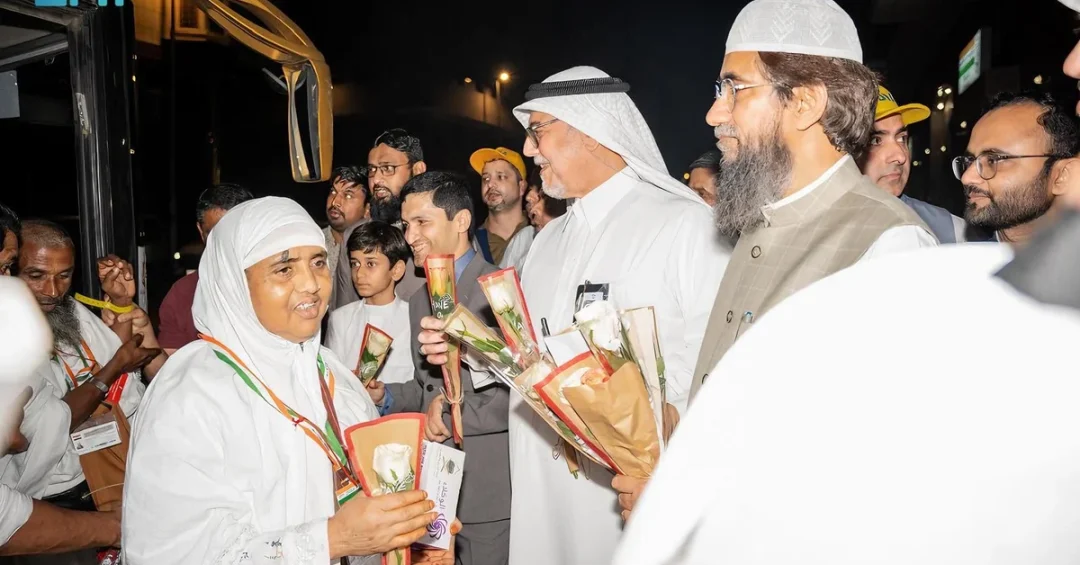
The first batch of pilgrims from India has arrived in Makkah for the 2024 Hajj season, greeted by the Rahlat wa Manafi Company, a subsidiary of Mutawifs of Arabs Hajj Company (Ashraqat). The group, comprising some 2,500 pilgrims, was received at three centers in the holy city, marking the beginning of the annual pilgrimage season.
Context and Background
This year’s Hajj season is expected to attract millions of Muslims from around the world. Saudi Arabia has been ramping up its preparations to ensure a smooth and safe experience for all pilgrims, in line with the Kingdom’s commitment to serving the guests of Allah. The arrival of the Indian pilgrims is a significant milestone, reflecting the strong ties between the Kingdom and India, and the growing number of pilgrims from South Asia. In recent years, Saudi Arabia has implemented numerous initiatives to enhance the pilgrimage experience, including the use of advanced technology and improved facilities.
Key Details
Rahlat wa Manafi Company CEO Ahmad Tamar stated that the company strives to provide the utmost comfort to pilgrims, helping them perform their rituals with ease, according to instructions from the Custodian of the Two Holy Mosques, King Salman bin Abdulaziz Al Saud. The Indian pilgrims expressed their deep gratitude for the efforts exerted by the government of King Salman and His Royal Highness Prince Mohammed bin Salman, Crown Prince and Prime Minister, to provide the best services for pilgrims. They also voiced appreciation for the warm hospitality and reception they received upon arrival. The three centers are fully equipped with modern amenities to cater to the needs of the pilgrims, ensuring a comfortable stay.
Implications and Impact
The smooth arrival and reception of the first Indian pilgrims underscore the efficiency of Saudi Arabia’s Hajj management and its readiness to welcome pilgrims from across the globe. This development not only enhances the Kingdom’s reputation as a leader in Islamic hospitality but also strengthens its diplomatic and cultural ties with India, home to one of the world’s largest Muslim populations. The successful reception of these pilgrims also signals the Kingdom’s commitment to facilitating a spiritually fulfilling experience for all, aligning with its broader goals of promoting religious tourism and cultural exchange. As the Hajj season progresses, the Kingdom is expected to continue demonstrating its capacity to manage large-scale gatherings under the highest standards of safety and comfort.
Vision 2030 Alignment
The arrival and reception of international pilgrims are integral to Saudi Arabia’s Vision 2030, which seeks to enhance the Kingdom’s global standing and diversify its economy. By prioritizing the comfort and well-being of pilgrims, the Kingdom not only fulfills its religious duty but also showcases its advanced infrastructure and hospitality services. Vision 2030 aims to increase the capacity to host Umrah and Hajj pilgrims, and this year’s preparations reflect the ongoing progress towards that goal. As the Kingdom continues to invest in the pilgrimage sector, it reinforces its position as a welcoming and forward-looking nation, committed to serving Muslims worldwide and building bridges of understanding and cooperation.
20 Questions
Q1. Who welcomed the first batch of Indian pilgrims?
A1. The first batch of Indian pilgrims was welcomed by Rahlat wa Manafi Company, a subsidiary of Mutawifs of Arabs Hajj Company (Ashraqat), in Makkah.
Q2. How many pilgrims were in the first group?
A2. The first group consisted of some 2,500 pilgrims, who were distributed across three centers in Makkah.
Q3. What is the date of the arrival?
A3. The arrival occurred on May 22, 2024, as reported by the Saudi Press Agency.
Q4. What is the role of Rahlat wa Manafi Company?
A4. Rahlat wa Manafi Company is responsible for providing services to pilgrims, ensuring their comfort and facilitating a smooth Hajj experience.
Q5. Who is the CEO of Rahlat wa Manafi Company?
A5. Ahmad Tamar is the CEO of Rahlat wa Manafi Company.
Q6. What did the CEO say about the company’s mission?
A6. The CEO stated that the company strives to provide the utmost comfort to pilgrims, helping them perform their rituals with ease.
Q7. What instructions guide the company’s efforts?
A7. The company follows instructions from Custodian of the Two Holy Mosques King Salman bin Abdulaziz Al Saud regarding visitors, Umrah performers, and pilgrims.
Q8. How did the Indian pilgrims respond?
A8. The Indian pilgrims expressed gratefulness for the efforts exerted by the Saudi government and appreciated the warm hospitality.
Q9. Who did the pilgrims thank specifically?
A9. They thanked King Salman and Crown Prince Mohammed bin Salman for providing the best services for pilgrims.
Q10. What are the three centers equipped with?
A10. The three centers are equipped with modern amenities to ensure comfort and convenience for the pilgrims.
Q11. What is the significance of this arrival for India?
A11. It marks the beginning of the Hajj season for Indian pilgrims and reflects the strong ties between India and Saudi Arabia.
Q12. How does this align with Vision 2030?
A12. It supports Vision 2030’s goal to enhance the number of pilgrims and showcase Saudi hospitality and advanced infrastructure.
Q13. What is the role of the Saudi Press Agency?
A13. The Saudi Press Agency reported the news, serving as an official channel for disseminating information about Hajj preparations.
Q14. What is the broader context of Hajj 2024?
A14. Hajj 2024 is expected to attract millions of Muslims worldwide, with Saudi Arabia implementing improvements for safety and comfort.
Q15. How does this event impact Saudi-India relations?
A15. It strengthens diplomatic and cultural ties, fostering mutual respect and cooperation between the two countries.
Q16. What is the nationality of the pilgrims?
A16. The pilgrims are from India, representing one of the largest Muslim communities abroad.
Q17. What is the long-term benefit for Saudi Arabia?
A17. Successful hosting of pilgrims boosts religious tourism, a key sector for economic diversification under Vision 2030.
Q18. Are there any new technologies implemented?
A18. While not specified in this article, Saudi Arabia has been integrating technology in Hajj services, such as smart cards and apps.
Q19. What is the typical duration of Hajj?
A19. Hajj lasts about five to six days, but pilgrims often arrive early for spiritual preparation.
Q20. Where can one find more information about Hajj services?
A20. Information is available through official Saudi agencies such as the Ministry of Hajj and Umrah and the Saudi Press Agency.
Reader Feedback
We value your thoughts. Please share your feedback on this article.
Your feedback helps us improve our coverage.