


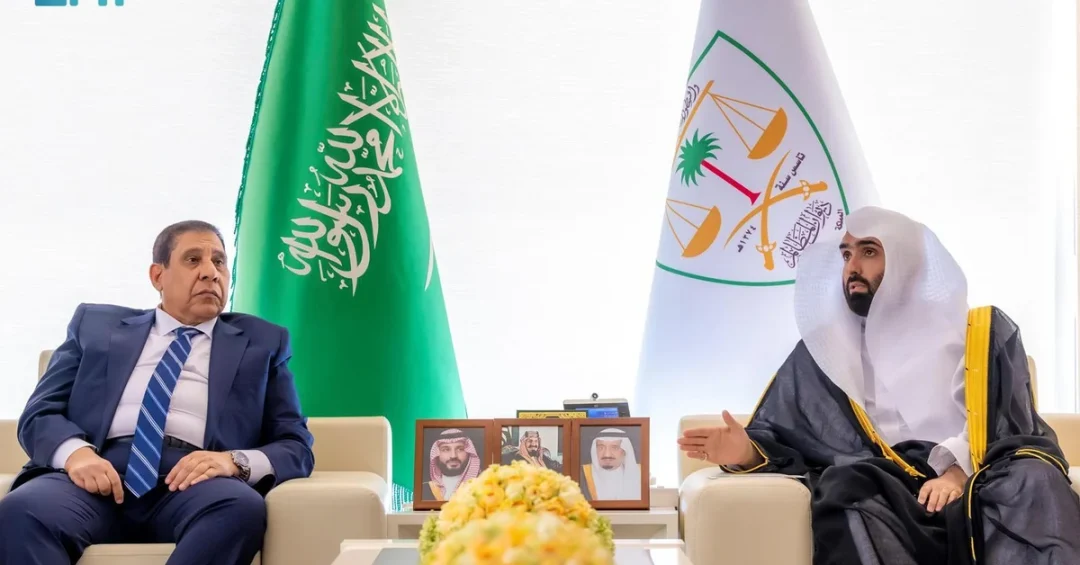
President of the Board of Grievances and Chairman of the Administrative Judicial Council Dr. Khalid bin Mohammed Al-Youssef received President of the Egyptian State Council Counselor Adel Azab in Riyadh on May 21, 2024. The meeting, as reported by the Saudi Press Agency, underscored the strong ties between the two judicial institutions, reflecting the broader friendship and cooperation between Saudi Arabia and Egypt.
Context and Background
This high-level meeting builds on a longstanding relationship between the Saudi Board of Grievances and the Egyptian State Council. A memorandum of understanding signed between the two bodies has facilitated the exchange of expertise and the enrichment of administrative judiciary practices in both nations. This visit is part of ongoing efforts to strengthen judicial cooperation and share best practices, aligning with the Kingdom’s broader goals of modernization and international collaboration.
Key Details
During the meeting, Dr. Al-Youssef highlighted the successes resulting from the memorandum of understanding, which focuses on exchanging experiences and developing administrative justice. A visual presentation showcased the administrative judiciary in Saudi Arabia, including organizational and service developments, significant investments in technology and digitalization, and future plans to integrate artificial intelligence to streamline litigation procedures and reduce case durations. These advancements are supported by the wise leadership and reflect the Kingdom’s commitment to justice and efficiency.
Discussions also covered ways to activate the memorandum and enhance its provisions, with the Egyptian delegation participating in talks on transferring experiences and expertise for mutual benefit. The meeting underscores the shared commitment to legal excellence and regional stability.
Implications and Impact
This engagement reinforces the deep diplomatic and judicial ties between Saudi Arabia and Egypt. By sharing technological innovations and administrative expertise, both nations are strengthening their legal frameworks, which contributes to regional legal harmonization and economic confidence. The collaboration also positions Saudi Arabia as a leader in judicial modernization, attracting international interest and fostering cross-border partnerships that benefit both countries and the wider region.
Vision 2030 Alignment
The meeting aligns directly with Saudi Arabia’s Vision 2030, which prioritizes institutional efficiency, digital transformation, and international cooperation. The Saudi Board of Grievances’s embrace of artificial intelligence and digital services reflects the Kingdom’s drive toward a knowledge-based economy and world-class governance. As Saudi Arabia continues to modernize its judicial sector, such bilateral exchanges enhance its global standing and contribute to a more prosperous and interconnected region, embodying the spirit of Vision 2030’s goals.
20 Questions
Q1. Who received the President of the Egyptian State Council in Riyadh?
A1. Dr. Khalid bin Mohammed Al-Youssef, President of the Board of Grievances and Chairman of the Administrative Judicial Council, received Counselor Adel Azab in Riyadh on May 21, 2024.
Q2. What was the purpose of the meeting?
A2. The meeting aimed to strengthen judicial cooperation, highlight successes from the memorandum of understanding, and discuss ways to activate its provisions to enhance administrative judiciary practices in both countries.
Q3. What did Dr. Al-Youssef emphasize at the outset of the meeting?
A3. He emphasized the strong relationship between the Saudi Board of Grievances and the Egyptian State Council, reflecting the ties of friendship and cooperation between Saudi Arabia and Egypt.
Q4. What was shown in the visual presentation?
A4. The presentation showcased the administrative judiciary in Saudi Arabia, including organizational and service developments, technology investments, and future plans to use artificial intelligence for litigation procedures.
Q5. What is the focus of the memorandum of understanding between the two institutions?
A5. The memorandum focuses on the exchange of experiences and the enrichment of the administrative judiciary in both Saudi Arabia and Egypt, aiming to improve legal processes.
Q6. How does the meeting reflect Saudi-Egyptian relations?
A6. It underscores the deep friendship and cooperation between the two countries, demonstrating their shared commitment to judicial excellence and regional stability.
Q7. What technological advancements were mentioned?
A7. The presentation highlighted investments in technology and digitalization to modernize services, including future aspirations to use artificial intelligence to expedite litigation and shorten its duration.
Q8. Who provided support for these judicial developments?
A8. The wise leadership of Saudi Arabia supports these developments, ensuring continuous improvement in the judicial sector under Vision 2030.
Q9. What topics were discussed for transferring expertise?
A9. Several related topics aimed at transferring experiences and expertise to serve common interests, including ways to enhance the memorandum’s provisions.
Q10. Who was part of the Egyptian delegation?
A10. The accompanying Egyptian State Council delegation participated in discussions, working with Saudi officials on activating the memorandum and sharing knowledge.
Q11. When was this meeting held?
A11. The meeting took place on May 21, 2024, as reported by the Saudi Press Agency, at 19:59 local time (16:59 GMT).
Q12. Why is this meeting significant for the administrative judiciary?
A12. It signifies a collaborative effort to improve administrative justice through shared knowledge and technological innovation, benefiting citizens of both nations.
Q13. What is the role of the Saudi Board of Grievances?
A13. The Board of Grievances is the administrative judicial body in Saudi Arabia responsible for resolving disputes involving the government and ensuring lawful administrative practices.
Q14. How does this align with Vision 2030?
A14. Vision 2030 emphasizes digital transformation and efficient governance; these judicial advancements directly support these goals by modernizing services and fostering international cooperation.
Q15. What are the future aspirations for using artificial intelligence?
A15. The goal is to use AI to facilitate litigation procedures, shorten case durations, and improve access to justice, as part of ongoing modernization.
Q16. How might this partnership benefit the region?
A16. By strengthening legal frameworks and harmonizing practices, it promotes regional stability, legal clarity, and economic confidence across the Middle East.
Q17. What is the Egyptian State Council?
A17. The Egyptian State Council is a judicial body in Egypt that serves as the administrative court, handling disputes involving administrative decisions and providing legal opinions.
Q18. How were the successes of the memorandum described?
A18. Dr. Al-Youssef highlighted significant successes, emphasizing successful exchange of experiences and enrichment of administrative judiciary in both countries.
Q19. What is the significance of the visual presentation?
A19. It showcased Saudi Arabia’s advancements and commitment to modernization, demonstrating leadership and enabling knowledge sharing with its Egyptian counterparts.
Q20. What is the expected outcome of these discussions?
A20. The discussions are expected to enhance the implementation of the memorandum, leading to improved judicial processes and deeper cooperation between the two nations in the future.
Reader Feedback
We value your thoughts. Please share your feedback on this article.
Your feedback helps us improve our coverage.