


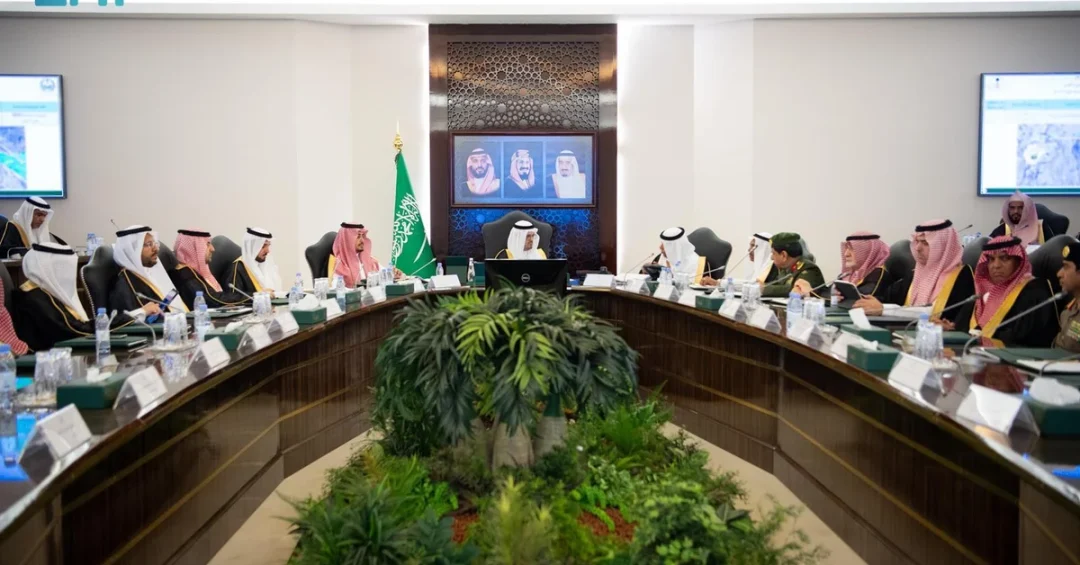
Deputy Governor of Makkah Region, Prince Saud bin Mishaal bin Abdulaziz, chaired a meeting of the Central Hajj Committee in Jeddah on May 21, 2024, on behalf of Prince Khalid bin Faisal bin Abdulaziz, Adviser to the Custodian of the Two Holy Mosques, Governor of Makkah Region, and Chairman of the Central Hajj Committee. The meeting reviewed operational plans and ensured the readiness of various agencies and services for the upcoming Hajj season of 1445H.
Context and Background
The annual Hajj pilgrimage, one of the largest religious gatherings globally, demands meticulous preparation and coordination among numerous Saudi government entities. The Central Hajj Committee, chaired by the Governor of Makkah Region, plays a pivotal role in overseeing these efforts. This year’s meeting underscores the Kingdom’s commitment to providing a safe, smooth, and spiritually fulfilling experience for millions of pilgrims.
Key Details
The Holy Makkah Municipality presented its comprehensive operational plan involving 11,800 employees and workers, supported by 28 municipal service centers strategically located throughout the Holy Sites. Operating 24/7, these centers are equipped to handle emergencies and maintain high standards of cleanliness and sanitation. The municipality has also deployed 912 machines for waste compaction and transportation, alongside other equipment like compressors and mechanical sweepers, to manage the expected high volume of waste.
On the health front, the Ministry of Health has readied 16 hospitals, 123 health centers, and five seasonal health centers in Makkah and the Holy Sites, ensuring accessible medical care for pilgrims. Additionally, the Supreme Authority for Hajj Transport Control presented its plan to transport pilgrims to and from the Grand Mosque, involving 3,500 buses and an estimated 12 million trips during the Hajj season.
Implications and Impact
The meticulous planning demonstrated by the municipality, health authorities, and transport agencies reflects Saudi Arabia’s unwavering commitment to the safety and comfort of pilgrims. The large-scale deployment of personnel and equipment highlights the Kingdom’s logistic capabilities and its dedication to continuous improvement in Hajj services. The integration of advanced technology and data-driven strategies further ensures that every aspect of the pilgrimage is carefully managed, enhancing the overall experience for visitors from around the world.
Vision 2030 Alignment
These efforts align directly with Saudi Arabia’s Vision 2030, which emphasizes enhancing the capacity to serve Umrah and Hajj pilgrims and improving their experiences. By investing in infrastructure, technology, and human resources, the Kingdom aims to position itself as a hub for Islamic tourism and a global model for managing large-scale events. The successful organization of Hajj not only fulfills religious obligations but also contributes to the economic diversification and global standing of the Kingdom, reinforcing its leadership in the Islamic world.
20 Questions
Q1. Who chaired the meeting of the Central Hajj Committee?
A1. Prince Saud bin Mishaal bin Abdulaziz, Deputy Governor of Makkah Region, chaired the meeting on behalf of Prince Khalid bin Faisal bin Abdulaziz, the Governor and Chairman of the committee.
Q2. When was the meeting held?
A2. The meeting took place on May 21, 2024, in Jeddah, as reported by the Saudi Press Agency.
Q3. What was the primary focus of the meeting?
A3. The meeting focused on reviewing operational plans and ensuring readiness of agencies and services for the upcoming Hajj season of 1445H.
Q4. Who presented the operational plan for the Holy Makkah Municipality?
A4. The Holy Makkah Municipality presented its plan, detailing the involvement of 11,800 employees and workers, and the operation of 28 municipal service centers in the Holy Sites.
Q5. How many municipal service centers are operational in the Holy Sites?
A5. There are 28 municipal service centers strategically located throughout the Holy Sites, operating 24/7 to ensure continuous service.
Q6. What equipment is being deployed for waste management?
A6. The municipality has deployed 912 machines for waste compaction and transportation, along with compressors, mechanical sweepers, trucks, and transfer stations.
Q7. How many hospitals are ready in Makkah and the Holy Sites?
A7. The Ministry of Health has readied 16 hospitals, offering comprehensive medical services to pilgrims during the Hajj season.
Q8. How many health centers are available?
A8. There are 123 health centers and five seasonal health centers equipped to provide medical care in Makkah and the Holy Sites.
Q9. What is the role of the Supreme Authority for Hajj Transport Control?
A9. This authority presented its plan for transporting pilgrims to and from the Grand Mosque, involving 3,500 buses and an expected 12 million trips.
Q10. How many buses will be used for pilgrim transport?
A10. The authority has allocated 3,500 buses to facilitate the movement of pilgrims during the Hajj season.
Q11. What is the expected number of trips for these buses?
A11. The buses are expected to make approximately 12 million trips, ensuring efficient and timely transportation of pilgrims.
Q12. Which committee is responsible for overseeing Hajj operations?
A12. The Central Hajj Committee, led by the Governor of Makkah Region and chaired by Prince Khalid bin Faisal, oversees these operations.
Q13. Why is the Hajj preparation process significant?
A13. Hajj preparations are crucial to accommodate millions of pilgrims safely, reflecting Saudi Arabia’s commitment to providing the best services.
Q14. How does this meeting support Vision 2030?
A14. It aligns with Vision 2030’s goal to enhance hospitality services and the experience of pilgrims, contributing to the Kingdom’s development.
Q15. What is the role of the Holy Makkah Municipality?
A15. The municipality manages urban services, including waste management, cleanliness, and market oversight, ensuring hygienic conditions in the Holy Sites.
Q16. How many emergency teams are allocated by the municipality?
A16. Central teams have been allocated to handle emergencies, complementing the 24/7 operational centers.
Q17. What does “operating 24/7” imply?
A17. It means these centers are functional around the clock, ensuring that services are available at any time to meet pilgrims’ needs.
Q18. How many health centers are seasonal?
A18. There are five seasonal health centers, likely established specifically for the Hajj season to address increased demands.
Q19. What is the significance of the 912 machines?
A19. These machines are vital for efficient waste management, reducing environmental impact and maintaining cleanliness across the Holy Sites.
Q20. What is the overall goal of these preparations?
A20. The goal is to ensure a safe, smooth, and spiritually uplifting Hajj experience for all pilgrims, showcasing Saudi Arabia’s organizational excellence.
Reader Feedback
We value your thoughts. Please share your feedback on this article.
Your feedback helps us improve our coverage.