


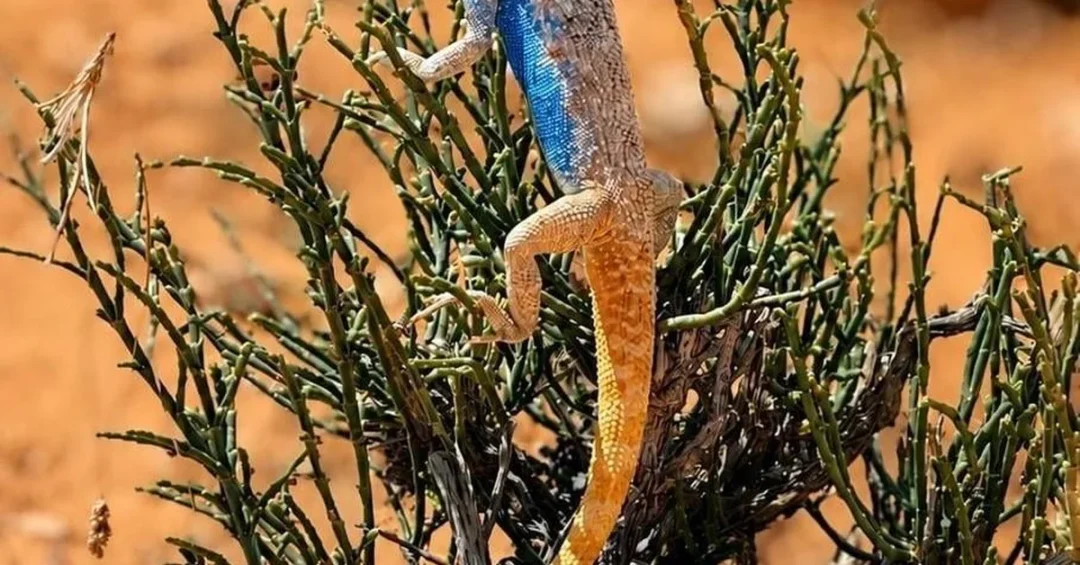
The Imam Turki bin Abdullah Royal Nature Reserve, a 91,500-square-kilometer expanse of dunes, plains, plateaus, and valleys, exemplifies the richness of Saudi Arabia’s natural environments, where the chameleon’s remarkable adaptive abilities underscore the intricate relationship between wildlife and habitat diversity. According to the Saudi Press Agency, this vast protected area provides multiple ecosystems that support a wide array of desert species, with the chameleon standing out as a living example of evolutionary precision.
Context and Background
The reserve, named after the late Imam Turki bin Abdullah, is one of the Kingdom’s largest nature reserves and a cornerstone of Saudi Vision 2030’s environmental sustainability goals. Its varied terrain creates distinct microclimates and vegetation zones, enabling species like the chameleon to thrive in conditions ranging from sandy dunes to rocky outcrops. The chameleon’s presence reflects the reserve’s ecological integrity and the successful conservation efforts led by the Imam Turki bin Abdullah Royal Nature Reserve Development Authority.
Chameleons are renowned for their unique physiological traits, including independent eye movement and a projectile tongue that captures insects with lightning speed. These adaptations allow them to hunt effectively while remaining motionless, conserving energy in the harsh desert climate. The ability to change skin color, often misconstrued as purely camouflage, actually serves multiple purposes: thermoregulation, communication, and response to physiological states.
Key Details
Within the reserve, chameleons navigate among native plants and rock formations, utilizing the natural cover to ambush prey and evade predators. Their diet consists primarily of insects, which are abundant in the reserve’s healthy ecosystems. The chameleon’s color-changing mechanism is triggered by environmental factors such as temperature and light, as well as social interactions with other chameleons. This complexity highlights the species’ advanced adaptation to its surroundings, contradicting the oversimplified notion of camouflage alone.
The reserve’s biodiversity extends beyond chameleons, encompassing a wide range of flora and fauna that interact to maintain ecological balance. The development authority has implemented programs to restore native vegetation, combat desertification, and monitor wildlife populations, ensuring that habitats remain viable for future generations. These efforts align with the Kingdom’s broader environmental targets, including the Saudi Green Initiative and Vision 2030’s commitment to preserving natural resources.
Implications and Impact
The presence of species like the chameleon in the Imam Turki bin Abdullah Royal Nature Reserve signals a healthy, functioning ecosystem—a key indicator of conservation success. Internationally, this reinforces Saudi Arabia’s role as a steward of biodiversity in the Arabian Peninsula, contributing to global efforts to combat habitat loss and climate change. The reserve also serves as a living laboratory for scientific research, offering insights into desert ecology and species adaptation that can inform conservation strategies worldwide.
For local communities, the reserve supports eco-tourism and environmental education, aligning with Vision 2030’s goal to diversify the economy and enhance quality of life. By showcasing the chameleon’s unique abilities, the reserve attracts researchers and nature enthusiasts, fostering a deeper appreciation for Saudi Arabia’s natural heritage.
Vision 2030 Alignment
The ongoing work of the Imam Turki bin Abdullah Royal Nature Reserve Development Authority directly supports Saudi Vision 2030’s environmental pillars, which aim to protect ecosystems, expand vegetation cover, and promote sustainable living. By preserving the intricate web of life that includes the chameleon, the Kingdom ensures that its natural treasures endure for generations, embodying a forward-looking commitment to ecological stewardship and global environmental responsibility.
20 Questions
Q1. What is the Imam Turki bin Abdullah Royal Nature Reserve?
A1. The Imam Turki bin Abdullah Royal Nature Reserve is a large protected area in Saudi Arabia covering 91,500 square kilometers, featuring diverse landscapes like dunes, plains, plateaus, and valleys, and is managed by the reserve development authority.
Q2. Why is the chameleon significant in this reserve?
A2. The chameleon is significant because it demonstrates remarkable adaptive abilities, including independent eye movement, a long tongue for catching insects, and color-changing skin, all of which reflect the reserve’s habitat diversity.
Q3. How does the chameleon catch its prey?
A3. The chameleon waits motionless for insects, then rapidly extends its long, quick tongue to capture them. This method conserves energy and ensures successful hunting in its desert environment.
Q4. What are the main habitats in the reserve?
A4. The reserve includes dunes, plains, plateaus, and valleys, each hosting unique plant and animal communities. These varied habitats support a wide range of species, including the chameleon.
Q5. Why do chameleons change color?
A5. Chameleons change color in response to temperature, physiological state, and communication with other chameleons. It is not solely for camouflage but serves multiple adaptive purposes.
Q6. What role does the chameleon play in the ecosystem?
A6. The chameleon helps control insect populations, serving as both predator and prey. Its presence indicates a balanced ecosystem where species interactions maintain stability.
Q7. How does the reserve support biodiversity?
A7. The reserve protects diverse habitats, supports vegetation growth, and implements conservation programs, providing safe environments for species like the chameleon to thrive and reproduce.
Q8. What is the size of the Imam Turki bin Abdullah Royal Nature Reserve?
A8. The reserve spans approximately 91,500 square kilometers, making it one of Saudi Arabia’s largest nature reserves, encompassing a variety of landscapes and ecosystems.
Q9. Who manages the reserve?
A9. The Imam Turki bin Abdullah Royal Nature Reserve Development Authority manages the reserve, focusing on ecosystem protection, habitat conservation, and wildlife sustainability in line with national goals.
Q10. How does the chameleon’s eye movement help it?
A10. The chameleon can move its eyes independently, giving it a wide field of view to detect predators and prey without moving its head, enhancing its survival in open terrain.
Q11. What do chameleons primarily eat?
A11. Chameleons primarily eat insects, which are abundant in the reserve. Their long, sticky tongue captures prey with precision, ensuring a reliable food source.
Q12. Why is habitat diversity important for wildlife?
A12. Habitat diversity provides varied food sources, shelter, and breeding sites, allowing different species to adapt and coexist. The reserve’s diverse terrain supports a richer array of wildlife.
Q13. What conservation efforts are in place?
A13. The reserve authority works to expand vegetation cover, restore native plants, and monitor wildlife populations. These efforts help maintain habitat stability and biodiversity.
Q14. How does the reserve align with Saudi Vision 2030?
A14. The reserve supports Vision 2030’s environmental goals by protecting ecosystems, promoting sustainability, and preserving natural resources for future generations, contributing to national development.
Q15. Can visitors see chameleons in the reserve?
A15. Visitors may spot chameleons in their natural habitats, though they are adept at blending in. The reserve offers opportunities for eco-tourism and educational observation of native wildlife.
Q16. What makes the chameleon’s tongue unique?
A16. The chameleon’s tongue can extend rapidly and is longer than its body, allowing it to capture insects from a distance with high accuracy, a key adaptation for feeding.
Q17. How does the chameleon regulate its temperature?
A17. Color change helps chameleons regulate temperature by darkening to absorb heat or lightening to reflect it, aiding in thermoregulation in the desert’s extreme conditions.
Q18. Why is the reserve considered ecologically valuable?
A18. The reserve’s value lies in its biodiversity and the interconnected roles of plants, soil, water, and organisms, which together maintain habitat stability and sustainability.
Q19. What future plans exist for the reserve?
A19. The reserve authority plans to continue conservation efforts, expand research, and promote eco-tourism, ensuring long-term protection of wildlife and habitats aligned with national environmental strategies.
Q20. How does the chameleon communicate with others?
A20. Chameleons communicate through color changes and body postures, conveying information about mood, reproductive status, and territorial boundaries, facilitating social interactions.
Reader Feedback
We value your thoughts. Please share your feedback on this article.
Your feedback helps us improve our coverage.