


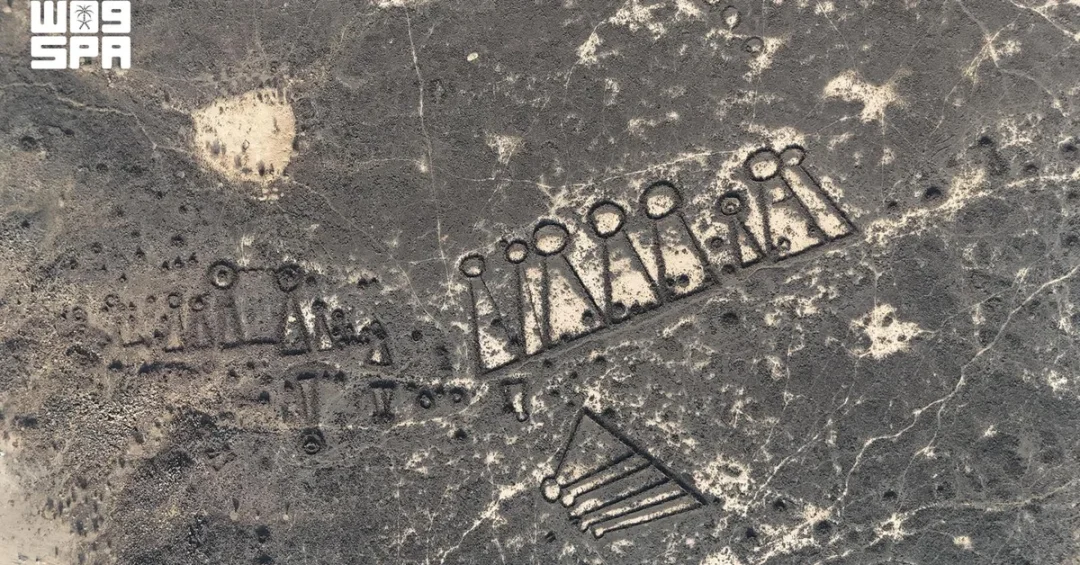
The Royal Commission for AlUla has documented a remarkable network of tail-shaped stone structures across the oases of AlUla, Khaybar, and Tayma, offering new insights into Bronze Age life in northwest Arabia. These ancient monuments, built from local volcanic and sedimentary rocks, are concentrated near water sources and along valley corridors, revealing a sophisticated pattern of human settlement and movement that dates back thousands of years.
Context and Background
The structures, known for their distinctive elongated stone appendages attached to burial chambers, represent one of the most significant archaeological finds in the region. According to the Saudi Press Agency (SPA), these monuments are densely distributed across volcanic fields, along wadis, and adjacent to oases and water sources. Archaeological studies have confirmed that many date to the Bronze Age, with variations in shape and size indicating an evolution of construction techniques over successive periods.
The Royal Commission for AlUla, which oversees research and heritage projects in the region, has highlighted that these structures are often linked to long pathways termed “funerary routes.” These routes stretched approximately 530 kilometers, connecting oases, pastures, and water sources, and they illustrate the movement patterns and communication networks among ancient settlements.
Key Details
Scientific studies conducted under the supervision of the Royal Commission, in collaboration with specialized academic teams, reveal that these monuments reflect social and economic bonds among communities in northwest Arabia during the Bronze Age. The density of tombs near oases underscores the vital importance of these locations for the inhabitants of that era. Researchers believe the funerary routes were associated with seasonal migrations of herders and their flocks between oases and grazing lands, while also strengthening connections between human settlements.
The architectural design of the tail-shaped structures consists of a central burial chamber with stone extensions forming a tail. The diversity and overlap of some structures suggest that building methods changed over time, providing a chronological record of ancient engineering and cultural practices. The use of locally sourced rocks indicates a deep understanding of the environment and a sustainable approach to construction that has preserved these monuments for millennia.
Implications and Impact
These discoveries significantly enhance our understanding of the Arabian Peninsula’s prehistory, challenging earlier assumptions that the region was sparsely populated or merely a transit corridor. The evidence points to thriving communities with complex social organization, economic interdependence, and territorial connections that spanned hundreds of kilometers. This research also positions Saudi Arabia as a key player in global archaeological studies, attracting international attention and collaboration.
For the international community, the findings offer a rare window into the lives of Bronze Age societies, highlighting the region’s role as a cradle of human civilization. The preservation and study of these structures align with global efforts to safeguard cultural heritage, while also providing a foundation for future tourism and educational initiatives that can showcase the Kingdom’s rich history to the world.
Vision 2030 Alignment
The archaeological work in AlUla, Khaybar, and Tayma directly supports Saudi Arabia’s Vision 2030, particularly its goals of diversifying the economy and promoting cultural heritage as a pillar of national identity. The Royal Commission for AlUla’s efforts to research, preserve, and present these ancient sites contribute to the development of sustainable tourism and the creation of world-class cultural destinations. By uncovering and sharing these historical treasures, Saudi Arabia not only enriches global knowledge but also reinforces its commitment to becoming a leading hub for heritage and innovation, aligning with the ambitious aspirations of Vision 2030.
20 Questions
Q1. What are the tail-shaped stone structures in Saudi Arabia?
A1. These are ancient monuments found in northwest Arabia, consisting of a burial chamber with a stone tail attached. They were built during the Bronze Age and are concentrated near oases, water sources, and volcanic areas, indicating settled communities.
Q2. Where are these structures located?
A2. They are located in the regions of AlUla, Khaybar, and Tayma, which are in the northwest of the Arabian Peninsula. The structures are found in volcanic fields, along valleys, and near oases and water sources.
Q3. Who documented these structures?
A3. The Royal Commission for AlUla, in collaboration with specialized academic teams, documented and studied these structures. The findings were released through the Saudi Press Agency.
Q4. What is the estimated length of the funerary routes?
A4. The funerary routes extend approximately 530 kilometers, connecting oases, pastures, and water sources. They represent movement and communication patterns among ancient settlements.
Q5. What period do these structures date back to?
A5. Archaeological studies indicate that many of these structures date back to the Bronze Age, which roughly spans from around 3300 BCE to 1200 BCE in this region.
Q6. What materials were used to build the structures?
A6. The structures were built using locally sourced stones, including volcanic rocks and sedimentary stones from the surrounding environment. This reflects sustainable building practices.
Q7. What is the significance of the structures’ location near oases?
A7. The density of tombs near oases highlights the importance of these water sources for ancient communities. Oases likely provided essential resources for living, agriculture, and animal husbandry.
Q8. How do the structures reveal social connections?
A8. The funerary routes and the distribution of tombs suggest that communities were interconnected through trade, seasonal migrations, and shared cultural practices, reflecting complex social and economic bonds.
Q9. What do researchers believe about the purpose of the funerary routes?
A9. Researchers believe the routes were associated with seasonal movements of herders and their flocks, allowing access to grazing lands and water, while also facilitating interaction between settlements.
Q10. How do these findings change perceptions of ancient Arabia?
A10. They challenge the idea that Arabia was sparsely inhabited, showing that it had organized societies with complex social structures and long-distance networks, contributing to a richer understanding of human history.
Q11. What role does the Royal Commission for AlUla play?
A11. The Royal Commission for AlUla oversees archaeological research, preservation, and presentation of heritage sites in the region. It conducts studies and collaborates with international experts to uncover and protect these treasures.
Q12. Are these structures similar to other archaeological finds in the Middle East?
A12. While unique in form, they share some similarities with other Bronze Age burial monuments in the region, but the tail-shaped design and the extensive funerary routes are distinctive to northwest Arabia.
Q13. How does this research contribute to Saudi Vision 2030?
A13. The research supports Vision 2030 by promoting cultural heritage, attracting tourism, and diversifying the economy. It showcases Saudi Arabia’s historical depth and creates opportunities for sustainable development.
Q14. What evidence indicates the structures were built over time?
A14. The diversity in shape and size, as well as the overlap of some structures, suggests that construction techniques evolved over successive periods, indicating a long tradition of building.
Q15. How do the structures relate to water sources?
A15. They are often found near oases and water sources, which were critical for survival. The proximity suggests that these locations were focal points for settlement and ritual activities.
Q16. Have any artifacts been found inside the structures?
A16. While the article does not specify, archaeological excavations typically reveal artifacts such as pottery, tools, and human remains, which help date the structures and understand the culture. Further studies may provide more details.
Q17. What is the global significance of this discovery?
A17. It provides new insights into Bronze Age societies in a region often overlooked, contributing to global knowledge about human migration, settlement patterns, and cultural complexity.
Q18. How can the public learn about these structures?
A18. The Royal Commission for AlUla is working to preserve and present these sites. Future tourism and educational programs may allow visitors to explore the archaeology, while publications and exhibitions share findings internationally.
Q19. Are there any preservation efforts in place?
A19. Yes, the Royal Commission for AlUla is actively involved in preservation and management, ensuring that these ancient monuments are protected for future generations and studied using modern techniques.
Q20. What is the next step for this research?
A20. Continued excavation and analysis will likely reveal more about the people who built these structures, including their daily lives, beliefs, and interactions. The research will also expand to map the full extent of the funerary routes and their connections.
Reader Feedback
We value your thoughts. Please share your feedback on this article.
Your feedback helps us improve our coverage.