


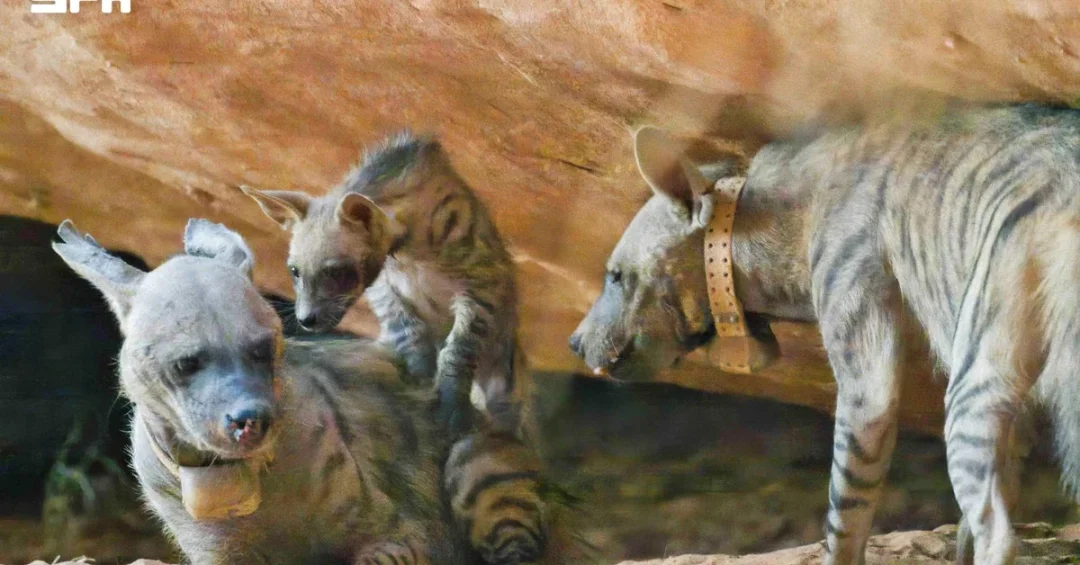
The National Center for Wildlife Conservation (NCW) and NEOM have documented the first births of striped hyenas following the reintroduction of four individuals into the NEOM Nature Reserve. This significant milestone, announced on August 17, 2026, signals the species’ successful adaptation to the reserve’s environment and its ability to reproduce in the wild. The development underscores the effectiveness of Saudi Arabia’s comprehensive programs to breed and reintroduce wildlife, including predator species, to restore their natural roles in ecosystems.
Context and Background
The birth follows a meticulous process led by the NCW, which selected two pairs of striped hyenas for the reintroduction initiative. Before their release, the animals were placed in a rehabilitation and care program at the Center’s Captive Breeding Facility. This program included comprehensive veterinary examinations, continuous health monitoring, and preparation for the transition to the natural environment. The goal was to ensure the animals were physically and behaviorally ready for life in the wild, a crucial step for any successful reintroduction effort.
The striped hyena, known scientifically as Hyaena hyena, plays a vital ecological role by feeding on carrion and dead animals, thereby acting as nature’s cleanup crew. This scavenging behavior helps maintain ecosystem health by preventing the spread of disease and recycling nutrients. However, the species has experienced population declines in parts of its natural range due to threats such as illegal hunting and poisoning. The reintroduction in NEOM is a direct response to these threats, aiming to reverse the trends and establish a sustainable population.
Key Details
Dr. Muhammad Ali Qurban, the CEO of the National Center for Wildlife Conservation, emphasized the significance of this event. “The registration of the first striped hyena birth marks an important station within our programs for the propagation and reintroduction of wild species,” he said. “The reintroduction of species into their natural habitats represents an advanced stage toward forming populations capable of stabilizing and reproducing in the wild, restoring their roles in ecosystems.” Dr. Qurban’s statement highlights the strategic importance of this achievement in the broader context of Saudi Arabia’s environmental conservation goals.
The births occurred in the NEOM Nature Reserve, which spans vast desert and mountain areas, providing a suitable habitat for the hyenas. The success follows a careful selection process where the pairs were chosen from the Center’s breeding stock, ensuring genetic diversity and overall health. The entire initiative is part of the center’s wider mission to protect and restore the Kingdom’s native biodiversity, which is a critical component of the Saudi Green Initiative and the Vision 2030 framework.
Implications and Impact
The successful breeding of striped hyenas in the reserve holds significant implications for the region and globally. It demonstrates Saudi Arabia’s commitment to preserving natural heritage and restoring ecosystems that have been degraded by decades of overhunting and habitat loss. The positive outcome also highlights the feasibility of large-scale wildlife reintroduction projects in arid and semi-arid environments, providing a model for other countries facing similar challenges.
Furthermore, this achievement enhances the Kingdom’s position as a leader in conservation in the Middle East. It contributes to the Saudi Green Initiative, which aims to protect and enrich the natural environment, and supports the goals of the UN Convention on Biological Diversity to protect and restore 30% of the planet by 2030. The progress is also a boon for ecotourism, as a healthy hyena population could attract wildlife enthusiasts to the NEOM region, which is already developing luxury and nature-based tourism destinations.
Vision 2030 Alignment
This development is a perfect example of how Saudi Arabia’s Vision 2030 is being realized in the environmental sector. The Vision 2030 blueprint emphasizes the importance of preserving the Kingdom’s natural capital and integrating sustainable development into all aspects of life. By strengthening biodiversity and creating a balanced ecosystem, the kingdom is not only meeting its environmental goals but also enhancing the quality of life for its citizens and future generations. As the striped hyenas flourish and breed, they symbolize a renaissance of the Arabian wilderness, promising a future where wildlife thrives hand in hand with human development. The continuing commitment of NCW and NEOM sets a precedent for future conservation efforts, ensuring that the Kingdom’s rich natural heritage remains a lasting legacy for all.
20 Questions
Q1. What is the striped hyena?
A1. The striped hyena is a species of hyena native to North and East Africa, the Middle East, and parts of Asia. It is known for its distinctive striped coat and its role as a scavenger, feeding on carrion, which helps keep ecosystems clean and healthy.
Q2. Why is the striped hyena important to the ecosystem?
A2. Striped hyenas play a critical role as scavengers, disposing of animal carcasses and waste. This process prevents the spread of diseases and supports nutrient recycling in the ecosystem, balancing ecological balance.
Q3. Where does the NEOM Nature Reserve located?
A3. The NEOM Nature Reserve is located in northwest Saudi Arabia, along the Red Sea coast. It spans over thousands of square kilometers, featuring mountains, deserts, and coastlines that provide diverse habitats for wildlife.
Q4. How many striped hyenas were initially released?
A4. The original text states that four individuals of the striped hyena were reintroduced in the NEOM Nature Reserve, consisting of two pairs, which have now produced the first births.
Q5. What is the National Center for Wildlife Conservation (NCW)?
A5. The NCW is a Saudi government entity responsible for the protection and conservation of wildlife and biodiversity. It leads programs for breeding, reintroduction, and the establishment of protected areas in the Kingdom.
Q6. Why was a rehabilitation program necessary before release?
A6. Rehabilitation ensures that animals are healthy, free from stress, and able to adapt to the wild. It includes veterinary care and monitoring, increasing their survival chances and reproductive success.
Q7. What threats does the striped hyena face?
A7. The main threats include hunting for parts or conflict, and poisoning through indirect methods. Habitat loss also contributes to the decline in some regions.
Q8. What is the significance of the hyena births?
A8. The births indicate the hyenas have not only survived but have thrived, proving the reserve’s environment is suitable for reproduction, which is a positive sign for the population’s long-term survival.
Q9. How does this align with Vision 2030?
A9. The initiative supports Vision 2030’s environmental sustainability goals, which include conserving biodiversity, enhancing green spaces, and positioning the Kingdom as a global leader in environmental stewardship.
Q10. What other species have been targeted for reintroduction?
A10. While the article specifically mentions the striped hyena, the NCW has undertaken similar programs for Arabian wolves, oryx, and gazelles, among other species that are part of the Kingdom’s conservation plans.
Q11. Are the hyenas still under monitoring?
A11. Yes, it is likely that the animals remain under observation via GPS and camera traps to track their movements, health, and integration into the wild, ensuring the project’s success.
Q12. What are the main threats to hyena populations?
A12. The main threats include illegal hunting, intentional or accidental poisoning from agricultural activities, and habitat degradation. These have drastically reduced their numbers in the wild.
Q13. What is the role of the CEO of NCW?
A13. Dr. Mohammed Ali Qurban is the CEO of the NCW. He leads the strategic direction and oversees the implementation of conservation programs across the Kingdom, including the reintroduction of the hyenas.
Q14. How does the striped hyena benefit the NEOM ecosystem?
A14. As a scavenger, the hyena helps to clean up the carcasses of dead animals, reducing disease risk and maintaining a healthy balance. This supports other wildlife and the overall health of the reserve.
Q15. What is the importance of genetic diversity in the breeding program?
A15. Genetic diversity is crucial for the long-term survival of a population. It ensures that the hyenas have a greater resistance to disease and adaptive to environmental changes.
Q16. How does this help regional biodiversity?
A16. Reintroducing the hyena restores a keystone species that was missing from the region, thus reestablishing the natural balance and promoting the recovery of other species, enhancing overall biodiversity.
Q17. How are the hyenas equipped for release?
A17. Prior to release, the hyenas undergo rehabilitation in the NCW’s dedicated center. They receive veterinary exams, behavioral conditioning, and are often fitted with tracking devices to monitor their movement.
Q18. Is the story part of a larger initiative?
A18. Yes, it is part of the NCW’s broader initiative to restore the Kingdom’s natural capital. The program aligns with the Saudi Green and international commitments, such as the UN SDGs.
Q19. Can this inspire other countries?
A19. Absolutely, Saudi Arabia’s success in captive breeding and reintroduction of a large carnivore in a harsh environment serves as a model for others, demonstrating that conservation can be achieved with careful planning.
Q20. What can the public do to support the conservation?
A20. The public can support by respecting protected areas, reporting poaching, and supporting sustainable ecotourism. Additionally, supporting organizations and staying informed about the vision can help.
Reader Feedback
We value your thoughts. Please share your feedback on this article.
Your feedback helps us improve our coverage.