


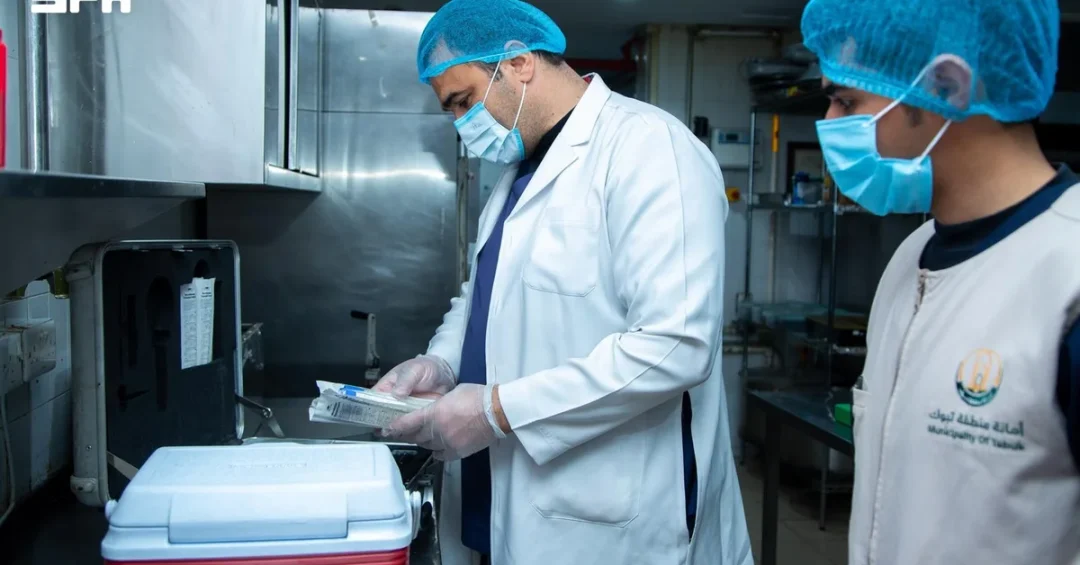
Tabuk Municipality’s Food Safety Laboratory has conducted more than 14,000 food safety tests and laboratory analyses during the first half of 2026, according to a report released by the Saudi Press Agency. This comprehensive inspection effort, overseen by the General Administration of Environmental Health, underscores the Kingdom’s proactive approach to safeguarding public health and ensuring the quality of food products available to consumers and residents in the Tabuk region.
Context and Background
The intensified inspection campaign aligns with Saudi Arabia’s broader Vision 2030 strategy, which prioritizes high standards of living and public health. The laboratory’s expanded operations reflect a growing institutional commitment to strengthen health surveillance systems and promote consumer safety across the Kingdom. Tabuk, a rapidly developing northern region known for its natural beauty and expanding tourism sector, benefits directly from such rigorous safety measures that enhance trust and well-being among citizens, residents, and visitors alike.
Key Details
According to the municipality, the laboratory carried out 2,201 visits to food establishments and destroyed 703 kilograms of food materials deemed unfit for consumption. In addition to these surveillance activities, the team performed over 4,834 organoleptic (visual) tests, 808 frying oil tests, 606 meat safety tests, and 63 fish freshness tests. Temperature checks—both through internal core probes and infrared scanning—totaled 1,647 and 3,669 tests, respectively.
In the laboratory, analysts processed 1,765 microbiological samples, of which 255 were found to be non-conforming, and 1,054 chemical samples, with 32 non-conforming. These rigorous checks help detect contamination, improper handling, and quality deviations, ensuring that all food products sold in Tabuk meet stringent health and safety standards.
Implications and Impact
The continuous and comprehensive monitoring protects consumers from health risks and supports the commercial sector by fostering a reliable environment for food businesses. With growing population and increasing tourist inflow, robust food safety measures are critical for sustaining public confidence and economic growth. The data from this initiative also aids in developing evidence-based policies and intervention strategies, strengthening the entire health surveillance framework in the region.
Vision 2030 Alignment
This enhanced food safety effort directly contributes to the Kingdom’s Vision 2030 by enhancing the quality of life, ensuring public health, and building a sustainable ecosystem that values safety and well-being. By investing in advanced laboratory capacities and rigorous regulatory enforcement, Saudi Arabia is committed to delivering an exceptional standard of living for its people and guests, while also setting a benchmark for regional food safety excellence.
20 Questions
Q1. What is the Food Safety Laboratory in Tabuk?
A1. The Food Safety Laboratory is a specialized facility operated by the General Administration of Environmental Health under Tabuk Municipality. It conducts inspections and laboratory tests to ensure food safety and quality within the Tabuk region.
Q2. How many visits did the laboratory conduct in H1 2026?
A2. The laboratory carried out 2,201 visits to food establishments, focusing on compliance with health and safety regulations.
Q3. How much food was destroyed during the inspections?
A3. A total of 703 kilograms of food materials were destroyed because they were found to be unsafe or unsuitable for consumption.
Q4. What are organoleptic tests?
A4. Organoleptic tests involve sensory evaluation of food through sight, smell, taste, touch, or texture. The lab performed 4,834 such tests.
Q5. Why are frying oil tests important?
A5. Frying oil tests check the chemical quality and breakdown of cooking oil to ensure it does not pose health risks. The lab conducted 808 frying oil tests.
Q6. How many meat safety tests were performed?
A6. The laboratory conducted 606 meat safety tests to verify the freshness, composition, and safety of meat products.
Q7. How many fish tests were conducted?
A7. A total of 63 fish safety tests were carried out to ensure fish and seafood are safe for consumption.
Q8. What are core temperature and infrared tests?
A8. Core temperature tests use penetration probes to check internal food temperatures, while infrared tests measure surface temperature. The lab performed 1,647 and 3,669 tests respectively.
Q9. How many microbiological samples were analyzed?
A9. The laboratory analyzed 1,765 microbiological samples to detect bacteria, fungi, or other microorganisms.
Q10. How many of the microbiological samples were non-conforming?
A10. Among the 1,765 microbiological samples, 255 were found to be non-conforming, meaning they failed to meet safety criteria.
Q11. How many chemical analyses were performed?
A11. The laboratory performed chemical analyses on 1,054 samples to check for adulteration, additives, or contamination.
Q12. How many chemical samples were non-conforming?
A12. Out of 1,054 chemical samples, 32 were found to be non-conforming, exceeding allowed limits for chemicals or residues.
Q13. What is the main goal of these inspections?
A13. The primary goal is to ensure food safety and protect the health of consumers by detecting unsafe products and enforcing strict health regulations.
Q14. Who is responsible for food safety in Tabuk?
A14. The General Administration of Environmental Health, operating under Tabuk Municipality, is responsible for food safety oversight, including inspections and laboratory testing.
Q15. How does this align with Saudi Vision 2030?
A15. The initiative supports Vision 2030 by enhancing the quality of life, ensuring public health, and building a sustainable environment for residents and visitors.
Q16. What happens to non-conforming food products?
A16. Non-conforming products are either destroyed or removed from the market, as shown by the 703 kilograms that were destroyed, to prevent them from reaching consumers.
Q17. How often are inspections carried out?
A17. Inspections are continuous and scheduled throughout the year, with specific attention on the first half of 2026, as reported by the municipality.
Q18. What kinds of food establishments are inspected?
A18. Inspections cover all food handling establishments, including restaurants, bakeries, groceries, and other food retailers within the Tabuk area.
Q19. How does the laboratory ensure accurate results?
A19. The laboratory follows strict methodologies and quality control procedures, including using standardized testing protocols and validated instruments, to ensure accurate and reliable results.
Q20. What is the public role in food safety?
A20. The public is encouraged to report any food safety concerns to authorities, supporting the municipality’s ongoing effort to protect health and maintain a high standard of safety across the region.
Reader Feedback
We value your thoughts. Please share your feedback on this article.
Your feedback helps us improve our coverage.