


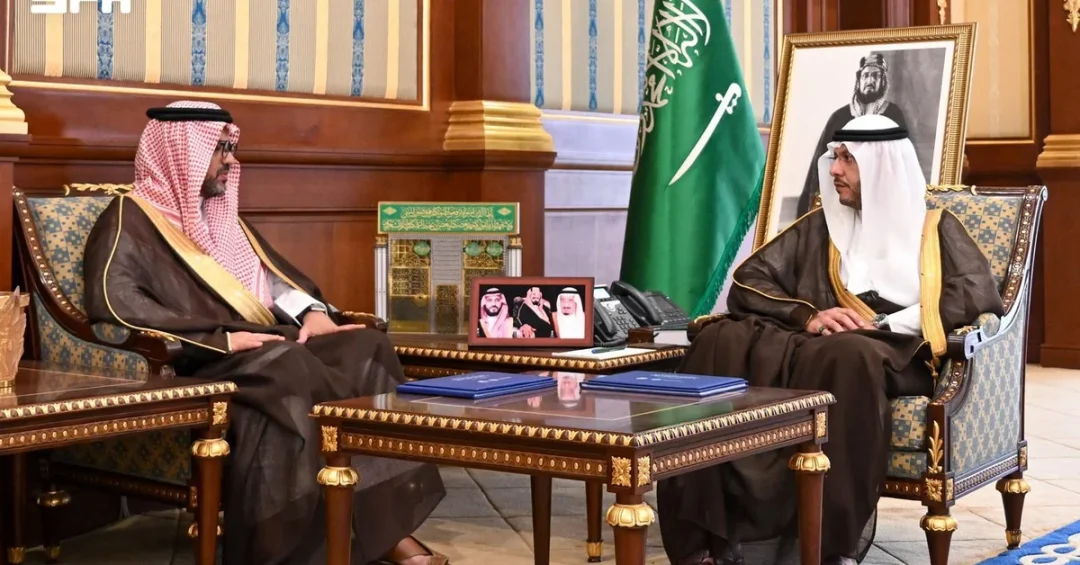
Madinah, August 17, 2026 (SPA) – His Royal Highness Prince Saud bin Nahar bin Saud bin Abdulaziz, Deputy Governor of the Madinah Region, received in his office at the Emirate the President of the Islamic University of Madinah, Dr. Saleh Al-Oqla. During the meeting, Dr. Al-Oqla presented the final report of the International Conference on Arabic Language and Applied Sciences, titled “Enablement and Integration,” summarizing the conference’s most prominent events, recommendations, and outcomes.
Context and Background
The Islamic University of Madinah, one of Saudi Arabia’s leading higher education institutions, has long been dedicated to advancing Arabic language studies and applied sciences. This year’s international conference, themed “Enablement and Integration,” brought together scholars and researchers from across the globe to explore ways to strengthen the role of Arabic in scientific research and the integration of various knowledge domains. The meeting between Prince Saud bin Nahar and Dr. Al-Gulaal underlines the Kingdom’s continued support for academic excellence and cultural enrichment, aligning with the broader goals of Vision 2030 to foster a thriving knowledge-based society.
The delegation handed over the conference’s final report, which provides a comprehensive overview of the deliberations, recommendations, and the roadmap for future collaboration. The report marks a milestone in the Kingdom’s commitment to enhancing Arabic as a language of science, innovation, and cross-disciplinary cooperation.
Key Details
During the meeting, Prince Saud bin Nahar lauded the Islamic University of Madinah for its active role in supporting scientific research, driving cultural and intellectual movement, and organizing scientific conferences and events that enrich knowledge. He emphasized the importance of continuing these efforts to strengthen the place of the Arabic language and support integration between the diverse fields of science. His Highness also highlighted the university’s contribution to international academic discourse, noting that the “Enablement and Integration” conference had become a distinct platform for learning and collaboration.
In response, Dr. Saleh Al-Ghaq appreciated the Deputy Prince’s continuous support and keen interest in the university’s programs and scientific activities. He reaffirmed the university’s determination to keep fulfilling its role in serving the Arabic language, sciences, and humanities, while enhancing scientific and research partnerships both regionally and globally.
Implications and Impact
The meeting and the conference’s outcomes carry significant implications for the Arab and global academic community. By promoting Arabic as a medium for scientific research, the Islamic University of Madinah fosters a bridge between traditional language and modern applied sciences, a synergy that can lead to new breakthroughs in technology, engineering, health, and other fields. The conference’s recommendations are expected to inform future curriculum and collaborative research programs, attracting more international students and researchers to the Kingdom.
Furthermore, this engagement strengthens Saudi Arabia’s position as a leading hub for cultural and educational exchange in the region. The cooperation between the university and government leadership demonstrates the country’s integrated approach to education, which supports the National Transformation Program and the goals of the Human Capability Development Program under Vision 2030. In doing so, it helps equip youth and professionals with the skills needed for the future and fosters a positive international image of the Kingdom as a center of learning and development.
Vision 2030 Alignment
The meeting between Prince Saud bin Nahar and Dr. Saleh Al-Ghalq is another testament to the Kingdom’s strategic direction under Vision 2030, which seeks to stimulate creativity, innovation, and scientific excellence in the education system. The continued support for the Arabic language and its integration with the sciences aligns with the Vision’s objective to strengthen national identity and empower citizens with a high-quality education. As the Islamic University of Madinah expands its scientific events and partnerships, it contributes directly to the Kingdom’s long-term prosperity and its global role as a pioneer in both culture and science. This forward-looking collaboration between regional leadership and academia underscores the dynamic synergy that will drive the Kingdom toward a future rich in discovery and shared knowledge.
20 Questions
Q1. Who received the President of the Islamic University of Madinah?
A1. His Royal Highness Prince Saud bin Nahar bin Saud bin Abdulaziz, the Deputy Governor of the Madinah Region, received the President of the Islamic University of Madinah, Dr. Saleh Al-Gulaq, in his office at the Emirate.
Q2. What was the purpose of the meeting?
A2. The President of the university presented the final report of the International Conference on Arabic Language and Applied Sciences to the Deputy Governor, highlighting the conference’s main events, recommendations, and outcomes.
Q3. What was the title of the conference?
A3. The conference was titled “Enablement and Integration” (Tamkeen and Takamul), reflecting its focus on strengthening Arabic language and its application in sciences.
Q4. Which university is involved?
A4. The Islamic University of Madinah, a leading Saudi higher education institution known for its focus on Islamic studies and Arabic language, is the university involved in the conference and the meeting.
Q5. What did the Deputy Governor praise?
A5. The Deputy Governor praised the university’s role in supporting scientific research, promoting Arabic and cultural knowledge, and organizing scientific conferences and events that enrich knowledge.
Q6. What did the President emphasize in response?
A6. Dr. Saleh Al-Ghaq emphasized the university’s commitment to serving the Arabic language, science, and knowledge, and to strengthening scientific and research partnerships.
Q7. What is the title of Dr. Saleh Al-Ghaq?
A7. Dr. Saleh Al-Ghaq is the President (or Rector) of the Islamic University of Madinah, a prestigious academic position overseeing the university’s administration and scientific activities.
Q8. How did the Deputy Governor describe the university’s role?
A8. He described it as a vital role in supporting scientific research and the intellectual movement, and in enhancing the presence of the Arabic language through scientific conferences and events.
Q9. What was the theme of the international conference?
A9. The theme was “Enablement and Integration,” meaning empowering the Arabic language and integrating it with applied sciences for innovative and collaborative research.
Q10. Where was the meeting held?
A10. The meeting was held in the Deputy Governor’s office at the Emirate of the Madinah Region, which is the administrative center of the region.
Q11. Why is this meeting important for the Arabic language?
A11. It signals official high-level support for Arabic’s role in science, encouraging further research and collaboration that elevate the language as a medium for knowledge.
Q12. How does this relate to Vision 2030?
A12. It aligns with Vision 2030’s goal of fostering a knowledge-based economy and developing human capabilities through advanced education and research, as well as preserving national identity.
Q13. What were the recommendations of the conference?
A13. The recommendations are part of the final report, focusing on integrating Arabic into applied sciences and enhancing multidisciplinary research, though the specifics were not disclosed in the statement.
Q14. Did the Deputy Governor emphasize any specific actions?
A14. He emphasized the need to continue efforts that enhance the status of Arabic and support the integration of different sciences, indicating a call for sustained academic activities.
Q15. What is the Islamic University of Madinah’s notable focus?
A15. The university is known for its specialization in Arabic language and Islamic studies, but also promotes applied sciences, making it a center for both traditional and modern knowledge.
Q16. How does this meeting contribute to international cooperation?
A16. By supporting conferences that bring international scholars, it strengthens scientific and research partnerships with international academia, fostering global collaboration.
Q17. Was there any financial support mentioned?
A17. The statement did not mention financial support, but highlighted the leadership’s support in terms of praise and encouragement for the university’s scientific efforts.
Q18. How does this affect the students of the university?
A18. The recognition and support help boost the university’s credibility and resources, which can enhance student learning and create more research opportunities.
Q19. Is this a common practice in Saudi Arabia?
A19. Yes, Saudi leaders frequently meet with university presidents to review reports and support higher education, demonstrating commitment to academic progress.
Q20. What is the overall outlook after this meeting?
A20. The meeting reinforces the university’s dedication to Arabic and science, promising to further integrate knowledge and collaborations that will contribute to Saudi Arabia’s long-term academic and developmental goals.
Reader Feedback
We value your thoughts. Please share your feedback on this article.
Your feedback helps us improve our coverage.