


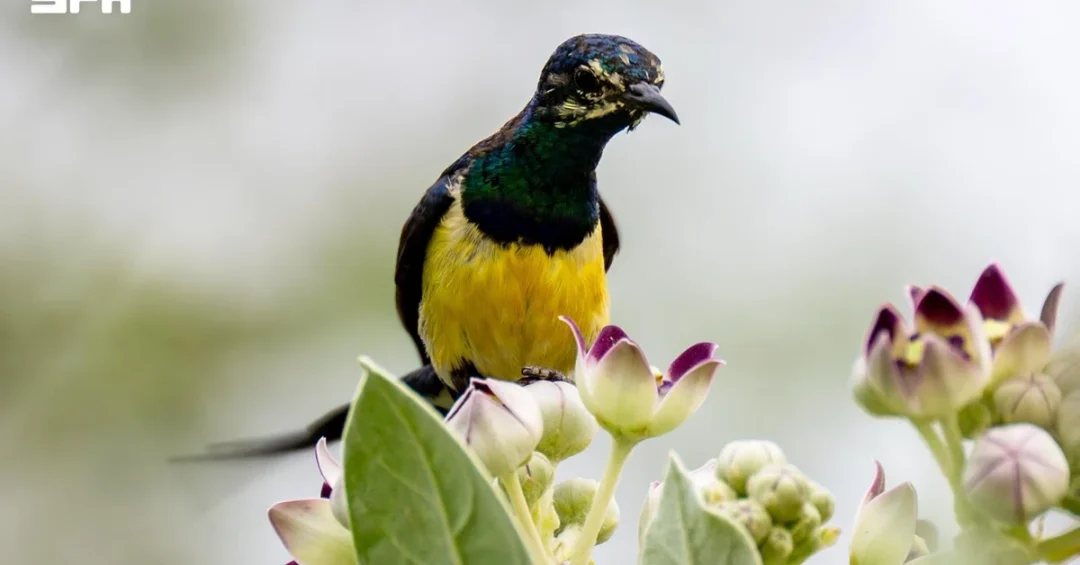
The Nile Sunbird (Cinnyris osea) has been recorded in multiple natural and agricultural habitats across the Jazan region of Saudi Arabia, the Saudi Press Agency reported on August 17, 2026. The observation underscores the area’s rich biodiversity and the importance of its dense vegetation in providing food and shelter for the species.
Context and Background
The Nile Sunbird is a small, vividly colored bird found across the Arabian Peninsula and parts of Africa. In Saudi Arabia, it thrives in agricultural zones, dry woodlands, and areas with abundant flowering plants. The male features striking iridescent blue-green and purple plumage, with a yellow underside, while the female has subtler brown, gray, and yellow tones for camouflage.
During breeding season, the male’s tail feathers lengthen to enhance display. The species primarily feeds on flower nectar and insects, making it a crucial pollinator within its ecosystem.
Key Details
The Nile Sunbird constructs a distinctive dome-shaped nest, suspended from a branch, often in thorny trees. It weaves plant fibers, rootlets, leaves, stems, and spider silk into an elongated oval structure. Both parents share nesting duties, cooperating in incubation and feeding of the chicks.
Jazan’s varied landscapes—including coastal plains, valleys, and farmlands—offer ideal conditions. The region’s abundant flowering plants and suitable nesting sites support not only the sunbird but also numerous resident and migratory birds, as well as other wildlife.
Implications and Impact
The presence of the Nile Sunbird in Jazan indicates a healthy, productive ecosystem. It relies on a network of blooming plants, which in turn supports other species and ecological balance. This makes the region a valuable reservoir for biodiversity and a natural attraction for birdwatchers.
Such observations highlight the ecological significance of Jazan and emphasize the need to conserve natural habitats, especially as urban expansion and climate change pose challenges. Protected areas and sustainable practices can ensure these ecosystems continue to thrive.
Vision 2030 Alignment
The Kingdom’s Vision 2030 places strong emphasis on environmental sustainability and the protection of natural heritage. The thriving Nile Sunbird populations in Jazan reflect the positive outcomes of Saudi Arabia’s conservation efforts, including the Saudi Green Initiative and other biodiversity programs. By preserving such habitats, the nation secures a vibrant environment for future generations, reinforcing its global role in sustainability.
20 Questions
Q1. What is the Nile Sunbird?
A1. The Nile Sunbird is a small bird species belonging to the sunbird family, known for its bright metallic colors and nectar-feeding behavior. It is resident in parts of Africa and the Arabian Peninsula.
Q2. Where was the Nile Sunbird observed in Saudi Arabia?
A2. It was observed in the Jazan region in southwestern Saudi Arabia, which includes coastal plains, valleys, and farmlands that provide a diverse habitat.
Q3. What are the distinctive features of a male Nile Sunbird?
A3. The male has brilliant iridescent blue-green and purple plumage, a yellow belly, and a longer tail during breeding season, making it extremely conspicuous.
Q4. How does the female Nile Sunbird appear?
A4. The female is duller, with brown, gray, and yellow feathers that help it blend into the surroundings, offering better camouflage while incubating eggs.
Q5. What does the Nile Sunbird feed on?
A5. It feeds primarily on the nectar of flowers, using its curved beak and brush-tipped tongue. It also consumes small insects and spiders for protein.
Q6. How does the Nile Sunbird construct its nest?
A6. The nest is an elongated dome woven from plant fibers, rootlets, leaves, and spider silk, usually suspended from a branch or thin twig, often in a thorny bush for protection.
Q7. Do both parents care for the young?
A7. Yes, both the male and female participate in building the nest, incubating the eggs, and feeding the chicks until they fledge, showing strong parental cooperation.
Q8. Why is Jazan a suitable habitat for this bird?
A8. Jazan offers a variety of plants, flowering trees, and shrubs, along with a mild climate and diverse topography, providing ample food sources and nesting sites.
Q9. What does the presence of the Nile Sunbird indicate about local biodiversity?
A9. It indicates a healthy ecosystem with abundant flowering plants and insect life, which is essential for supporting various bird species and maintaining ecological balance.
Q10. Is the Nile Sunbird a resident or a migratory species?
A10. It is a resident species in Saudi Arabia, staying all year round, as long as food and nesting conditions are suitable, which they are in Jazan.
Q11. What role does the Nile Sunbird play in pollination?
A11. As it feeds on nectar, the bird’s feathers and beak brush against pollen, transferring it between flowers, thus assisting in reproduction of many plant species.
Q12. How does the Nile Sunbird adapt to agricultural areas?
A12. It easily adapts to farmland where flowering crops, fruit trees, and hedgerows supply nectar and insects. It benefits from the diversity of cultivated plants.
Q13. What other bird species are found in Jazan?
A13. Jazan supports a wide range of birds, including weavers, sunbirds, doves, hoopoes, and various birds of prey, alongside migratory species that stop over.
Q14. Why is Jazan considered a biodiversity hotspot?
A14. Its varied altitudes, from coastal to mountainous, create microhabitats with rich flora, offering refuge to many native and endemic species, making it a vital area for conservation.
Q15. How does Vision 2030 support environmental conservation?
A15. Vision 2030 includes the Saudi Green Initiative, which aims to plant billions of trees, protect terrestrial and marine habitats, and enhance air quality, directly aiding biodiversity.
Q16. What is the Saudi Green Initiative?
A16. A major national project aimed at increasing vegetation, reducing desertification, and preserving natural resources through sustainable land management and reforestation.
Q17. Can birdwatching promote tourism in Jazan?
A17. Yes, the unique birdlife of Jazan can attract nature tourists, and birdwatchers, promoting ecotourism that benefits local communities and reinforces environmental awareness.
Q18. Are there protected areas in Jazan for such birds?
A18. Yes, the Jazan region includes several protected areas and reserves, which are managed by the National Center for Wildlife to preserve habitats and mitigate threats.
Q19. What actions can protect the Nile Sunbird’s habitat?
A19. Avoiding heavy pesticide use, preserving native vegetation, and establishing wildlife corridors that connect areas are essential. Environmental education also helps prevent disturbances.
Q20. What does the Nile Sunbird represent for Saudi Arabia’s future?
A20. It symbolizes the nation’s progress in sustainable development and biodiversity protection. Its thriving presence demonstrates the positive impact of Vision 2030’s environmental goals.
Reader Feedback
We value your thoughts. Please share your feedback on this article.
Your feedback helps us improve our coverage.