


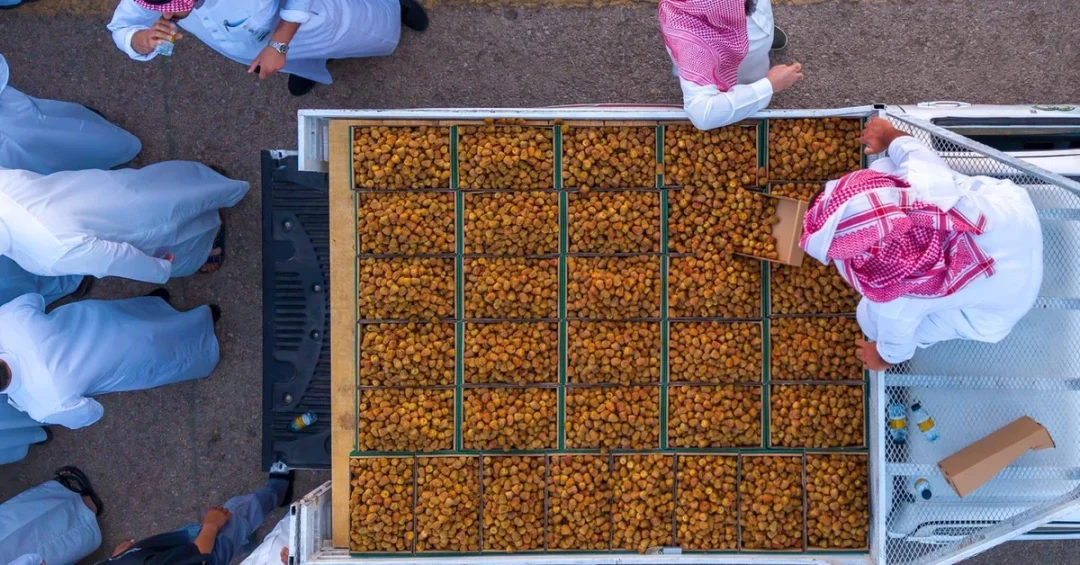
Sales at the Buraidah International Dates Festival exceeded 98 million Saudi Riyal during the first 15 days of August 2026. The Saudi Press Agency (SPA) reported total sales of SAR 98,015,377, with 12,377 vehicles entering the festival grounds and 2,084,421 packages of dates sold, weighing approximately 8,264 metric tons.
Context and Background
Held annually in Buraidah, the capital of the Qassim Province, the festival has become a key event in Saudi Arabia’s agricultural calendar. The province is renowned for its high-quality date production, and the event serves as a central marketplace for farmers, traders, and international buyers. The festival reinforces the Kingdom’s commitment to preserving its cultural heritage and strengthening its agricultural sector, providing a platform to display the diversity of Saudi dates.
Key Details
According to the SPA, the first week of the festival alone recorded sales surpassing SAR 17,904,337, with 533,801 packages and 2,110,578.75 kilograms of dates supplied. Over 5,500 vehicles visited during this period. The sustained high visitor numbers and robust sales reflect the growing popularity of the event, which is now recognized as one of the most important seasonal markets for date trade in the region. The festival also features various cultural and educational activities aimed at improving the quality of date production and marketing.
Implications and Impact
These figures underscore the vitality of the date industry in Saudi Arabia, providing substantial economic benefits to farmers and businesses. The festival contributes to the Kingdom’s agricultural diversification goals, creates trade opportunities, and strengthens the non-oil sector. It also enhances the appeal of Qassim as a tourist destination, attracting visitors from across the Gulf region and beyond, and reinforcing Saudi Arabia’s status as a hub for high-quality agricultural products.
Vision 2030 Alignment
The success of the Buraidah International Dates Festival aligns closely with Saudi Vision 2030, which emphasizes economic diversification, food security, and rural development. By supporting local producers and advancing sustainable agricultural practices, the festival helps build a resilient non-oil economy. Through such initiatives, Saudi Arabia continues to strengthen its global position as a leader in agricultural innovation while preserving its cultural identity.
20 Questions
Q1. What is the Buraidah International Dates Festival?
A1. The Buraidah International Dates Festival is a major seasonal event held in Buraidah, Saudi Arabia, showcasing premium date varieties from the Qassim Province. It serves as a marketplace for farmers and traders, attracts thousands of visitors, and celebrates the region’s rich date-growing heritage.
Q2. How much sales revenue was recorded in the first 15 days?
A2. According to the Saudi Press Agency, total sales reached SAR 98,015,377 during the first 15 days, reflecting the festival’s strong commercial appeal and the high demand for Saudi dates from both local and international buyers.
Q3. How many vehicles entered the festival during this period?
A3. A total of 12,377 vehicles entered the festival grounds in the first 15 days, highlighting a significant influx of visitors and indicating the event’s popularity and good transportation accessibility.
Q4. How many packages of dates were sold?
A4. More than 2.08 million packages of dates were sold, demonstrating a high volume of purchases and the festival’s efficiency in handling large-scale transactions efficiently.
Q5. What was the total weight of dates supplied?
A5. The total weight of dates supplied amounted to 8,264,261.8 kilograms, roughly 8,264 tons, underscoring the scale of the event and its importance in the region’s date trade.
Q6. What were the first-week sales figures?
A6. In the first week, sales reached SAR 17,904,337, with 533,110 packages and 2,110,578.75 kg of dates, plus 5,500 vehicles entering the festival grounds.
Q7. Why is Buraidah famous for dates?
A7. Buraidah is located in Qassim, a province celebrated for its date palm cultivation, fertile soils, and traditional expertise. It produces many high-quality date varieties, making it a central hub in the Kingdom.
Q8. How does the festival support local farmers?
A8. The festival gives farmers a direct platform to sell their produce, offers a stable market, and fosters community engagement. It also provides opportunities for farmers to connect with larger markets, improving their income sustainability.
Q9. What is the festival’s impact on tourism?
A9. The event boosts agro-tourism by attracting visitors to the Qassim region, showcasing local traditions and date products, and generating a notable contribution to the local economy.
Q10. Are there special date varieties highlighted at the festival?
A10. Yes, the festival features a wide variety of dates, including notable ones like Sukkari and Bart. Visitors can taste and purchase these varieties, which are known for their quality and origin.
Q11. What role does the Saudi Press Agency play?
A11. The Saudi Press Agency acts as the official source of information, publishing reliable statistics and updates about the festival, and ensuring that the public has access to accurate and transparent data.
Q12. How many vehicles visited in the first week?
A12. In the first week, approximately 5,500 vehicles visited the festival, indicating steady attendance and strong community interest in the event.
Q13. What is the quantity of dates sold in the first week?
A13. In the first week, the weight of dates supplied was 2,110,578.75 kilograms, packaged in about 533,110 boxes, reflecting high sales velocity.
Q14. How does this year’s performance compare to previous years?
A14. The current figures show remarkable growth compared to previous editions, indicating increased demand, better marketing, and growing awareness of Saudi dates internationally.
Q15. When does the festival typically take place?
A15. The festival usually takes place in August, aligning with the date’s best harvest season and coinciding with the peak ripening of dates in the Qassim region.
Q16. Are there any cultural or educational activities?
A16. Yes, the festival organizes cultural heritage exhibitions, educational workshops, and tasting sessions, and programs to educate visitors about date varieties and best agricultural practices.
Q17. What is the role of the Ministry of Environment, Water and Agriculture?
A17. The Ministry supports the festival and provides technical guidance, quality assurance, and training to farmers, helping to enhance the productivity and sustainable practices of the sector.
Q18. How does the festival contribute to the national economy?
A18. It contributes to the economy through direct sales, tourism, and support for the non-oil sector. The event strengthens the value chain and opens up markets for domestic producers.
Q19. What safety and quality measures are in place?
A19. The festival implements strict quality checks and safety measures, including hygiene standards and organized parking, to ensure a safe and comfortable experience for all visitors.
Q20. Where can one find more information about the festival?
A20. Reliable information is available through official announcements from the Saudi Press Agency, the Qassim Municipality, and the official festival’s communications, which provide updated data and event details.
Reader Feedback
We value your thoughts. Please share your feedback on this article.
Your feedback helps us improve our coverage.