


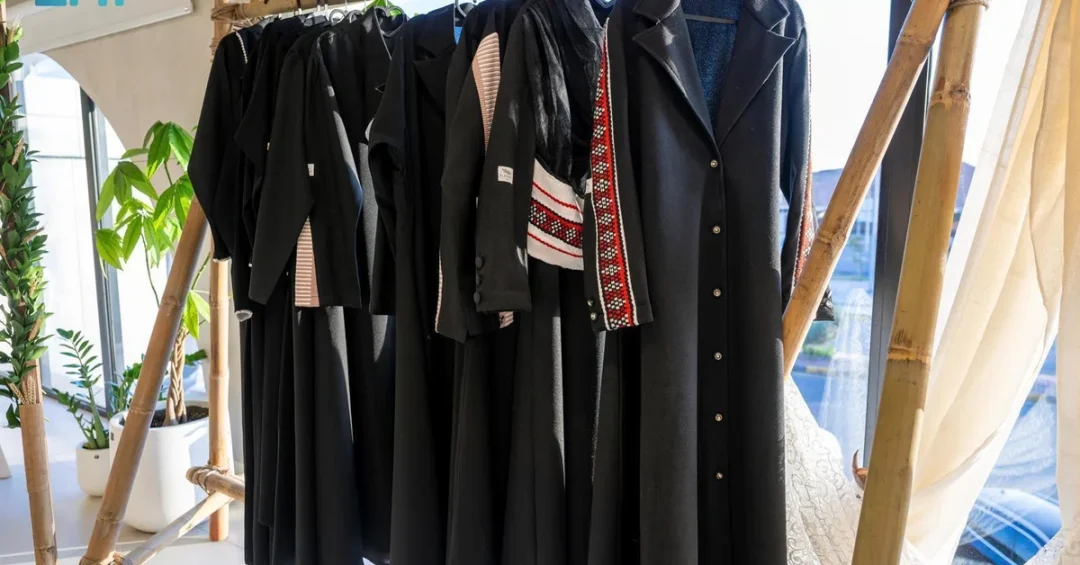
The Al-Jouf Region is celebrating its rich heritage of Sadu weaving, a traditional craft that has become a cornerstone of modern women’s fashion in Saudi Arabia. Designated as the Year of Handicrafts in 2025, Saudi Arabia is spotlighting the region’s artisans who skillfully incorporate Sadu techniques into contemporary abaya designs, particularly for national celebrations like Founding Day and National Day.
Context and Background
Sadu weaving, a centuries-old craft, has long been a symbol of Saudi Arabia’s cultural heritage. Originating from the Bedouin tribes, Sadu is characterized by its intricate geometric patterns and vibrant colors. The Al-Jouf Region, known for its skilled artisans and abundant natural resources, has preserved this tradition, adapting it to modern fashion trends while maintaining its authenticity.
Key Details
Craftswomen in Al-Jouf use traditional tools, such as ground-stretched wooden looms, to create Sadu products in varying lengths. The process begins with wool threads from livestock, which are spun and dyed using natural dyes extracted from local rocks or wild plants. These dyes produce vibrant colors that are incorporated into the designs of abayas, particularly on sleeves, midsections, and sides.
Implications and Impact
The integration of Sadu weaving into women’s fashion not only preserves a vital cultural tradition but also empowers local artisans, particularly women, by providing them with sustainable income opportunities. This initiative aligns with Saudi Arabia’s broader goals of promoting cultural heritage and supporting small-scale industries as part of Vision 2030.
Vision 2030 Alignment
The promotion of Sadu weaving in Al-Jouf is a testament to Saudi Arabia’s commitment to preserving its cultural heritage while fostering economic growth and empowerment. By integrating traditional crafts into modern fashion, Saudi Arabia is showcasing its rich history and contributing to the diversification of its economy, a key pillar of Vision 2030.
20 Questions
Q1. What is Sadu weaving?
A1. Sadu weaving is a traditional craft practiced by Bedouin tribes, characterized by intricate geometric patterns and vibrant colors.
Q2. Where is Sadu weaving most prominent in Saudi Arabia?
A2. Sadu weaving is most prominent in the Al-Jouf Region, known for its skilled artisans and natural resources.
Q3. How is Sadu weaving incorporated into modern fashion?
A3. Craftswomen incorporate Sadu techniques into abaya designs, particularly for national celebrations like Founding Day and National Day.
Q4. What tools are used in Sadu weaving?
A4. Traditional tools, such as ground-stretched wooden looms, are used in Sadu weaving.
Q5. Where do the wool threads for Sadu weaving come from?
A5. Wool threads are sourced from livestock and spun for weaving.
Q6. What are the natural dyes used in Sadu weaving?
A6. Natural dyes are extracted from local rocks or wild plants to create vibrant colors.
Q7. How does Sadu weaving empower local artisans?
A7. Sadu weaving provides sustainable income opportunities, particularly for women, by preserving cultural heritage and promoting small-scale industries.
Q8. What is the significance of the Year of Handicrafts in 2025?
A8. The Year of Handicrafts highlights Saudi Arabia’s commitment to preserving and promoting traditional crafts like Sadu weaving.
Q9. How does Sadu weaving contribute to Saudi Arabia’s cultural heritage?
A9. Sadu weaving preserves centuries-old Bedouin traditions and integrates them into modern contexts.
Q10. What are the key features of Sadu designs in abayas?
A10. Sadu designs feature decorative elements on sleeves, midsections, and sides of abayas.
Q11. How does Sadu weaving align with Vision 2030?
A11. Sadu weaving supports economic diversification and cultural preservation, key goals of Vision 2030.
Q12. What are the economic benefits of Sadu weaving?
A12. Sadu weaving provides income for artisans and promotes small-scale industries, contributing to local economies.
Q13. How are natural dyes extracted in Al-Jouf?
A13. Natural dyes are extracted from local rocks or wild plants and mixed with water to create vibrant colors.
Q14. What role do women play in Sadu weaving?
A14. Women are the primary artisans in Sadu weaving, preserving and innovating the craft.
Q15. How does Sadu weaving reflect Saudi Arabia’s modernization efforts?
A15. Sadu weaving integrates traditional crafts into modern fashion, showcasing Saudi Arabia’s ability to balance heritage and innovation.
Q16. What is the cultural significance of Sadu weaving?
A16. Sadu weaving is a symbol of Bedouin heritage and Saudi Arabia’s rich cultural history.
Q17. How does Sadu weaving support Saudi Arabia’s tourism industry?
A17. Sadu weaving attracts cultural tourists interested in traditional crafts and heritage.
Q18. What are the environmental benefits of using natural dyes?
A18. Natural dyes are eco-friendly and sustainable, reducing the environmental impact of textile production.
Q19. How does Sadu weaving promote gender equality?
A19. Sadu weaving empowers women by providing them with economic opportunities and recognition for their craftsmanship.
Q20. What is the future of Sadu weaving in Saudi Arabia?
A20. Sadu weaving is poised to grow as a cultural and economic asset, supported by initiatives like the Year of Handicrafts and Vision 2030.
Reader Feedback
We value your thoughts. Please share your feedback on this article.
Your feedback helps us improve our coverage.