


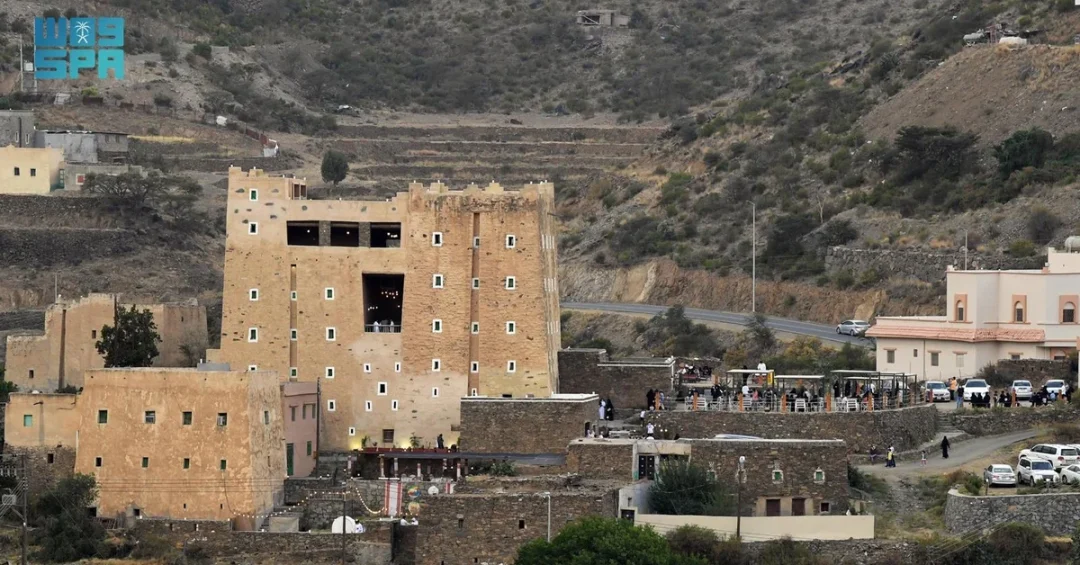
The Abu Sarrah Palaces, a group of meticulously restored 19th-century structures in the Al-Azizia village of Soudah, have become a premier cultural and tourist attraction in the Aseer region, drawing hundreds of visitors with their unique architectural heritage. Located west of Abha city, the palaces span over 3,000 square meters and were reopened to the public following a comprehensive restoration in late 2016, as reported by the Saudi Press Agency (SPA).
Context and Background
The palaces, dating back to 1835, consist of three distinct edifices: Waz’a Palace, Aziz Palace, and Al-Muasla Fort. According to Abdulaziz Abu Sarrah, supervisor of the site, Aziz and Waz’a Palaces rise to six floors each, while Al-Muasla Fort stands at three floors. These structures were built using indigenous materials such as stone and juniper wood, covered with a layer of mud and straw, reflecting the traditional building techniques of the region.
Key Details
In an interview with the Saudi Press Agency, Abdulaziz Abu Sarrah highlighted the site’s appeal to both Saudi and foreign visitors. “Our focus is on Vision 2030, blending traditional styles that honor the history of these grand structures, the largest in the Aseer region,” he said. “We have customized the experience with an open-air café run by local youths serving drinks and food tailored to our guests’ tastes. The site also includes a restaurant, exhibitions, and seating areas, inviting visitors to return to this spot in the heart of the famous Soudah highlands.” During a tour, architect Abdullah Al-Wathiq explained that the palaces are known for their intricate design, multiple levels, and distinct room layouts. Certain rooms lack windows on specific floors to store supplies like grains, protecting them from moisture, while the ground floor is dedicated to livestock and the upper floor reserved for hosting guests. Three floors are exclusively allocated for prayer. “The lofty ceilings, robust exterior walls, and intricate door carvings are among the distinctive architectural features,” Al-Wathiq added.
Implications and Impact
The restoration of the Abu Sarrah Palaces serves as a model for heritage tourism in Saudi Arabia, supporting the broader goal of diversifying the economy beyond oil. By preserving historical sites and integrating modern amenities, the site attracts international visitors interested in cultural experiences. The involvement of local youth in operating facilities like the café fosters community engagement and creates employment opportunities, contributing to regional development. The palaces, situated in the Soudah highlands—a key area for eco-tourism and mountain retreats—bolster the Aseer region’s appeal as a year-round destination.
Vision 2030 Alignment
The revitalization of the Abu Sarrah Palaces directly aligns with Saudi Vision 2030’s goals of promoting tourism, preserving national heritage, and empowering local communities. By restoring these architectural gems and offering them as a cultural attraction, the Kingdom showcases its commitment to balancing modernization with historical preservation. The site is poised to play a significant role in enhancing the visitor experience in the Aseer region, supporting the Saudi Tourism Authority’s efforts to attract a diverse global audience and contribute to the Kingdom’s long-term economic transformation.
20 Questions
Q1. Where are the Abu Sarrah Palaces located?
A1. The Abu Sarrah Palaces are located in Al-Azizia village in Soudah, west of Abha city, in the Aseer region of Saudi Arabia.
Q2. When were the palaces built?
A2. The palaces date back to 1835, as confirmed by the site supervisor in an interview with the Saudi Press Agency.
Q3. What is the total area of the Abu Sarrah Palaces site?
A3. The site encompasses an area of over 3,000 square meters.
Q4. How many structures make up the Abu Sarrah Palaces?
A4. The palaces consist of three edifices: Waz’a Palace, Aziz Palace, and Al-Muasla Fort.
Q5. How many floors does Aziz Palace have?
A5. Aziz Palace rises to six floors.
Q6. What materials were used to construct the palaces?
A6. The palaces were crafted from indigenous materials including stone, juniper wood, mud, and straw.
Q7. When were the palaces restored and reopened to the public?
A7. The restoration and upkeep of the palaces were completed in late 2016, leading to their reopening.
Q8. Who supervises the Abu Sarrah Palaces?
A8. Abdulaziz Abu Sarrah is the supervisor of the Abu Sarrah Palaces.
Q9. What is the purpose of rooms without windows in the palaces?
A9. Certain rooms lack windows to store supplies, especially grains, protecting them from moisture.
Q10. How are the palaces used for prayer?
A10. Three floors within the palaces are exclusively allocated for prayer.
Q11. What facilities are available for visitors at the site?
A11. The site includes an open-air café, a restaurant, exhibitions, and seating areas.
Q12. Who operates the open-air café at the palaces?
A12. The open-air café is run by local youths, as stated by the site supervisor.
Q13. What kind of visitors do the palaces attract?
A13. The palaces are popular with both Saudi and foreign visitors.
Q14. What is the architectural significance of the palaces?
A14. The palaces are noted for their intricate design, multiple levels, distinct room layouts, lofty ceilings, robust exterior walls, and intricate door carvings.
Q15. Which Saudi Vision 2030 goal do the palaces support?
A15. The palaces support Vision 2030’s goals of promoting tourism, preserving national heritage, and empowering local communities.
Q16. What role do local youths play at the site?
A16. Local youths operate the open-air café and are involved in running other facilities, creating employment opportunities.
Q17. Which region of Saudi Arabia are the palaces located in?
A17. The palaces are located in the Aseer region, specifically in the Soudah highlands.
Q18. What is the function of the ground floor in the palaces?
A18. The ground floor is dedicated to livestock, as explained by architect Abdullah Al-Wathiq.
Q19. How does the site contribute to tourism in the Aseer region?
A19. The palaces serve as a cultural attraction that boosts heritage tourism and attracts international visitors to the Aseer region.
Q20. What is the name of the tallest structure among the palaces?
A20. Both Waz’a Palace and Aziz Palace are the tallest, each soaring to six floors.
Reader Feedback
We value your thoughts. Please share your feedback on this article.
Feedback submitted successfully. Thank you.
(function(){var articleRef=window.location.pathname||window.location.href;var b=document.getElementById(‘fb-submit’);if(!b)return;b.addEventListener(‘click’,function(){var n=document.getElementById(‘fb-name’).value.trim();var m=document.getElementById(‘fb-message’).value.trim();var ok=document.getElementById(‘fb-success’);var er=document.getElementById(‘fb-error’);ok.style.display=’none’;er.style.display=’none’;if(!n||!m){er.textContent=’Name and message are required.’;er.style.display=’block’;return;}b.disabled=true;fetch(‘/api/feedback’,{method:’POST’,headers:{‘Content-Type’:’application/json’},body:JSON.stringify({name:n,message:m,article_reference:articleRef})}).then(function(r){if(!r.ok)throw new Error(‘submit failed’);return r.json();}).then(function(){ok.style.display=’block’;document.getElementById(‘fb-message’).value=”;}).catch(function(){er.textContent=’Error submitting feedback. Please try again.’;er.style.display=’block’;}).finally(function(){b.disabled=false;});});})();