


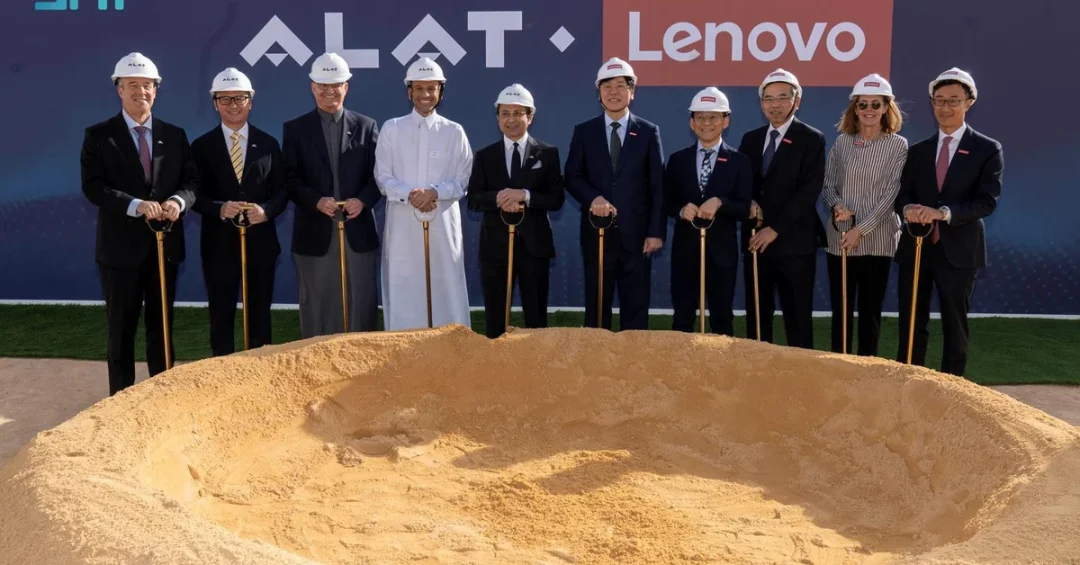
Alat, a Public Investment Fund (PIF) company, and Lenovo, a global technology leader, broke ground on a major new manufacturing facility in Riyadh on February 9, 2025. The factory, located at the Riyadh Integrated Special Integrated Logistics Zone (SILZ), will produce millions of “Saudi Made” laptops, desktops, and servers, marking a significant milestone in Saudi Arabia’s industrial diversification under Vision 2030.
Context and Background
The groundbreaking follows the closing of a US$2 billion investment by Alat in Lenovo via three-year zero-coupon convertible bonds, announced on January 8, 2025, and the initial strategic collaboration agreement revealed in May 2024. The new facility will be constructed on a 200,000 square meter campus, just 15 minutes from King Khalid International Airport, and is expected to begin production in 2026. This development underscores the Kingdom’s ambition to become a leading global manufacturing and technology hub.
Key Details
The factory will produce millions of devices, including laptops, desktops, and servers, designed and operated to high sustainability standards. The partnership is projected to create up to 15,000 direct jobs and 45,000 indirect jobs, with a cumulative non-oil GDP contribution of up to $10 billion by 2030. Lenovo will also establish a regional Middle East and Africa headquarters in Riyadh, further cementing its commitment to the region.
Implications and Impact
This investment is a key component of Alat’s planned investments by 2030 to enhance the technological sector in Saudi Arabia. By empowering the private sector and forming partnerships with leading international manufacturers, Alat aims to boost local capabilities across nine business units: semiconductors, smart devices, smart buildings, smart appliances, smart health, electrification, advanced industrials, next generation and AI infrastructure. The facility will strengthen the Kingdom’s supply chain resilience and position it as a competitive player in the global electronics market.
Vision 2030 Alignment
The Lenovo-Alat partnership directly supports Vision 2030’s goals of economic diversification, job creation, and technological advancement. By fostering a world-class manufacturing ecosystem and attracting global tech giants, Saudi Arabia is accelerating its transition to a knowledge-based economy, reducing reliance on oil, and enhancing its role as a regional innovation leader.
20 Questions
Q1. What is the new manufacturing facility being built by Alat and Lenovo?
A1. The facility is a factory in Riyadh that will produce millions of “Saudi Made” laptops, desktops, and servers, located at the Riyadh Integrated Special Integrated Logistics Zone.
Q2. When did the groundbreaking ceremony take place?
A2. The groundbreaking ceremony took place on February 9, 2025, as announced by the Saudi Press Agency.
Q3. What is the size of the campus for the new factory?
A3. The campus covers 200,000 square meters, situated in the Special Integrated Logistics Zone (SILZ) near Riyadh.
Q4. When is production expected to begin at the facility?
A4. Production is expected to start in 2026, following construction and setup phases.
Q5. How much is Lenovo investing in this partnership with Alat?
A5. Lenovo is investing US$2 billion via three-year zero-coupon convertible bonds, as part of the strategic collaboration.
Q6. What types of products will be manufactured at the facility?
A6. The factory will manufacture laptops, desktops, and servers, all labeled as “Saudi Made.”
Q7. How many jobs is the project expected to create?
A7. The project is projected to create up to 15,000 direct jobs and 45,000 indirect jobs.
Q8. What is the estimated non-oil GDP contribution by 2030?
A8. The cumulative non-oil GDP contribution is estimated at up to US$10 billion by 2030.
Q9. Will Lenovo establish any regional headquarters in Saudi Arabia?
A9. Yes, Lenovo will establish a regional Middle East and Africa headquarters in Riyadh.
Q10. What is Alat’s role in the Saudi technology sector?
A10. Alat is a PIF company focused on creating a world-class manufacturing hub, enhancing capabilities across nine business units.
Q11. How does this partnership align with Vision 2030?
A11. It supports economic diversification, job creation, and technological advancement, reducing oil dependence and building a knowledge-based economy.
Q12. What are Alat’s nine business units?
A12. The units are semiconductors, smart devices, smart buildings, smart appliances, smart health, electrification, advanced industrials, next generation and AI infrastructure.
Q13. Where is the factory located in Riyadh?
A13. It is located at the Riyadh Integrated zone within the Special Integrated Logistics Zone (SILZ), about 15 minutes from King Khalid International Airport.
Q14. What sustainability standards will the factory follow?
A14. The factory will be designed, constructed, and operated to high standards of sustainability, though specific certifications were not detailed.
Q15. How many product categories will Alat manufacture across its units?
A15. Alat will manufacture products in 34 categories across its nine business units.
Q16. What was the initial announcement date for the Alat-Lenovo collaboration?
A16. The strategic collaboration was initially announced in May 2024.
Q17. What is the Special Integrated Logistics Zone (SILZ)?
A17. SILZ is a logistics zone near Riyadh designed to facilitate manufacturing and trade, offering integrated services for companies.
Q18. How will the partnership boost the private sector in Saudi Arabia?
A18. Alat will empower the private sector through its business systems and partnerships with leading international technology manufacturers.
Q19. What is the value of Alat’s planned investments by 2030?
A19. The Lenovo investment is part of Alat’s many planned investments by 2030, but the total value was not specified in the announcement.
Q20. What does this development mean for Saudi Arabia’s global tech role?
A20. It positions Saudi Arabia as a competitive manufacturing hub, attracting global tech giants and enhancing its role as a regional innovation leader under Vision 2030.
Reader Feedback
We value your thoughts. Please share your feedback on this article.
Your feedback helps us improve our coverage.