


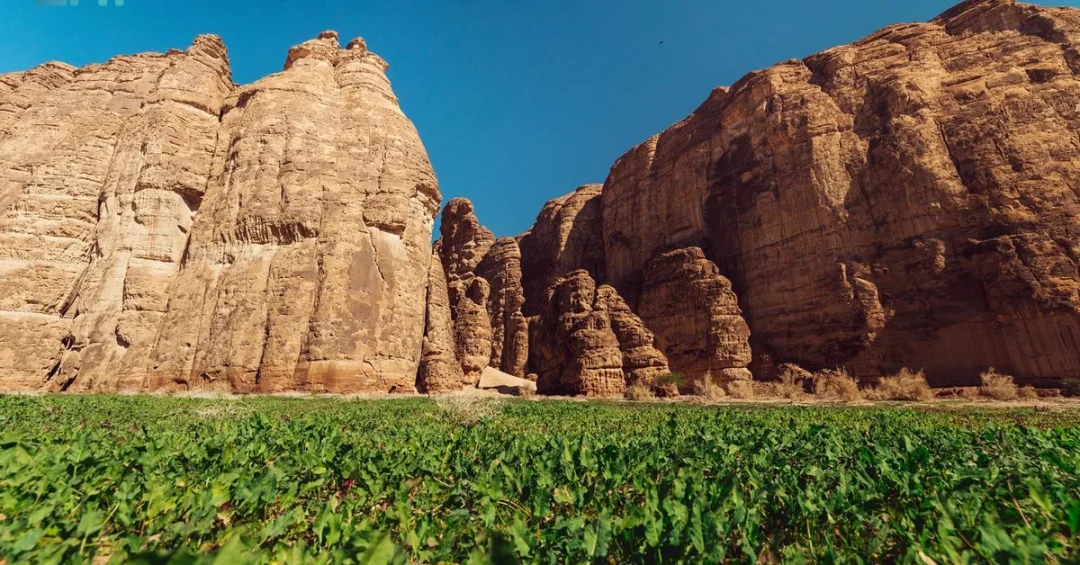
The Royal Commission for AlUla (RCU) has successfully planted 500,000 native trees and shrubs in AlUla’s Sharaan Nature Reserve, marking a major milestone in ecological restoration aligned with the Saudi Green Initiative (SGI). Announced on December 3, 2024, via the Saudi Press Agency, the month-long planting effort involved community members, students, and RCU employees, who used native plant species sourced from RCU’s own nursery to restore the region’s natural ecosystems.
Context and Background
This planting initiative is part of RCU’s broader ecological restoration and rewilding program, which supports the Kingdom of Saudi Arabia’s goal to plant 10 billion trees under the Saudi Green Initiative. The Sharaan Nature Reserve, a key protected area, has become a testing ground for arid-environment rehabilitation, including a 100-hectare pilot project run in partnership with SGI. By focusing on native species, RCU aims to improve soil health, water retention, and biodiversity, creating conditions for wildlife reintroduction.
Key Details
The project used seeds collected from AlUla and cultivated at RCU’s native plant nursery, ensuring genetic suitability for the local environment. Planting native trees and shrubs enhances soil structure, nutrient availability, and resilience to climate variability, providing food sources for herbivores released as part of RCU’s rewilding program. To date, RCU has released over 1,000 native animals into four of AlUla’s nature reserves, including the Sharaan reserve. Dr. Stephen Browne, RCU’s Vice President of Wildlife and Natural Heritage, stated: “RCU is restoring the power of nature’s balance to safeguard AlUla’s natural and cultural heritage… Planting 500,000 trees and shrubs is a major contribution to the Kingdom’s climate goals.”
Implications and Impact
The successful planting strengthens AlUla’s role as a model for sustainable tourism and environmental stewardship in Saudi Arabia. By involving the local community and students, RCU fosters environmental awareness and skills development. The project also contributes to global climate action by enhancing carbon sequestration and preserving vulnerable ecosystems. Regionally, it positions AlUla as a leader in arid-zone ecological rehabilitation, offering insights that could benefit similar environments in the Middle East and beyond.
Vision 2030 Alignment
This initiative directly supports Saudi Vision 2030 by promoting environmental sustainability, economic diversification through eco-tourism, and community engagement. RCU’s efforts align with the Saudi Green Initiative’s pillars of “greening Saudi Arabia” and “protecting land and sea,” underpinning the Kingdom’s commitment to a greener future. By regenerating natural habitats and empowering local communities, AlUla exemplifies how conservation and development can advance together under Vision 2030.
20 Questions
Q1. What is the Royal Commission for AlUla?
A1. The Royal Commission for AlUla (RCU) is a Saudi government agency established to preserve and develop AlUla, a region of natural and cultural significance, in line with Vision 2030.
Q2. How many trees and shrubs were planted?
A2. RCU planted 500,000 native trees and shrubs in Sharaan Nature Reserve, as announced on December 3, 2024.
Q3. Where did the planting take place?
A3. The planting occurred in Sharaan Nature Reserve, a protected area in AlUla, northwestern Saudi Arabia.
Q4. What is the Saudi Green Initiative?
A4. The Saudi Green Initiative (SGI) is a national program aimed at planting 10 billion trees, reducing carbon emissions, and protecting the environment to achieve sustainability.
Q5. Why were native plant species used?
A5. Native species are adapted to local conditions, improving soil health, water retention, and biodiversity, and supporting wildlife reintroduction.
Q6. Who participated in the planting?
A6. The planting involved AlUla community members, students, and RCU employees, fostering local engagement and environmental stewardship.
Q7. What is RCU’s rewilding program?
A7. RCU’s rewilding program releases native animals into protected reserves to restore ecological balance. Over 1,000 animals have been released so far.
Q8. How does planting support climate goals?
A8. Trees and shrubs sequester carbon, improve soil and water systems, and enhance resilience to climate variability, aligning with national climate targets.
Q9. What is the Sharaan Nature Reserve?
A9. Sharaan Nature Reserve is a protected area in AlUla, serving as a pilot site for ecological rehabilitation and wildlife conservation.
Q10. What is RCU’s native plant nursery?
A10. RCU operates a nursery that grows native plants from locally collected seeds, ensuring genetic suitability for restoration projects.
Q11. How does this project affect wildlife?
A11. The planting creates food sources for herbivores like ibex and gazelles, supporting RCU’s rewilding and ecosystem restoration efforts.
Q12. What is Vision 2030?
A12. Vision 2030 is Saudi Arabia’s strategic plan to diversify the economy, improve quality of life, and promote sustainability, including environmental projects.
Q13. How does the project align with Vision 2030?
A13. It supports Vision 2030 by promoting eco-tourism, environmental conservation, and community involvement, contributing to sustainable development.
Q14. What role did the Saudi Press Agency play?
A14. The Saudi Press Agency (SPA) officially announced the planting milestone, providing credible information from Saudi authorities.
Q15. How long did the planting take?
A15. The planting took place throughout November 2024, with community and staff contributions achieving the 500,000 milestone.
Q16. What is the 100-hectare pilot project?
A16. A 100-hectare pilot in Sharaan Reserve tests ecological rehabilitation methods in arid environments, in partnership with SGI.
Q17. How does the project benefit the local community?
A17. It involves residents in hands-on conservation, provides education opportunities, and promotes sustainable livelihoods through eco-tourism.
Q18. What species were planted?
A18. The project used native trees and shrubs grown from seeds collected in AlUla, though specific species were not detailed in the announcement.
Q19. How does planting improve soil?
A19. Native plants enhance soil structure, increase water retention, and boost nutrient availability, improving overall ecosystem health.
Q20. What is the long-term goal of this initiative?
A20. The long-term goal is to restore AlUla’s natural habitats, support biodiversity, and contribute to Saudi Arabia’s goal of planting 10 billion trees under SGI.
Reader Feedback
We value your thoughts. Please share your feedback on this article.
Your feedback helps us improve our coverage.